By Siddharth Gokhale
Abstract
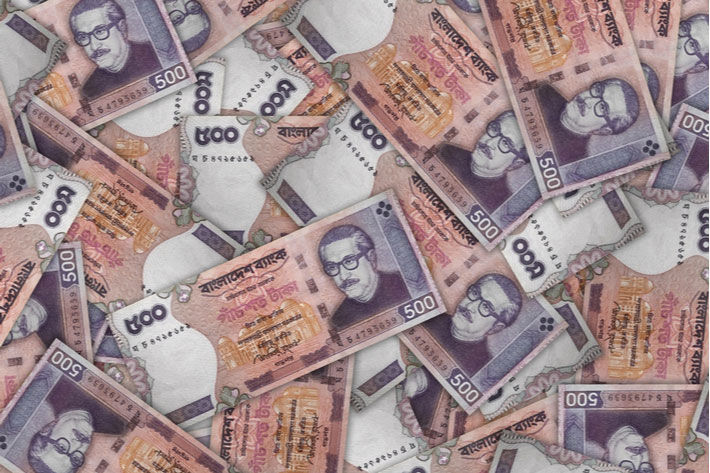
Once an economic success story, Bangladesh is positioned at a juncture. It faces several hurdles, both internal and external, on its road to graduating from its status as one of the Least-Developed Countries. The COVID-19 pandemic and the Russia-Ukraine war, together with soaring oil prices in the global market and global and domestic inflation, have significantly depleted its foreign exchange reserves from approximately USD 48 billion in 2020 to a meagre USD 26 billion by 2023. The depreciation of the Taka to combat this depletion has exacerbated external debt costs. This, along with the recent political instability in the country and the non-performing loans amassed by the domestic financial sector, has heightened the risk of an eventual debt crisis. Bangladesh needs urgent reforms in addition to the IMF assistance it has already availed. The coming months will test Bangladesh’s resilience as it navigates these murky economic waters.
Bangladesh has long been lauded as one of Asia’s several economic success stories; this conclusion is evident even with a cursory glance at its developmental history. Rising from being one of the world’s poorest nations at the time of its independence, marred with high levels of unemployment, poverty, hunger and economic disparity, it was able to cut the prevailing rate of poverty in half in the fifty years since then, and cause significant human development which was reflected in its jump in the Human Development Index from 0.399 in 1990 to 0.67 in 2022. Commercial and trade spaces in the Bangladeshi market also reflected this growth, with its foreign exchange reserves striking an all-time high in FY 2020-21 at USD 48 billion, riding on the high levels of foreign exchange remittances by overseas employed nationals and booming exports from the ready-made garments (RMG) industry, with total exports hitting a record-high USD 64.2 billion in 2022. However, more recent trends indicate that the Bangladesh economy might be facing a bust that was perhaps inevitable considering the boom that it had enjoyed. This is not the consequence of a single factor, but a culmination of multiple factors that have coincided in their arising.
Between the Pandemic and the War
There is no doubt that the Bangladesh economy has faced the wrath not only of the pandemic but also of the Russia-Ukraine war, amidst global inflation and an almost worldwide economic slowdown. Perhaps the credit for this is due to the over-reliance of the Bangladesh economy on exports from the RMG industry to maintain a surplus in its forex reserves and keep its currency afloat.
The Covid-19 pandemic hitting economies globally caught several developing economies in the Global South, including Bangladesh, off-guard. While the primary consequence of the pandemic on these economies is well-documented to be the increased fiscal deficits that governments had to bear to cope with the disease, Bangladesh’s woes were far too many, not stopping at merely incurring a fiscal deficit. The multi-wave pandemic also wreaked havoc in the RMG export industry. The numerous RMG manufacturing units that served clothing and fast-fashion industries of the West were hit the most, with workers either getting infected or not turning up for fear of getting infected. Public health measures such as lockdowns and mandatory social-distancing norms in closed environments, understandably, merely exacerbated this. Moreover, the pandemic caused global supply chain disruptions, with a decrease in trade, and a consequent decrease in Bangladesh exports – which consisted largely of RMG and other clothing accessories. Bangladeshi exports therefore sharply contracted from USD 39.3 billion in 2019 to USD 33.6 billion in 2020. However, this economy has had to face the brunt of international economic turmoil more than once.
While attempting to recover from this loss of exports, the Bangladesh economy was hit by the increasing oil prices in the global commodities market. The rise in this price was attributed to the fact that global oil and petroleum producers including OPEC and Russia were attempting to increase their supply, though their attempts were in vain since they could not cope up with sharp increase in the global demand of petroleum in a global economy that was just opening up after the pandemic. The Russian invasion of Ukraine merely added the metaphorical fuel to the fire. Russia was one of the largest exporters of crude oil and petroleum products along with the United States and OPEC-members, and when countries around the world chose to respond to the invasion, Russia found itself at the receiving end of sanctions not directly targeting Russian oil but impacting activities ancillary to oil export, including some on logistics (freight), and financing (banking and insurance). This disabling of the supply of Russian oil meant an increase in the global market price of oil and petroleum products. Bangladesh, being a country that was highly dependent on energy imports for its functioning, had to shell out more money than it could have ever imagined for energy imports, the lifeline of its fast-paced developing economy; in 2022 it spent approximately USD 11.3 billion on importing refined petroleum.
Global Inflation, Expensive Imports and Depleting Forex Reserves
Indeed the cost of imports was gradually increasing, but that did not cause the Bangladeshi domestic demand for imports to slack off, as the imports were essential to the development, nay the survival of the domestic economy, mostly consisting of machinery, mineral fuels and food, besides the textile raw materials imported by the RMG industry for processing and exporting. These increasingly expensive imports triggered a minor balance of payment crisis, as Bangladesh could not balance this high cost of imports against its level of exports, leading to a significant and rapid depletion of Bangladesh’s forex reserves, from its highest levels in FY 2020-21 to a gross forex reserve of USD 26 billion in FY 2023-24 as per central bank data. Recognizing this erosion of the forex reserves, not only due to the high food and oil prices caused by the Russian-Ukraine war but also due to the inflationary pressures faced by the larger global economy by this time, the Bangladesh Bank, the central bank of the economy, sought to counteract this by allowing for the depreciation of the Taka, which has remained its policy for quite some time now. However, the central bank failed to notice that depreciating the Taka makes meeting external debt obligations and importing essential goods more expensive.
Depreciating the Taka and the Looming Crisis
Simply explained, depreciation of a currency under a managed floating exchange rate regime akin to the one followed by Bangladesh, means that where, at one point in time, ten Takas can be exchanged for one USD, at some other point in time, it would require twenty Takas to obtain one USD. In case of external debt obligations of nations, where the debt is denominated in foreign currency, most popularly the USD, a depreciation of the domestic currency makes meeting the debt obligation more expensive; while the level of external debt may remain still at USD 100, it will take more Takas to be exchanged for 100 dollars to fulfil that same obligation. Similarly, imports are paid for in foreign currency, but a depreciation of the Taka would require more Takas to pay for the same import.
These two factors, combined with the already high levels of non-performing loans in the financial sector, recent political instability, and internal governance issues including corruption, have left Bangladesh vulnerable to an impending debt crisis as well as a larger economic one. Obviously, the debt crisis is fuelled by the increasing costs of servicing external debt obligations and the ever-mounting debt obligations themselves. However, an even greater factor to be considered is that a default on these debt or debt-servicing obligations can trigger a wider economic crisis as it would entail a direct impact on the already fragile and over-leveraged domestic banking and financial system. Additionally, a default on external debt would entail lower fiscal deficits and developmental expenditure, which can potentially reverse the position that Bangladesh has strived to achieve at the global level in terms of human development. These factors, in turn, could fuel an economic downturn that, if not addressed at the appropriate time, could result in a large-scale economic crisis.
However, all hope is not lost. While it remains to be seen how the Bangladesh economy reacts, it has already availed of assistance from the IMF, which has agreed to bailout the economy in tranches. Indeed, this alone can do little in rescuing the country from the position that it is in. Wider reforms in this regard are necessary, including diversification of its export portfolio and reducing its reliance on import of essential goods and commodities, besides traditional prescriptions of a tight monetary and fiscal policy, and focusing on sustainable debt. The coming months will prove to be a testing time for the Bangladesh economy, but should it resurface from the murky waters it is stuck in, it could very well reclaim the praise it received in the foregone times.
About the Author
Siddharth Gokhale is a fourth-year law student from Jindal Global Law School and a member of the Economics and Finance Cluster of Nickeled & Dimed. He is an avid reader of economics and is passionate about exploring the realm of international trade and investment law. He also has a keen interest in corporate restructuring, insolvency, and bankruptcy.
Image source: https://static.fibre2fashion.com/newsresource/images/281/shutterstock-2139065335_292938.jpg
 NICKELED AND DIMED