
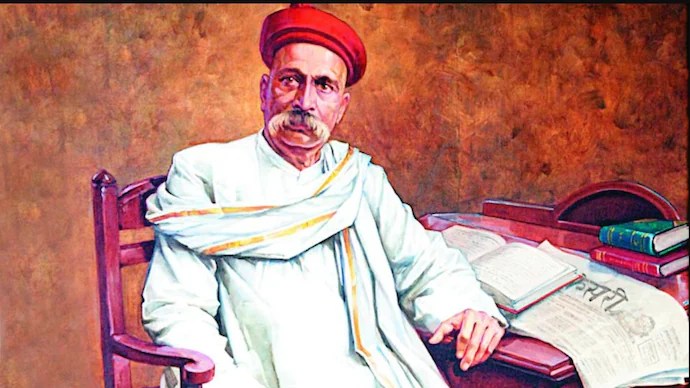
By Aditi Lazarus
Abstract
This article examines the profound impact of Lokmanya Tilak, often referred to as “The Father of Indian unrest,”. India’s struggle for self-rule during the late 19th century, positioned him as a catalyst for socio-political awakening. Tilak called upon the Indian populace to shed the chains of colonial subjugation and reclaim their agency through the movement of Swarajya—self-governance infused with moral and spiritual purpose. By intertwining cultural revivalism with political activism, he galvanized a collective identity that transcended mere resistance against imperialism. His strategic use of media and education mobilized the masses, fostering heightened awareness of their rights and duties. Ultimately, Tilak’s legacy is not only a testament to the fight for political autonomy but also a celebration of India’s rich cultural heritage, illustrating that true freedom is rooted in both self-determination and the reclamation of national identity.
Introduction:
“What is enlightenment?” Kant proclaimed in 1784, “Enlightenment is the emergence of man from his self-imposed immaturity.” Riddled with British Raj in late 19th CE, India gave birth to a pioneer who awakened the masses and instilled the dream of swa-raj—self-rule, self-governance, and self-determination. Just as Kant called upon the individuals to emerge free from intellectual dependence, Lokmanya Tilak sought to liberate the Indian spirit from colonial subjugation through the movement of Swaraj – a clarion call for people to claim their right to think, act, and govern. The enlightenment of Swaraj was multifaceted, as it had evoked the ‘self’, elevated the notion of cultural and religious identities, and had accelerated the rise of nationalism, paving India’s path towards independence.
Background:
Keshav Gangadhar Tilak was born in 1856 in Ratnagiri, Maharashtra, to Gangadharpant Tilak and Parvati Bai. He later became prominently known as Lokmanya Bal Gangadhar Tilak. The Tilak family belonged to the Chitpavan caste of Brahmins in the Konkan region, and they were renowned for their exceptional intellectual and administrative abilities. His father, Gangadharpant Tilak, was an eminent educator with an immense knowledge of Sanskrit and mathematics. He had also earned the position of Assistant Deputy Educational Inspector, however, in the traditional Indian setting. Due to this, Lokmanya Tilak received orthodox Indian primary education, and soon he followed his father’s footprints to gain exceptional aptitude mathematics and proficiency in Sanskrit lexicon, by nurturing high academic inclinations. Along with a degree in Mathematics in Pune, he also obtained a degree in L.L.B. from Government Law College, Mumbai. He also became a Mathematics teacher, however due to differences with his colleagues, he resigned and later became a journalist. Owing to his religious background, there was also an emphasis put on deep-rooted traditional learnings linked to ancient Sanskrit texts and Hindu philosophy. It had instilled principles of justice, freedom, and righteousness in him, allowing him to form independent opinions without being suppressed by societal norms. This intrinsic quality had not only led Lokmanya Tilak to become one of the most prominent radicalists of his time, but also to envision an India rooted in those very principles.
Enlightenment of the Self: The foundation of a nation
The meaning of Swarajya can be traced back to numerous political journals of Indian colonial history, which capture its essence as self-government. However, it is integral to understand its meaning in moral and spiritual dimensions that aimed to free the mind before the nation. For Lokmanya Tilak, the concept additionally referred to the attainment of self-control, where individuals must rise above their personal limitations to align themselves with their duty (swadharma). Through the moral framework of swadharma, he linked self-control with self-rule, where controlling one’s passions, fears and limitations helps one attain true freedom and govern themselves better. This echoes Kant’s idea of enlightenment as emerging from self-imposed immaturity, but for Tilak, the immaturity to be overcome is both moral and spiritual. Working towards this ‘duty’ for spiritual liberation necessitated individuals to also intellectually emancipate themselves. He envisioned this sense of personal duty as integral to the larger cause of national freedom, where the pursuit for spiritual liberation would naturally extend into a collective movement for external freedom and independence of the country. The enlightenment of the self, in this case, means recognizing that inner discipline is the foundation upon which national freedom must be built.
To cultivate this, he used media and education as an agent to liberate the Indian spirit from colonial suppression. The establishment of the Deccan Education Society put emphasis on education, while his editorials in the newspapers were to persuade and mobilize the masses. Evoking the mind, thus, required the uprooting of deep-seated psychological and spiritual normalization of enslavement. Through this, he aimed to mirror their enlightenment of the self to the collective national consciousness. This notion of Swaraj was the stepping stone to reconnect one’s spirit with the political essence of the nation.
Cultural and religious revivalism & reform: Forging a collective identity
Whilst several academics classify Lokmanya Tilak as an orthodox conservative, he is renowned for championing numerous integral social reforms. He was a strong opponent of untouchability, and sought to integrate them into the society through cultural means. Furthermore, similar to Jyotibai Phule, his emphasis on education of women, to liberate them from bondage, was also greatly admired in the society. In addition to that, he understood the sensitivity of widow remarriage, where whilst social reformists advocated for their marriage without comprehending the stigma they faced, Lokmanya Tilak suggested that true solidarity for widows must be both tangible and normalized in the society. His radicalist ideas did clash with his contemporaries and the norms the British introduced in the society, although, his central focus was on empowering and educating individuals to unite them against the colonial suppression.
Unlike the European enlightenment, Tilak’s movement did not ridicule religion and faith to propagate reason and skepticism against colonialism. Instead, he used oriental revivalism as a vehicle in Maharashtra to not only unite people, but to create consciousness amongst them. The two newspapers – Kesari and Maratha, established in 1881, were used by him as a medium to agitate against British rule. Whilst the editorials in the Maratha were written in English to reach an educated audience, Kesari was written in Marathi to influence the Maharastrians or the Marathi-speaking audience. Over time, Lokmanya Tilak developed an affinity for Kesari and engaged closely with it to enlighten the Marathi-speaking ethnic masses. Moreover, in order to enthuse the masses, he sought to revive the glorious past of the country through the festive celebration of Ganpati festival and Shivaji Mahotsava. These two celebrations became an integral symbol of unity of masses, and utilized cultural past to forge nationalist sentiments against the British cultural discourse amongst the masses. Lokmanya Tilak’s prominent engagement with the Bhagavad Gita in Gita Rahasya, written during the time he spent in jail, is another essential element of the inspiration he drew from religion. Tilak claimed, “The most practical teaching of the Gita… is not to give way to any morbid sentimentality when duty demands sternness and the boldness to face terrible things.” Through this, he envisaged the masses to fulfill their moral duty towards the nation, to attain self-fulfillment in life. Lokmanya Tilak, therefore, engages critically with cultural and religious motifs to forge a collective identity and create national consciousness to incite the masses.
Lokmanya Tilak’s Political Philosophy: Steering the Revolution
Lokmanya Tilak’s political philosophy was pivotal in shaping Indian nationalism during the colonial struggle, emphasizing self-governance and the ethical imperatives of freedom. He recognized that armed rebellion was not a viable option due to the lack of trained leadership and effective organization in India. Unlike the radical left movements that resorted to violence, Tilak advocated for a legal and principled approach to agitation, asserting that true political change must emerge from the will of the people. His concept of ‘Swarajya’ went beyond mere political autonomy; it represented a moral imperative for individual freedom, positing that governance should reflect the needs and aspirations of the populace. This perspective is underscored in his critique of British imperialism, titled as “Pachhahipana ka Gulamgiri?” (Imperialism or Slavery?) in the Kesari, where he argued that any government, whether indigenous or colonial, that failed to consider the welfare of its citizens could not be regarded as true ‘Swarajya’. He contended that imperialism was inherently exploitative, benefiting only a select few in the ruling nation, while imposing economic and cultural detriment on the majority.
Lokmanya Tilak’s vision of nationalism also emphasized economic independence and self-reliance. He articulated the ‘drain theory’ to highlight the economic exploitation of India by British policies, arguing that the wealth generated by Indian labor was systematically extracted and sent abroad. Advocating for the Swadeshi movement, he urged Indians to boycott foreign goods and promote local industries as a means to reclaim economic sovereignty. It also highlighted the dimension of economic enlightenment and raised consciousness amongst the masses. This approach to nationalism emphasized the importance of mobilizing the masses to take concerted action against colonial rule. Moreover, Tilak’s belief in the significance of political engagement and mass mobilization marked a departure from the more elitist approaches of his contemporaries. He recognized that true political power lay in the hands of the common people, galvanizing them to actively participate in the national movement through media discourse. Through this pragmatic and inclusive framework, Tilak not only inspired collective action but also laid the groundwork for a vision of India that demanded political and economic freedom, asserting that Swarajya was not just a right, but an essential component of national dignity and self-determination.
Conclusion:
“I regard India as my Motherland and my Goddess,
the people in India my kith and kin,
and loyal and steadfast work for their political and social emancipation
my highest religion and duty.” – Lokmanya Tilak
Lokmanya Bal Gangadhar Tilak’s contributions to India’s socio-political landscape were transformative, embodying the spirit of self-rule and national identity. His concept of ‘Swarajya’ extended beyond mere political autonomy; as it encapsulated moral and spiritual dimensions that urged individuals to transcend personal limitations and align with their collective duties. By advocating for self-governance and economic independence, Tilak illuminated the path toward a united India, drawing from both traditional values and contemporary needs. His critique of British imperialism, coupled with his emphasis on mass mobilization, positioned him as a pivotal figure in the Indian independence movement. His legacy lies in the integration of cultural identity with political action, illustrating that the pursuit of freedom was as much about reclaiming heritage as it was about governance, thereby laying the groundwork for future generations to engage in both political and social reform as essential components of nation-building.
Tilak effectively utilized the media as a powerful tool for political awakening, using his newspapers to engage and educate the public about their rights and responsibilities. His promotion of cultural and religious revivalism was instrumental in fostering a collective identity, rallying the masses around shared heritage and values. Through initiatives like the Swadeshi movement, he not only aimed to reclaim economic sovereignty but also sought to instill a sense of pride in India’s cultural past. By celebrating festivals and emphasizing the significance of traditional narratives, Tilak connected the struggle for independence with the revival of national consciousness. Tilak embodied idealism in action, showing that perfect synergy exists between revolutionary principles and pragmatic pursuit—a truth encapsulated in his resolute declaration, “Swaraj is my birthright, and I shall have it.”
About the Author:
Aditi Lazarus is a second year B.A. Diplomacy and Foreign Policy student at O. P. Jindal Global University. She has a strong affinity for researching art, literature, politics and economics.
 NICKELED AND DIMED