
By Sahaj Sohi
Abstract:
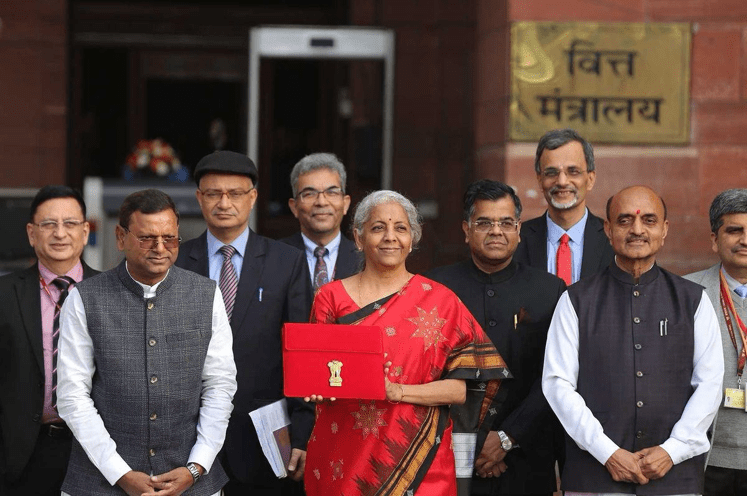
The day of the Budget proposal has historically been a much-anticipated event, looked forward to by both businesses and the wider public. It encompasses a plethora of initiatives and schemes that are aimed at bringing about benefits to the stakeholders in society. Amidst the nation’s dynamic political and economic transformation, Finance Minister Nirmala Sitharaman’s presentation of the interim budget on February 1st emerges as a pivotal moment. She declares the theme of ‘Viksit Bharat’ by 2047 whilst reiterating the motive of Atmanirbhar Bharat along with a special emphasis on the welfare and aspirations of Gareeb (poor), Mahila (women), Yuva (youth), and Annadatta (farmers) this term for robust economic growth. Until April-May 2024, the interim budget finely encapsulated the ministry’s committed efforts in redefining the nation’s financial landscape, post which the incoming government, subsequent to the Lok Sabha Election, will table a meticulously crafted new budget. This marks the Finance Minister’s sixth budget presentation and the final budget presentation under Prime Minister Narendra Modi’s second term and once again has very efficiently captured the allocation of the nation’s resources to various sectors like infrastructure, agriculture, education, and healthcare to name a few. This article attempts to conduct a thorough examination of the allocation of these resources across the different sectors of the economy through a study of infrastructure, healthcare, agriculture, and education. Secondly, it aims to provide insights into the efficiency of this allocation, identifying the stakeholders affected, and analysing the future implications of this sectoral allocation.
Sector-Wise Spending:
A blueprint for spending on various sectors like infrastructure, health, education, agriculture, and sustainable energy for instance is a very strategic process adopted while designing annual budgets by countries as it helps in establishing a groundwork for prioritising the needs of the society and also optimally utilising financial resources for a much more balanced growth. Along similar lines, the interim budget 2024 aims at achieving the same with its sectoral allocation for this year.
Infrastructure:
Infrastructure is the backbone of an economy, the cornerstone in shaping future investments, the quality of life of the citizens, and other economic activities. Looking back at the nation’s recent history, numerous far-reaching advancements in infrastructure have come to light and the interim budget with the same vision proposes more such projects. Thus Niramala Sitharaman proposed a significant 11% boost in the industry, now at 11.11 lakh crore constituting 3.4% of the total GDP. Notably, the aviation sector has seen substantial progress over the past couple of years whereby the number of airports has doubled to 149 and the finance minister advocates to keep the momentum going with the development of many more new airports to enhance connectivity further. Moreover, she also highlights the significant headway the UDAN scheme has had, with 517 operational routes. As for the railways, the state plans to bring into effect three primary railway corridor programs namely the energy, mineral, and cement corridor, the port connectivity corridor, and the high traffic density corridor under the PM Gati Shakti. Following the success of Vande Bharat trains, the Finance Minister announced the conversion of around 40,000 more rail bogies to Vande Bharat coaches. Highlighting that this initiative would not only create job opportunities but also contribute to the reduction of travel time and an increase in tourism across the country. Additionally, other major railway projects also include the Metro Rail and Namo Bharat being extended to more and more cities and not just the metropolitan. These suggested projects for infrastructure in the budget are essentially strategic pathways for increasing the network between remote areas, revamping the urban infrastructure, and elevating the living index, whilst promoting smooth business operations, giving room to much more comprehensive development.
Healthcare:
As we step into 2024 and the echoes of the pandemic fade, the government is prioritising the strengthening of the healthcare system to better equip us for future crises akin to the one experienced in 2020. Sitharaman has allocated a substantial Rs 90,171 crore to the medical community to enhance access to medical services. The government is actively promoting cervical cancer vaccination for girls aged 9-14, a commendable step in promoting the thought of preventive medicine for the third most common cancer in India. Furthermore, health coverage under the ‘Ayushman Bharat’ scheme is extended to all ASHA and Anganwadi workers and helpers. Upgradation of Anganwadi centres through the ‘Saksham Anganwadi’ scheme and Poshan 2.0 will enhance early childhood care and nutrition delivery. The newly crafted ‘U-Win’ platform will be rolled out for the immunisation efforts of Mission Indradhanush. The government also plans to increase medical personnel by utilising existing hospital infrastructure and constructing more medical colleges for enhanced medical education. A dedicated committee will be set up solely to study this cause and address the issues in setting up additional medical colleges. While these healthcare proposals in the budget are promising, their efficacy ultimately depends on implementation. Notably, the budget has yet to address the pressing concerns of nursing shortages and the migration of nurses from India. Achieving utopian levels in medical advancements is a gradual process, and these budget measures are crucial stepping stones toward that goal in a planned and organised manner.
Agriculture:
According to experts such as Anand Ramanathan from Deloitte India, the Budget continues to support growth and productivity in agriculture through interventions in crop insurance, encouraging the use of nano fertilisers, promoting self-sufficiency in oilseed production, and increasing investments in micro food processing. ‘Annadata’ (Farmers) being one of the focus points in the budget this term, the agriculture sector has witnessed significant allocations. The interim union budget has allocated Rs 1,27,469.88 crore to the Ministry of Agriculture. These funds are bifurcated into Rs 1,17,528.79 crore for the Department of Agriculture, and Rs 9,941.09 crore for the Department of Agricultural Research and Education (DARE). Addressing the uncertainties faced by farmers in crop production, the Pradhan Mantri Fasal Bima Yojana receives substantial allocation, aiming to provide insurance to 4 crore farmers and protect them from unforeseen adverse climate changes. India in particular deals with a critical challenge in terms of post-harvest losses whereby the nation loses approximately 5-13% of its fruits and vegetables and 3-7% of crops like oil seeds and spices. To combat the rising concern of post-harvest losses, initiatives involving 38 lakh farmer schemes and private-public investments have been introduced. Edible oil is a commodity extensively imported into our nation to counter this, the government has introduced the ‘Atmanirbhar Oil Seeds Abhiyan’. The initiative aims to reduce reliance on imported edible oils like mustard and groundnut, including research, modern farming techniques, market linkages, procurement, value addition, and crop insurance. The Interim Budget introduces provisions for the nationwide adoption of cost-effective and domestically manufactured Nano DAP fertiliser to reduce agricultural import dependence. Lastly, a comprehensive program supporting dairy farmers will be launched to enhance productivity and control the spread of foot and mouth diseases in the sector.
Education:
Human capital development stands as a crucial pillar for economic growth and progress, and the updates in India’s education landscape given by the Interim Budget reflect significant strides in this regard. Over the past ten years, there has been a commendable 28% increase in female enrollment in higher education, with a particularly noteworthy 43% of women now participating in STEM courses, marking it to be the highest figure globally. The transformative reforms brought about by the National Education Policy 2020 contribute to this positive trend. The introduction of PM Schools for Rising India (PM SHRI) emphasises quality teaching and the holistic development of individuals. However, the budget for the University Grants Commission (UGC) witnessed a substantial decrease, dropping by 60.99% to Rs 2,500 crore, while central universities experienced a noteworthy increase, receiving Rs 15,928 crore for the financial year 2024-25. The Finance Minister, Nirmala Sitharaman, highlighted these achievements and changes during her speech for the Union Budget 2024, underscoring the government’s commitment to advancing education and human capital in the country.
Conclusion:
Provided that the new government post the Lok Sabha elections will present a comprehensive budget, the Ministry of Finance has executed a stellar job in formulating the interim budget, effective until April-May. The allocation of resources by the ministry appears judicious, auguring well for the future of these sectors. While there remain various factors to be scrutinised within each sector for more well-rounded and comprehensive development, the nation must diligently work towards achieving the ‘Viksit Bharat goal by 2047. The journey toward economic prosperity and progress is extensive and arduous, but with the provisions, schemes, and initiatives outlined in the interim budget, the nation is significantly supported on its path to success.
Author’s Bio:
Sahaj Sohi, currently in her second year of pursuing a B.A. in Economics (Hons.) at the Jindal School of Government and Public Policy, possesses a profound enthusiasm for the domains of economics, finance, and data sciences. Her specific areas of research interest include Financial Economics, Applied Econometrics, and Data Analysis.
 NICKELED AND DIMED