
By Professor Tridivesh Singh Maini
Introduction
Days after the victory of Masoud Pezeshkian in Iran’s Presidential election, the Chief Commander of the Islamic Revolution Guards Corps (IRGC) Major General Hossein Salami lashed out at the US. On July 8, 2024 the IRGC Chief Commander said:
“We eroded the US’s power. The United States has become small and weak, and it has gradually lost its power because of the erosion caused by [Iran’s] Islamic Revolution,”
Major General Hossein Salami pointed to the Iranian Revolution as one of the reasons for the US decline. The IRGC Chief Commander also stated that while the US had made attempts to isolate Iran via economic sanctions, it had not been able to achieve its goal. He also said that Iran had proven, “the world is much bigger than the US and that the US is much smaller than the world.”
Iran-US relations
Masoud Pezeshkian, who will be sworn in next month, is unlikely to have the final on crucial domestic and foreign policy issues. It is Iran’s supreme leader, Ali Khamenei, who calls the shots on key matters such as Iran’s nuclear policy. Iran’s president elect has been scathing in his criticism of Israel and come out in support of Hezbollah on the one hand, while he has been in favour of engagement with the outside world with an eye on reducing Tehran’s economic isolation (many believe there is a window of opportunity for Iran’s engagement with the west).
During a Presidential debate, Masoud Pezeshkian had said: “The primary issue is the perspective: Do we want to solve our problems with the world or not? I believe we must get out of the deadlock to solve the country’s problems,”
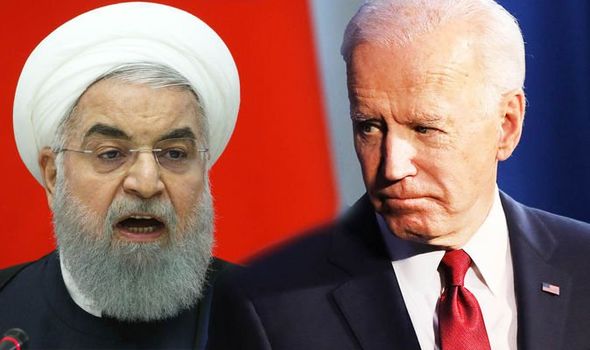
Iran-US ties have witnessed a steady deterioration since the US withdrawal from the Iran nuclear deal/Joint Comprehensive Plan of Action (JCPOA) in 2018, during the Donald Trump Administration. The Biden Administration made attempts to reduce strains and revive the JCPOA, but Iran’s nuclear program – in violation of the terms of the JCPOA/Iran nuclear deal – as well as the Middle East Conflict which began in October 2023, reduced the space for any meaningful engagement (both countries have had back-channel talks after attacks by Iran backed Houthis on ships in the Red Sea).
After the victory of Masoud Pezeshkian, the US has expressed its scepticism vis-à-vis the election but categorically stated, that it will carry on with diplomatic engagement with Iran – provided it is in US interests. The scope for any meaningful engagement between Tehran and Washington DC over the next few months is limited. First, the US is already in election mode and the Biden administration has limited room for any bold steps vis-à-vis Iran. Joe Biden, the current US President, who is also the Democrat candidate for the November 2024 election is being compelled by many democrats to pull out of the presidential race after his poor performance in a debate on June 27, 2024. Second, even the Iranian President elect is severely hemmed in by domestic constraints. While he personally may not be dogmatic or strait-jacketed he will not be in a position to go against the overall domestic sentiment and as mentioned earlier, it is the Supreme Leader who has the final say on important policy issues.
If Donald Trump were to win the 2024 election, many commentators believe that the US may follow an even tougher approach vis-à-vis Iran. Trump has been critical of Biden’s Iran policy saying that relaxation of sanctions vis-à-vis Iran gave the latter space to support its proxies – Hezbollah and Hamas.
This point was made by Trump during the June 27th debate where while praising his own approach of maximum sanctions against Iran, he said: “Iran was broke. They had no money for Hamas, Hezbollah, for terror. No money whatsoever.”
Role of other western countries
Here it would be pertinent to point out that the role of other western countries – especially France, Germany and UK (members of the P5+1) is likely to be important. While the conservative dispensation went along with Washington’s tough approach vis-à-vis Tehran, the recently elected Labour government may follow a different approach and favour greater engagement with Iran (especially if Masoud Pezeshkian seems more open to engagement). While it is true that Tehran in recent years has upped the ante vis-à-vis the west, it is also important for the west to change its approach vis-à-vis Tehran and not to isolate it.
Conclusion
In conclusion, it seems that Iran and the US are likely to lose another opportunity to engage and reduce tensions, given the current turmoil in the Middle East and the flux in US’ domestic politics. As discussed earlier the state of Washington-Tehran ties will depend on the next dispensation in Washington and also on the approach of countries like France, UK and Germany vis-à-vis Iran. Several countries, including those with close ties with the US, would like to strengthen economic links with Iran and would be hoping for a thaw between Washington and Tehran – howsoever unlikely it may seem in the short run.
Author’s Bio
Tridivesh Singh Maini is an Assistant Professor at OP Jindal Global University. His research interests include — India’s ties with its extended neighbourhood (with a focus on Gulf and Iran), Geo-economics in South Asia, The Belt and Road Initiative (BRI) and the role of India’s states in the country’s external relations.
Image Source: Daily Express
 NICKELED AND DIMED