
By Sonakshi Garg
Abstract
Pierre de Coubertin, the founder of the Olympics, believed that the Games were beyond physical and mental displays of excellence. Rather he considered themcapable of acting as a bridge to friendly relationships between states, which can nurture mutual respect and understanding. His revolutionary words still echo in the Olympics slogan played today-‘Excellence, Respect, and Friendship’. Therefore, it can be inferred that from the very start, sports were envisaged as being part of the state’s machinery, which allowed it to control and act in domestic and international events.
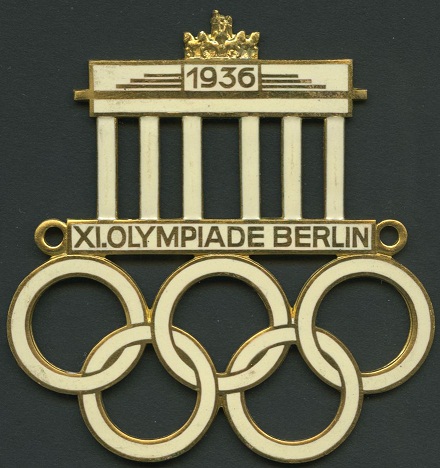
This essay aims to prove this assertion, by narrating the story of the 1936, Nazi Olympics, which can be claimed to be an edition of the Games, that was highly politically charged and had enormous ramifications on the domestic politics of the participants. Therefore, let’s “Open the Olympic Games of Berlin, celebrating the eleventh Olympiad of the modern era.”
The choice of Germany
In the year 1931, Germany was allotted to be the host of the 1936 Olympics. But, two years later, when the reign of Hitler began, opposition brewed in the National Socialist Party of Germany, in regards to the hosting of the event, because Hitler called the Olympic Games ‘a plot against the Aryan race by Freemasons and Jews’.
However, this decision against the hosting of the Olympics, quickly changed into a vigorous approval, as the immense soft power the Olympics provided the state was soon discovered.
Thus, propaganda in favour of Germany as a rising power, antisemitism, Hitler’sbrilliance, and Aryan Superiority channelised through the Olympics, which was used as a legitimizing tool for Germany’s superpower capabilities.
The government therefore, worked very hard to make the 1936 Olympics one that was never seen before the event, and the success they did achieve, as the Nazi Olympics, is still remembered for its architectural wonders and is replicated in the modern-day Olympics through the prevalence of the Athlete’s Village and Mass Media Coverage.
However, the road to this spectacle was not a straightforward one, mainly because of the political theories of antisemitism and Race floating around the globe. These theories which reached their penultimate form in the states of America and Germany, are therefore the main actors in the next section of the essay, which uncovers the Race politics the 1936 Games are also famous for.
America and Germany and Their Politics
The seizure of power by Hitler, immediately started discriminatory measures against the Jews, through legislation like the Restoration of Professional Civil Services, and boycotting Jew businesses. Like many aspects of German lives, the Nazis also extended their control over sports, as they felt that indulgence in sports trained one’s mind and body for the army. Therefore, antisemitic ideologies were pumped into the world of athletics, and Jews were not allowed equal training facilities, ousted from sports clubs and shunned from participating in the Olympics. These actions were legitimized through the narrative, that only Aryan sportspersons possessed the body to successfully represent the state. Therefore, talented Jews like Erich Seelig and Johann Trollman were threatened with their lives if they continued their sport.
Therefore, Olympic boycott movements sprouted in different parts of the world, against the treatment of the Jews. Ironically the strongest movement emerged in the United States, a country which itself practiced its brand of racism against its Black populations. However, the strong Jewish lobby in America created an outcry against German tactics and threatened to stop funding to the American Olympic Committee. However, the President of the Committee, Avery Brundage, was himself threatened by the Jews, and therefore, secretly wanted the Olympics to be held in Germany. Therefore, he started the narrative that the world of sports is divorced from politics
Against such strong protests, the German Organising Committee started worrying that the Games would flop if teams from America, France and Britain decided to abstain. Therefore Hitler was advised to publish a statement that ‘competitors from all races are welcome’. However, Germany also proclaimed that the internal composition of Germany’s team could not be questioned by any other state. To this the International Olympic Committee readily agreed, eager to put this race debacle behind them.
Additionally, Germany also included a half-Jew Fencer, Helene Mayer, and a half-Jew Ice Hockey player, Rudi Ball, as ‘Token Jews’, on advice from the Americans, to further subsume protests and appease the Jewish lobby in America.
Parallely, debates about the participation of Blacks in the Olympics, as representing America, also started to commence. This question was sparked by many Black newspapers, in light of America’s hypocritical racial statements, and Germany’s obvious bias against Blacks. Black athletes were faced with two options, either boycott the games or participate in the Olympics and bust myths surrounding Aryan and White superiority.
Amongst these athletes, the decision of Jesse Owens, an esteemed athlete in Track and Field, held a large sway over the final decision. After initially claiming to boycott the Olympics, he later changed his mind, to affirm that he would participate in the Games. His mind was changed because of the urge to shine in the international arena after being snubbed in his home by the removal of his name from the Sullivan Memorial Award.
Therefore, after much action and anxiety over the materialization of the Olympics, the boycott movements were defeated and all major powers participated in the Nazi Olympics, which raises hypothetical questions, that if states like the United States, Britain and France, actually boycotted the movement, would Hitler have risen to the height of stardom that he did, and could the Holocaust have been halted right in 1936 ?
The results of the 1936 Olympics
The conclusion of the Olympics was largely successful for the states which had the highest stakes in it, but groups of people suffered. For instance, the US finished with the highest number of medals in Track and Field, however, many German and even American Newspapers, wrote of the victories won majorly by the Black populations as possible because the bone structure of the athletes was more ‘primitive’, than White participants, therefore allowing them to only succeed in sports which did not require the application of one’s mind, which was Track and Field.
Germany as a state, finished with the highest number of medals, while the Jews (from various states) won a total of only 5 medals, therefore reinforcing Aryan – superiority narratives, which completely cast away Jewish hardships like the poor training facilities and discrimination.
Additionally, Jesse Owens, the star of the Games, came back singing the praises of Hitler and stated that it was President Roosevelt who snubbed him, instead of Hitler.
Newspapers went so far as to call Hitler, one of the ‘greatest leaders of all time’, and the covert antisemitic practices of Germany were buried underneath Olympic infrastructure.
Conclusion
Therefore, events of the 1936 Olympics shed light on the close equation sports and state institutions have, which reinforces sayings like, ‘everything is politics’. India, as a state, has not been immune to such intermingling, as is evident from the patriotically charged atmosphere during an India – Pakistan match, or the Brig Bhushan Wrestling scandal.
Therefore, the 1936 Olympics has a lot to teach India, in terms of state glorification and the usage of soft power. After the 1936 Olympics, Germany did see a high in terms of both international and domestic politics, even though the high was short-lived.
Let’s hope that India can secure the privilege of hosting the 2036 Olympics, and become the state which upholds the principles of sportsmanship and camaraderie to their fullest while attempting to allow the institution of sports to fix the broken pieces of humanity.
About the Author
Sonakshi Garg is a first-year law student at O.P.Jindal Global University. She is deeply passionate about History, Sociology, Psychology and Political Science and enjoys inter-dimensional research and writing.
Image Source: https://www.davidfeldman.com/2015/01/official-medals-and-badges-of-the-berlin-1936-olympic-games/
 NICKELED AND DIMED