By Tarana Dutta
Abstract
This article explores the historical background and current applicability of UN Security Council Resolution 242 in resolving the intricate Arab-Israeli conflict. Established in the aftermath of the 1967 Six-Day War, Resolution 242 is a fundamental component of diplomatic endeavours to accomplish a comprehensive peace deal in the Middle East. The conflict’s history, the diplomatic discussions that resulted in Resolution 242, its main features, and its lasting influence on later peace endeavours are all covered in this essay. Resolution 242 continues to direct peace negotiations and agreements in the region by highlighting the significance of Israel’s disengagement from occupied lands, respect for sovereignty, and the necessity of a reasonable and lasting peace settlement.
Introduction
One of the most persistent and intricate geopolitical issues of the 20th and 21st centuries is the Arab-Israeli conflict, fueled by long-standing historical grudges, geographical disputes, and ideological disagreements that continue to escalate tensions throughout the Middle East. Adopted in the aftermath of the Six-Day War in June 1967, UN Security Council Resolution 242 is the cornerstone of diplomatic efforts to address this conflict. Crafted amid regional rivalries and Cold War political complexities, this resolution is a pillar of world diplomacy, directing peace initiatives and talks to reach a comprehensive resolution to the Arab-Israeli issue.
This research paper aims to thoroughly examine UN Security Council Resolution 242, its history, drafting, its main points, and its continued significance for Middle Eastern peace initiatives. This study aims to shed light on the complex dynamics of one of the most crucial resolutions in modern diplomatic history by exploring the historical background of the Arab-Israeli conflict, the diplomatic negotiations that resulted in the creation of Resolution 242, and the resolution’s influence on later peace initiatives and negotiations.
Background of the Six-Day War
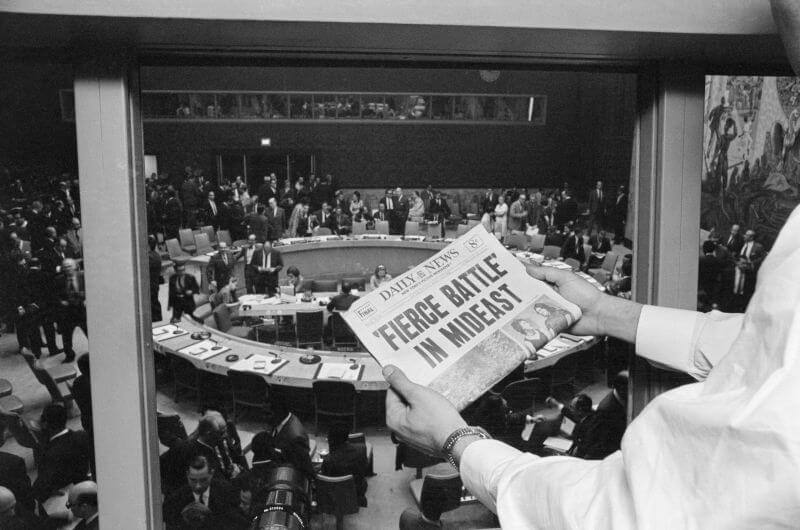
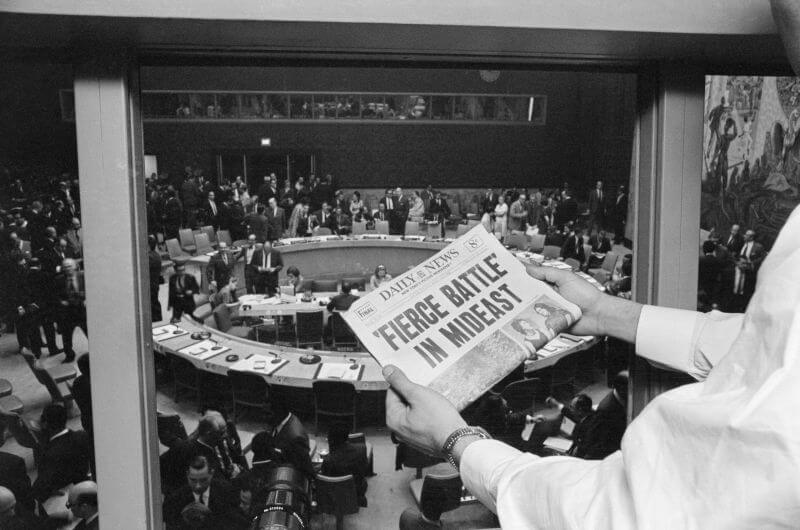
Tensions had been rising between Israel and its Arab neighbours in the years preceding the Six-Day War in June 1967 as a result of unresolved territory disputes, political rivalry, and ideological disagreements. Arab governments, bound by their denial of Israel’s existence, have fought Israel in several wars since the state’s founding in 1948, notably the 1948 Arab-Israeli War and the 1956 Suez Crisis. Resolved issues arose from these conflicts, especially those about the status of the Gaza Strip, the West Bank, and East Jerusalem, all of which Israel had occupied in the 1948 war. Propagandising pan-Arabism and anti-colonialism, Arab nationalist leaders such as Egyptian President Gamal Abdel Nasser attempted to contest Israel’s existence and recover lost territory while presenting themselves as defenders of the Palestinian cause. Early in the 1960s, Prime Minister Levi Eshkol and others stepped up their military build-up and rhetoric against Israel. However, when Egypt drove out UN peacekeeping forces from the Sinai Peninsula, blocked Israeli shipping via the Straits of Tiran, and gathered soldiers at its border with Israel, creating the possibility of an impending attack, tensions escalated to a breaking point in May 1967. These aggressive actions ultimately led to the launch of hostilities on June 5, 1967, which marked the start of the Six-Day War, along with bellicose language and reciprocal provocations.
Calls for ceasefires began to surface as hostilities decreased, and the UN Security Council quickly met to discuss ways to end the conflict. The region’s intricate geopolitical dynamics and the warring groups’ deeply ingrained animosity made mediating ceasefires more difficult. Despite these obstacles, diplomatic channels continued to function, with powerful nations like the US and the USSR conducting covert diplomacy and secret talks to end hostilities.
The Six-Day War’s immediate aftermath showed how urgently coordinated international measures are needed to resolve the conflict’s underlying causes and further Middle East peace.
Origins and Drafting of UN Resolution 242
The aftermath of the Six-Day War in June 1967 sparked extensive diplomatic deliberations that led to the creation and wording of UN Security Council Resolution 242. As hostilities decreased, the world community realised how urgently a diplomatic framework was needed to address the root causes of the conflict and open the door to long-term peace in the Middle East. Major powers, the United States and the Soviet Union launched significant diplomatic initiatives, which helped shape the resolution’s goals and phrasing. Important diplomats from other nations, such as British Ambassador Lord Caradon and UN Secretary-General U Thant, who were instrumental in the resolution’s development and promotion, supported diplomatic efforts. Despite having different goals and agendas, regional players such as Israel, Arab nations, and Palestinian delegates all had an impact on the negotiating process.
To balance the interests and concerns of all parties involved, extensive negotiations were held during the drafting of Resolution 242, with particular attention to the Israeli forces’ withdrawal from occupied territories, the recognition of the sovereignty and territorial integrity of all states in the region, and the necessity of a just and lasting peace settlement. After several discussions, changes, and compromises, Resolution 242 was finally adopted as a historic diplomatic victory, setting the stage for future peace talks and diplomatic attempts to end the Arab-Israeli conflict.
Key Provisions of Resolution 242
Several significant clauses in UN Security Council Resolution 242, approved on November 22, 1967, are intended to address the intricacies of the Arab-Israeli conflict and advance a comprehensive peace settlement in the Middle East. The demand that Israeli military personnel leave areas they captured during the Six-Day War is one of Resolution 242’s main points. Notably, the agreement leaves open negotiations regarding the precise borders from which Israel should withdraw. This ambiguity is a reflection of the political compromise required to win over the Security Council members and take into account Israel’s and its Arab neighbours’ divergent territorial claims. In addition, Resolution 242 highlights the necessity of respecting the sovereignty and territorial integrity of all states in the region, including Israel, Egypt, Jordan, and Syria, as well as the idea that “acquiring territory by war” is unacceptable. This clause affirms states’ rights to live within safe and acknowledged borders while also working to protect the fundamentals of international law and deter future violence and expansionism.
Resolution 242 further emphasises the importance of sincere talks that result in a fair and long-lasting peace agreement in the Middle East. It showcases how crucial it is to resolve the underlying grievances and security concerns of all parties concerned and how important it is to create amicable conditions for peace that protect the rights and interests of all parties.
Overall, Resolution 242’s main points emphasise the need for a negotiated settlement, territorial integrity, and sovereignty as cornerstones of regional peace and stability. This approach to resolving the intricacies of the Arab-Israeli issue is balanced.
Legacy and Ongoing Relevance of Resolution 242
Resolution 242 of the UN Security Council has a significant and enduring significance since it was a driving force behind diplomatic efforts to end the Arab-Israeli conflict and further Middle East peace. Resolution 242 has been a pillar of international diplomacy since 1967. It offers a framework for peace initiatives and describes a comprehensive settlement. Its tenets—which continue to direct and shape peace efforts in the region—call for the evacuation of Israeli forces from occupied lands, respect for the sovereignty and territorial integrity of all states in the area, and the necessity of a just and long-lasting peace settlement.
Resolution 242 has been cited in many later peace initiatives, talks, and agreements—such as the Camp David Accords, the Oslo Accords, and the Arab Peace Initiative—and shows how important and influential it is in the peace process. Despite the obstacles and disappointments faced during the process, Resolution 242 continues to be a ray of hope for Middle East peace, representing the values of mutual respect, compromise, and negotiation as the means of ending one of the longest-running conflicts in modern history. Resolution 242 will probably continue to function as a framework and point of reference for peace negotiations and the Arab-Israeli peace process, reminding all parties of the common objective of establishing fair and sustainable peace in the area.
Conclusion
In conclusion, Resolution 242 of the UN Security Council is evidence of the international community’s dedication to a diplomatic settlement of the Arab-Israeli issue. Resolution 242, drafted in the aftermath of the Six-Day War, provides a framework for talks and actions meant to bring about a comprehensive settlement to the war. It captures the aspirations of all parties for peace, justice, and stability in the Middle East. Resolution 242 is a beacon of hope for peace campaigners, legislators, and diplomats throughout its history. It has influenced diplomatic initiatives, agreements, and peace discussions, ending decades of violence and division in the region.
Considering Resolution 242’s history and continued applicability, the discussion around the Arab-Israeli conflict is shaped by its tenets and provisions. The demands made in 1967 regarding the evacuation of Israeli soldiers from occupied areas, the affirmation of sovereignty and territorial integrity, and the necessity of a fair and durable peace agreement are still pertinent today. Resolution 242, which embodies the concepts of compromise, negotiation, and mutual respect as the road to a better future for all peoples in the area, continues to symbolise hope for peace in the Middle East despite the obstacles and setbacks met along the route.
It is evident in the future that everyone engaged in the process will need to maintain their commitment, tenacity, and cooperation for peace in the Middle East. Although Resolution 242 offers a foundation for peace and is challenging to execute, it necessitates fresh diplomatic efforts, steps to boost confidence, and community-based programmes to promote trust and reconciliation.
Author’s Bio
Tarana Dutta is a 2nd year B.A, (hons.) Global Affairs student at O, P, Jindal Global University. Most of her work revolves around North East Asia, with a special emphasis on the Korean Peninsula. She further dabbles in research surrounding West Asia political thought.
Image Source: https://honestreporting.com/wp-content/uploads/2021/01/UNSC-Six-Day-War.jpg
 NICKELED AND DIMED