
By Ishita Sethi
Abstract
The abrogation of Article 370, which granted special status to Jammu and Kashmir within the Indian Constitution, marked a significant political and constitutional shift. This research paper delves into the historical background, legal implications, and aftermath of Article 370’s revocation. Examining key historical events, judicial decisions, and the human rights landscape post-2019, the article analyses the political complexities, landmark cases, and the J&K Reorganisation Act. The literature review encompasses insights from notable works, providing a comprehensive understanding of the intricate dynamics surrounding Article 370. The research critically assesses the constitutionality of the decision, the impact on state autonomy, and the long-term political and constitutional ramifications. The conclusion emphasises the need for careful interpretation amidst constitutional criticism and highlights potential challenges to constitutional legitimacy.
Introduction
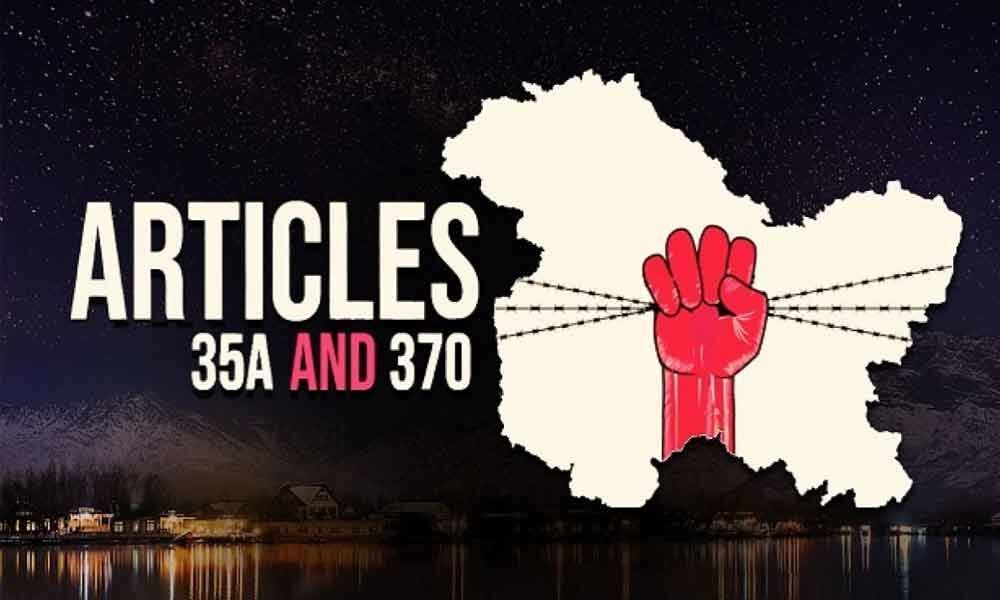
Article 370—which is now found in Part XXI of the Constitution—was abrogated from Article 306A earlier. Maintained by the Constituent Assembly, it bestowed Kashmir a special status that limited the power of the federal government and permitted its own constitution and flag.
Article 35A, which strengthened regional authority, defined Kashmir’s position as a permanent resident in conjunction with Article 370. Using Article 370, the government removed Kashmir’s special status on August 5, 2019. Specifically, the 1957 Constituent Assembly dissolution presented a problem strategically resolved by a presidential order. This action paved the way for revolutionary constitutional adjustments that resulted in Kashmir’s absorption into India’s constitution and the revocation of its own constitution.
This research explores the historical background, legal ramifications, and aftermath of Article 370’s abrogation. It examines significant historical occurrences, judicial decisions, and the effects on human rights following the August 2019 ruling. Political complications, landmark cases, and the J&K Reorganisation Act are evaluated. The conclusion emphasises the need for careful interpretation in the face of political and constitutional criticism.
Literature Review
Throughout the process of creating this study on the Abrogation of Article 370, a wide range of academic sources, including books, journals, and articles, have been carefully examined. The combined knowledge of these texts greatly expands our comprehension of the complex issues underlying Article 370.
“Scrapping of Article 370 and the Manifestation of the Hindu State,” a thorough analysis by Omair Farooq Khan, stands out as a particularly noteworthy contribution. It skillfully depicts the government’s action as a calculated move towards defining Indians’ collective identity while also admitting the associated loss of some rights guaranteed by the constitution. The Human Rights Watch study “Human Rights Crisis in Kashmir,” a crucial resource that explores the long-running confrontation between Indian security forces and the Muslim population in Jammu and Kashmir since the 1980s, adds depth to our investigation. The difficulties that the Hindu minority in the area faces are fascinatingly highlighted in this booklet.
With his insightful piece “The Untold Story,” Maj. Gen. Sheru Thapliyal greatly expands our historical understanding of piece 370 and its profound effects on the people of Jammu and Kashmir as well as India. Taking a more pragmatic stance, Ayjaz Wani’s work, “Life in Kashmir after Article 370,” is notable for its empirical methodology, which is based on firsthand information and critical analysis. This research offers insightful information on the challenges that Kashmiris have been encountering at the local level since the repeal of Article 370.
Lastly, the provocative essay “Seeking Legality for the Illegitimate,” by Amitabh Hoskote and Vishakha A. Hoskote, deepens our understanding of Jammu and Kashmir by delving into the complex political nuances underlying Article 370.
While the initial intent behind Article 370 was to safeguard the identity and culture of the people of Jammu and Kashmir, an unintended consequence emerged as power became disproportionately concentrated in the hands of a select few, hampering the achievement of the intended outcomes. Separatist sentiments emerged throughout the state as a result of this imbalance, which made matters worse. The combined knowledge from these sources enhance our understanding of the intricate dynamics surrounding Article 370 and its ramifications.
History
Pakistan became independent on August 14, 1947, and India on August 15, 1947. Princely nations might choose to become independent or join Pakistan or India. Princely states were integrated into India under the leadership of Jawaharlal Nehru, Lord Mountbatten, V.P. Menon, and Sardar Vallabhai Patel. Thirteen states joined Pakistan, whereas 552 joined India out of 565. Of them, 549 nations and India signed the Instrument of Accession (IoA). Later, Hyderabad and Junagagarh became part of India, but Jammu and Kashmir (J&K) stayed a distinct state.
While the Maharaja was Hindu, the bulk of people in J&K were Muslims. In an effort to preserve J&K’s independence, the Maharaja inked a standstill agreement with Pakistan and India. But the military takeover of Kashmir by Pakistan in October 1947 forced the Maharaja to turn to India for support. J&K and India signed an IoA on October 26, 1947, ceding defence, communications, and external affairs to the Indian government. The conditions could not be changed without the Maharaja’s consent, according to clause 5. Clause 7 upheld his right to interact with the Indian government in accordance with any upcoming constitution.
India started looking for a solution on January 1, 1948, as a result of the 1947 Indo-Pakistan War. In 1951, the Security Council Resolution asked India to reduce its soldiers and recommended Pakistan to withdraw from J&K. The Line of Control (LOC) was created in 1949 as a line of truce by the Karachi Agreement.
All state officials were invited to contribute their views throughout the constitution-writing process in India. But only Jammu and Kashmir (J&K) contended that the state’s application of constitutional provisions must be consistent with the original Instrument of Accession. Dr Ambedkar disagreed with Sheikh Abdullah’s strong autonomy. N. Gopal Swami Ayyangar eventually pushed for and introduced Article 306A, which subsequently became Article 370, to meet the special conditions of J&K.
Delhi Agreement Took Place in 1952 to Discuss Center-State Relationships
The Delhi Agreement put into effect a number of significant clauses, one of which gave the Indian government the right to declare a national emergency in the event of foreign aggression—state legislatures still had this ability in the case of domestic threats. Jammu and Kashmir were granted fundamental rights, and the Supreme Court’s jurisdiction was enlarged to include the area. The authority to commute a death sentence belonged to the President of India. Furthermore, the President of India would appoint the Sadar-i-Riyasat, the Head of State, based on a recommendation by the State Legislature.
Before Abrogation of Article 370
The 1950 land reforms, violence by organisations like the Jammu Kashmir Liberation Front (JKLF), and attacks by Islamist rebels were some of the reasons for the 1990 “exodus day” when a large number of Kashmiri Pandits left the Kashmir Valley. Hindus were compelled to flee after being targeted by terrorists, leading to a large-scale exodus. Hit lists went viral, and there was a blackout demanding that Kashmiri Hindus be exterminated. A great deal was lost as a result of this relocation, including livelihoods, houses, and employment.
Following this, there was significant police brutality and allegations of human rights violations by the Indian army and Parliamentary forces in January 1990 as the government stepped up its campaign on rebels. There was proof of militant involvement in rape, but there were no investigations. Article 370 and 35A have been abused, depriving individuals of their rights. The refusal of Jammu and Kashmir to enact regulations that would have extended the application of the 73rd and 74th amendments prevented women from serving in Panchayats.
Moreover, Section 6 of the J&K Constitution, which created the notion of permanent residents, was violated when Sikh and Hindu minorities who fled from Pakistan in 1947 were denied state citizenship. More than 60,000 refugees were impacted by this, losing their access to state universities, voting rights, and citizenship.
After the abrogation of Article 370
In addition to imposing a virtual lockdown in the Kashmir Valley, the unilateral withdrawal of Article 370 on August 5, 2019, disregarded popular consent and mandates. Notable political leaders like Farooq Abdullah, Omar Abdullah, Mehbooba Mufti, Shah Faesal, and Ravinder Sharma were among the thousands of people detained as a result of this sudden action, along with elected officials, employees of the government, attorneys, activists, business owners, and students.
These mass arrests, which are frequently conducted in violation of the strict J&K Public Safety Act, have raised many concerns since they jeopardise social justice norms and fundamental rights. Suitably, the Supreme Court has referred to these detentions as a “lawless law,” emphasising the necessity for investigation and evaluation. The widespread limitations imposed on communication, such as the cessation of internet connectivity, resulted in an even greater restriction on residents’ freedom of speech and expression.
There are severe humanitarian concerns as a large number of individuals lack access to essential amenities including food, water, shelter, and energy as a result of this extraordinary scenario. Extended confinement of someone without accusation or trial is blatantly against human rights norms and necessitates constitutional remedies. Given India’s dedication to the preservation, defence, and protection of human rights, resolving these constitutional and humanitarian issues is essential to ensuring justice for the people of Jammu and Kashmir.
Judiciary and its Initiative on Jammu and Kashmir
Prem Nath Kaul v. State of Jammu and Kashmir is one of the earliest and significant lawsuits under Article 370. The Honourable Supreme Court stressed in this historic ruling that the Constituent Assembly has the authority granted by Article 370 to decide how the State would identify itself with India. The court noted that both the President and the Parliament continued to exercise their authority over the interim provisions of Article 370(1), subject to specific restrictions and the Constituent Assembly’s final approval on pertinent issues.
The Supreme Court emphasised the significance of maintaining the self-determination and sovereignty of the State in Jammu and Kashmir v. Mubarik Shah Naqshbandi (1971), reiterating that its status will not change. The constitutional relationship that exists between the citizens of the remainder of the country and the inhabitants of Jammu and Kashmir was made clear in large part by Article 35(A). It declared unequivocally that the people of Jammu and Kashmir will preserve their independence and unassailable constitution.
The 1968 Sampath v. State of Jammu and Kashmir case served as more evidence of the importance of Article 370. The Supreme Court ruled that this provision should stay in effect, highlighting that it was originally intended to provide the president the authority to use his discretion when interpreting the constitution. Comprehension of the complexities and ramifications of Article 370 within the context of the constitution requires a solid comprehension of these legal precedents.
The J&K Reorganization Act of 2019
The State of Jammu and Kashmir may be reorganised in accordance with the terms of the Jammu and Kashmir Reorganisation Act. This legislation resulted in the state’s division into two separate Union territories, Jammu and Kashmir and Ladakh. This is the inaugural occasion that an Indian state has been split into two Union territories. In accordance with the Act, the governance of Jammu and Kashmir would follow the structure given in Article 239A, which was first designed for the Union Territory of Puducherry. All subjects on the state list are subject to legislation by the legislative assembly, with the notable exceptions of “public order” and “police.”
The Act assigns the Lieutenant Governor the responsibility of designating a Council of Ministers to assist in carrying out the functions under the Legislative Assembly’s purview, including the Chief Minister’s function. The Lieutenant Governor has the right to establish laws with the same force as those passed by the legislative assembly, as well as the capacity to act independently in specific situations. These rules represent a major reorganisation of the region’s legal and administrative framework subsequent to its division into Union territories.
Political and Constitutional Complications
In the beginning, Article 370 was intended to be a weapon to protect the people’s concerns about their identity and culture. It sought to guarantee the people’s right to self-governance, autonomy, and influence over their own destiny. The primary inquiry pertaining to the revocation of Article 370 concerns its constitutionality and political justifications. Whether the Legislative Assembly’s agreement is the same as a presidential order is a key question.
If Jammu and Kashmir does not have a revitalised constitutional assembly, then “Governor’s rule” is a workable option. But there are doubts about this alternative’s practicality. Excesses have distinguished the executive’s participation in rescinding Article 370. Decisions in a democratic system need to reflect the preferences of the people, who are best represented by an elected legislative assembly.
Although it is considered important for security, detaining political leaders creates procedural holes in the decision-making process. There was room for improvement in the democratic process. The decision’s justifiability is questionable; one area of disagreement is whether Article 370’s use of the word “special” is constitutional.
With Jammu and Kashmir being a border state, changing the region’s name is a delicate topic that was decided upon without the people’s permission or mandate, and their elected representatives were not consulted. A careful balance is suggested when interpreting the terms “temporary” and “transitional” in relation to “special” in the clause. The abrogation was carried out with insufficient care and prudence, as demonstrated by the incarceration of political leaders.
The democratic spirit requires choices to be made via common understanding, yet the abrogation did not include a Legislative Assembly agreement. This divergence from democratic standards casts doubt on the decision’s legitimacy.
The interpretation of Article 370 Clause 3, which allows the president to declare some articles inoperative, raises concerns regarding its applicability to special provisions. The employment of interpretation restrictions in Article 367(4) to render Article 370 ineffective raises constitutional problems.
Fundamentally, the revocation of Article 370 entails complex constitutional and political factors, bringing to light concerns about the lack of popular agreement, the application of interpretive clauses, the conflation of a Presidential proclamation with the Legislative Assembly, and the utilisation of unclear procedures. Due to the subsequent state of law and order, which resulted in detentions, there were worries that the restriction of free speech and expression was being caused by slow internet access. Whether an interpretive phrase may arbitrarily take the place of a constitutional provision is still a major legal dispute.
Conclusion
Though deemed prudent for maintaining national unity, the politically calculated choice to repeal Article 370 is subject to constitutional examination. Although this is a bold political step, questions are raised over the constitutionality of the process. The decision, which has been criticised for undermining state autonomy, has a substantial influence on Jammu and Kashmir’s federal features and aims to resolve the long-standing Kashmir dispute. Preventive detention has come under fire for possibly stifling dissent. Though politically justified, the decision’s legitimacy is called into doubt both domestically and internationally, and its constitutionality is disputed. It’s important to note that other states may not follow Article 370’s abrogation as a general rule. Political and constitutional objectives are at odds with the way the execution is carried out, which might have long-term negative effects on constitutional legitimacy and political ramifications.
___________________________________________________________________________
Authored by Ishita Sethi, a third-year student pursuing B. Com. LL.B. (Hons.) from Jindal Global Law School
Introduction
Article 370—which is now found in Part XXI of the Constitution—was abrogated from Article 306A earlier. Maintained by the Constituent Assembly, it bestowed Kashmir a special status that limited the power of the federal government and permitted its own constitution and flag.
Article 35A, which strengthened regional authority, defined Kashmir’s position as a permanent resident in conjunction with Article 370. Using Article 370, the government removed Kashmir’s special status on August 5, 2019. Specifically, the 1957 Constituent Assembly dissolution presented a problem strategically resolved by a presidential order. This action paved the way for revolutionary constitutional adjustments that resulted in Kashmir’s absorption into India’s constitution and the revocation of its own constitution.
This research explores the historical background, legal ramifications, and aftermath of Article 370’s abrogation. It examines significant historical occurrences, judicial decisions, and the effects on human rights following the August 2019 ruling. Political complications, landmark cases, and the J&K Reorganisation Act are evaluated. The conclusion emphasises the need for careful interpretation in the face of political and constitutional criticism.
Literature Review
Throughout the process of creating this study on the Abrogation of Article 370, a wide range of academic sources, including books, journals, and articles, have been carefully examined. The combined knowledge of these texts greatly expands our comprehension of the complex issues underlying Article 370.
“Scrapping of Article 370 and the Manifestation of the Hindu State,” a thorough analysis by Omair Farooq Khan, stands out as a particularly noteworthy contribution. It skillfully depicts the government’s action as a calculated move towards defining Indians’ collective identity while also admitting the associated loss of some rights guaranteed by the constitution. The Human Rights Watch study “Human Rights Crisis in Kashmir,” a crucial resource that explores the long-running confrontation between Indian security forces and the Muslim population in Jammu and Kashmir since the 1980s, adds depth to our investigation. The difficulties that the Hindu minority in the area faces are fascinatingly highlighted in this booklet.
With his insightful piece “The Untold Story,” Maj. Gen. Sheru Thapliyal greatly expands our historical understanding of piece 370 and its profound effects on the people of Jammu and Kashmir as well as India. Taking a more pragmatic stance, Ayjaz Wani’s work, “Life in Kashmir after Article 370,” is notable for its empirical methodology, which is based on firsthand information and critical analysis. This research offers insightful information on the challenges that Kashmiris have been encountering at the local level since the repeal of Article 370.
Lastly, the provocative essay “Seeking Legality for the Illegitimate,” by Amitabh Hoskote and Vishakha A. Hoskote, deepens our understanding of Jammu and Kashmir by delving into the complex political nuances underlying Article 370.
While the initial intent behind Article 370 was to safeguard the identity and culture of the people of Jammu and Kashmir, an unintended consequence emerged as power became disproportionately concentrated in the hands of a select few, hampering the achievement of the intended outcomes. Separatist sentiments emerged throughout the state as a result of this imbalance, which made matters worse. The combined knowledge from these sources enhance our understanding of the intricate dynamics surrounding Article 370 and its ramifications.
History
Pakistan became independent on August 14, 1947, and India on August 15, 1947. Princely nations might choose to become independent or join Pakistan or India. Princely states were integrated into India under the leadership of Jawaharlal Nehru, Lord Mountbatten, V.P. Menon, and Sardar Vallabhai Patel. Thirteen states joined Pakistan, whereas 552 joined India out of 565. Of them, 549 nations and India signed the Instrument of Accession (IoA). Later, Hyderabad and Junagagarh became part of India, but Jammu and Kashmir (J&K) stayed a distinct state.
While the Maharaja was Hindu, the bulk of people in J&K were Muslims. In an effort to preserve J&K’s independence, the Maharaja inked a standstill agreement with Pakistan and India. But the military takeover of Kashmir by Pakistan in October 1947 forced the Maharaja to turn to India for support. J&K and India signed an IoA on October 26, 1947, ceding defence, communications, and external affairs to the Indian government. The conditions could not be changed without the Maharaja’s consent, according to clause 5. Clause 7 upheld his right to interact with the Indian government in accordance with any upcoming constitution.
India started looking for a solution on January 1, 1948, as a result of the 1947 Indo-Pakistan War. In 1951, the Security Council Resolution asked India to reduce its soldiers and recommended Pakistan to withdraw from J&K. The Line of Control (LOC) was created in 1949 as a line of truce by the Karachi Agreement.
All state officials were invited to contribute their views throughout the constitution-writing process in India. But only Jammu and Kashmir (J&K) contended that the state’s application of constitutional provisions must be consistent with the original Instrument of Accession. Dr Ambedkar disagreed with Sheikh Abdullah’s strong autonomy. N. Gopal Swami Ayyangar eventually pushed for and introduced Article 306A, which subsequently became Article 370, to meet the special conditions of J&K.
Delhi Agreement Took Place in 1952 to Discuss Center-State Relationships
The Delhi Agreement put into effect a number of significant clauses, one of which gave the Indian government the right to declare a national emergency in the event of foreign aggression—state legislatures still had this ability in the case of domestic threats. Jammu and Kashmir were granted fundamental rights, and the Supreme Court’s jurisdiction was enlarged to include the area. The authority to commute a death sentence belonged to the President of India. Furthermore, the President of India would appoint the Sadar-i-Riyasat, the Head of State, based on a recommendation by the State Legislature.
Before Abrogation of Article 370
The 1950 land reforms, violence by organisations like the Jammu Kashmir Liberation Front (JKLF), and attacks by Islamist rebels were some of the reasons for the 1990 “exodus day” when a large number of Kashmiri Pandits left the Kashmir Valley. Hindus were compelled to flee after being targeted by terrorists, leading to a large-scale exodus. Hit lists went viral, and there was a blackout demanding that Kashmiri Hindus be exterminated. A great deal was lost as a result of this relocation, including livelihoods, houses, and employment.
Following this, there was significant police brutality and allegations of human rights violations by the Indian army and Parliamentary forces in January 1990 as the government stepped up its campaign on rebels. There was proof of militant involvement in rape, but there were no investigations. Article 370 and 35A have been abused, depriving individuals of their rights. The refusal of Jammu and Kashmir to enact regulations that would have extended the application of the 73rd and 74th amendments prevented women from serving in Panchayats.
Moreover, Section 6 of the J&K Constitution, which created the notion of permanent residents, was violated when Sikh and Hindu minorities who fled from Pakistan in 1947 were denied state citizenship. More than 60,000 refugees were impacted by this, losing their access to state universities, voting rights, and citizenship.
After the abrogation of Article 370
In addition to imposing a virtual lockdown in the Kashmir Valley, the unilateral withdrawal of Article 370 on August 5, 2019, disregarded popular consent and mandates. Notable political leaders like Farooq Abdullah, Omar Abdullah, Mehbooba Mufti, Shah Faesal, and Ravinder Sharma were among the thousands of people detained as a result of this sudden action, along with elected officials, employees of the government, attorneys, activists, business owners, and students.
These mass arrests, which are frequently conducted in violation of the strict J&K Public Safety Act, have raised many concerns since they jeopardise social justice norms and fundamental rights. Suitably, the Supreme Court has referred to these detentions as a “lawless law,” emphasising the necessity for investigation and evaluation. The widespread limitations imposed on communication, such as the cessation of internet connectivity, resulted in an even greater restriction on residents’ freedom of speech and expression.
There are severe humanitarian concerns as a large number of individuals lack access to essential amenities including food, water, shelter, and energy as a result of this extraordinary scenario. Extended confinement of someone without accusation or trial is blatantly against human rights norms and necessitates constitutional remedies. Given India’s dedication to the preservation, defence, and protection of human rights, resolving these constitutional and humanitarian issues is essential to ensuring justice for the people of Jammu and Kashmir.
Judiciary and its Initiative on Jammu and Kashmir
Prem Nath Kaul v. State of Jammu and Kashmir is one of the earliest and significant lawsuits under Article 370. The Honourable Supreme Court stressed in this historic ruling that the Constituent Assembly has the authority granted by Article 370 to decide how the State would identify itself with India. The court noted that both the President and the Parliament continued to exercise their authority over the interim provisions of Article 370(1), subject to specific restrictions and the Constituent Assembly’s final approval on pertinent issues.
The Supreme Court emphasised the significance of maintaining the self-determination and sovereignty of the State in Jammu and Kashmir v. Mubarik Shah Naqshbandi (1971), reiterating that its status will not change. The constitutional relationship that exists between the citizens of the remainder of the country and the inhabitants of Jammu and Kashmir was made clear in large part by Article 35(A). It declared unequivocally that the people of Jammu and Kashmir will preserve their independence and unassailable constitution.
The 1968 Sampath v. State of Jammu and Kashmir case served as more evidence of the importance of Article 370. The Supreme Court ruled that this provision should stay in effect, highlighting that it was originally intended to provide the president the authority to use his discretion when interpreting the constitution. Comprehension of the complexities and ramifications of Article 370 within the context of the constitution requires a solid comprehension of these legal precedents.
The J&K Reorganization Act of 2019
The State of Jammu and Kashmir may be reorganised in accordance with the terms of the Jammu and Kashmir Reorganisation Act. This legislation resulted in the state’s division into two separate Union territories, Jammu and Kashmir and Ladakh. This is the inaugural occasion that an Indian state has been split into two Union territories. In accordance with the Act, the governance of Jammu and Kashmir would follow the structure given in Article 239A, which was first designed for the Union Territory of Puducherry. All subjects on the state list are subject to legislation by the legislative assembly, with the notable exceptions of “public order” and “police.”
The Act assigns the Lieutenant Governor the responsibility of designating a Council of Ministers to assist in carrying out the functions under the Legislative Assembly’s purview, including the Chief Minister’s function. The Lieutenant Governor has the right to establish laws with the same force as those passed by the legislative assembly, as well as the capacity to act independently in specific situations. These rules represent a major reorganisation of the region’s legal and administrative framework subsequent to its division into Union territories.
Political and Constitutional Complications
In the beginning, Article 370 was intended to be a weapon to protect the people’s concerns about their identity and culture. It sought to guarantee the people’s right to self-governance, autonomy, and influence over their own destiny. The primary inquiry pertaining to the revocation of Article 370 concerns its constitutionality and political justifications. Whether the Legislative Assembly’s agreement is the same as a presidential order is a key question.
If Jammu and Kashmir does not have a revitalised constitutional assembly, then “Governor’s rule” is a workable option. But there are doubts about this alternative’s practicality. Excesses have distinguished the executive’s participation in rescinding Article 370. Decisions in a democratic system need to reflect the preferences of the people, who are best represented by an elected legislative assembly.
Although it is considered important for security, detaining political leaders creates procedural holes in the decision-making process. There was room for improvement in the democratic process. The decision’s justifiability is questionable; one area of disagreement is whether Article 370’s use of the word “special” is constitutional.
With Jammu and Kashmir being a border state, changing the region’s name is a delicate topic that was decided upon without the people’s permission or mandate, and their elected representatives were not consulted. A careful balance is suggested when interpreting the terms “temporary” and “transitional” in relation to “special” in the clause. The abrogation was carried out with insufficient care and prudence, as demonstrated by the incarceration of political leaders.
The democratic spirit requires choices to be made via common understanding, yet the abrogation did not include a Legislative Assembly agreement. This divergence from democratic standards casts doubt on the decision’s legitimacy.
The interpretation of Article 370 Clause 3, which allows the president to declare some articles inoperative, raises concerns regarding its applicability to special provisions. The employment of interpretation restrictions in Article 367(4) to render Article 370 ineffective raises constitutional problems.
Fundamentally, the revocation of Article 370 entails complex constitutional and political factors, bringing to light concerns about the lack of popular agreement, the application of interpretive clauses, the conflation of a Presidential proclamation with the Legislative Assembly, and the utilisation of unclear procedures. Due to the subsequent state of law and order, which resulted in detentions, there were worries that the restriction of free speech and expression was being caused by slow internet access. Whether an interpretive phrase may arbitrarily take the place of a constitutional provision is still a major legal dispute.
Conclusion
Though deemed prudent for maintaining national unity, the politically calculated choice to repeal Article 370 is subject to constitutional examination. Although this is a bold political step, questions are raised over the constitutionality of the process. The decision, which has been criticised for undermining state autonomy, has a substantial influence on Jammu and Kashmir’s federal features and aims to resolve the long-standing Kashmir dispute. Preventive detention has come under fire for possibly stifling dissent. Though politically justified, the decision’s legitimacy is called into doubt both domestically and internationally, and its constitutionality is disputed. It’s important to note that other states may not follow Article 370’s abrogation as a general rule. Political and constitutional objectives are at odds with the way the execution is carried out, which might have long-term negative effects on constitutional legitimacy and political ramifications.
Author’s Bio
Ishita Sethi is a third-year student pursuing B. Com. LL.B. (Hons.) from Jindal Global Law School
Image Source: https://www.thehansindia.com/hans/opinion/news-analysis/abrogation-of-article-370-a-masterstroke-554731
 NICKELED AND DIMED