
By Savya Atrey
Abstract
Cinema and culture engage in a dynamic symbiotic relationship, with films mirroring and shaping social norms, values, and aesthetics, while simultaneously being influenced by the cultural zeitgeist. Throughout history, this dynamic has evolved, witnessing the rise and fall of dominant styles, the integration of technological advancements, and the emergence of diverse voices from around the globe. Filmmakers have served as both reflectors and shapers of culture, challenging societal conventions, sparking conversations about critical issues, and fostering understanding between cultures. As technology democratizes filmmaking and global audiences diversify, the future of cinema promises a vibrant tapestry of voices and perspectives, further enriching the complex interplay between film and culture. Taking a closer look at the fascinating journey of Bollywood, this article reveals how Hindi cinema has transformed from its formulaic roots to a more layered and realistic art form in the modern era.
Introduction
Bollywood or the Hindi film industry, stands as a captivating example of how cultural influences mould and shape the visual language of cinema. This vibrant industry, a confluence of Indian traditional theatre, Western cinematic styles, and contemporary trends, has honed a distinct and captivating visual identity. The bedrock of Bollywood lies in the rich tapestry of Indian traditions. Through its intricate fusion of cultural influences, Bollywood has developed a visual language that is both familiar and unique. The vibrant colours, ornate costumes, and extravagant sets evoke a sense of spectacle and grandeur. The exaggerated acting and melodramatic plotlines resonate with the emotions and sensibilities of Indian audiences. This distinct visual style instantly identifies as a Bollywood film, setting it apart from other cinematic traditions. Beyond the entertainment value, Indian cinema often serves as a mirror to Indian society, reflecting its cultural values, social issues, and aspirations. Through its narratives, it delves into themes of love, family, honour, and societal expectations in India. This social and cultural engagement further strengthens the connection between film and its audiences.
Indian cinema has undergone a significant metamorphosis in its portrayal of social issues and character dynamics. Early films presented a sanitized view of society, adhering to stringent moral codes, portraying simplistic narratives, and relying heavily on archetypal characters, devoid of internal conflict or psychological depth. Such narratives, while perhaps reflective of the prevailing social attitudes of the time, failed to engage in critical examination or challenge these deeply ingrained norms. However, contemporary Indian cinema has embarked on a path towards nuanced and complex storytelling, marked by a critical engagement with previously accepted social norms which manifests in several ways. This article aims to elucidate this transformation through the lens of critical analysis, tracing the evolution of Indian cinema’s social commentary.
Classical Hindi Cinema
Early narrative cinema often presented women through a male-centric lens, perpetuating gender stereotypes and reinforcing conservative ideologies. Muscularity and physical aggression were associated with masculinity and valorized, while women were often objectified and confined to specific roles. This portrayal effectively positioned women as subordinate to men, suggesting they lacked the capacity for independence or respectability outside of male control. The late 20th century witnessed the rise of globalisation, accompanied by a shift towards a free-market ideology. This transition, however, further entrenched patriarchal structures as women were primarily viewed through the lens of the nation as a family unit. This paradigm confined women to domestic and motherly roles, reinforcing their dependence on men for social validation and identity. While some portrayals acknowledged the cultural importance of traditional Indian customs, any deviation towards modernization was often associated with negativity. Women who embraced modern clothing or lifestyles were frequently portrayed as arrogant and disrespectful, further reinforcing the ideal of a submissive and culturally bound woman. Indian classical cinema also rarely featured women as protagonists, focusing instead on male-centred narratives. A notable exception is the film “Mother India,” which captures the quintessential female identity of the period. It celebrates women as pillars of strength and showcases various aspects of their lives and struggles within Indian social contexts, but ultimately shows her as the mother of sacrifice as well.
Many classical Bollywood films seemed to be heavily influenced by Gandhian ideals, perpetuating a problematic dichotomy between passive, suffering virtue and outspoken rebellion. The “ideal” character, often a woman, embodied stoic resilience and silent endurance in the face of injustice, equating their suffering with moral purity. Conversely, the rebellious character, often perceived as too vocal or assertive, was demonized as a threat to social order and traditional values; case in point, Seeta Aur Geeta. This portrayal reinforces a deeply problematic notion of “goodness” as synonymous with passivity and acceptance of power structures, particularly for women who were expected to conform to patriarchal norms, particularly in olden times.
Contemporary Bollywood
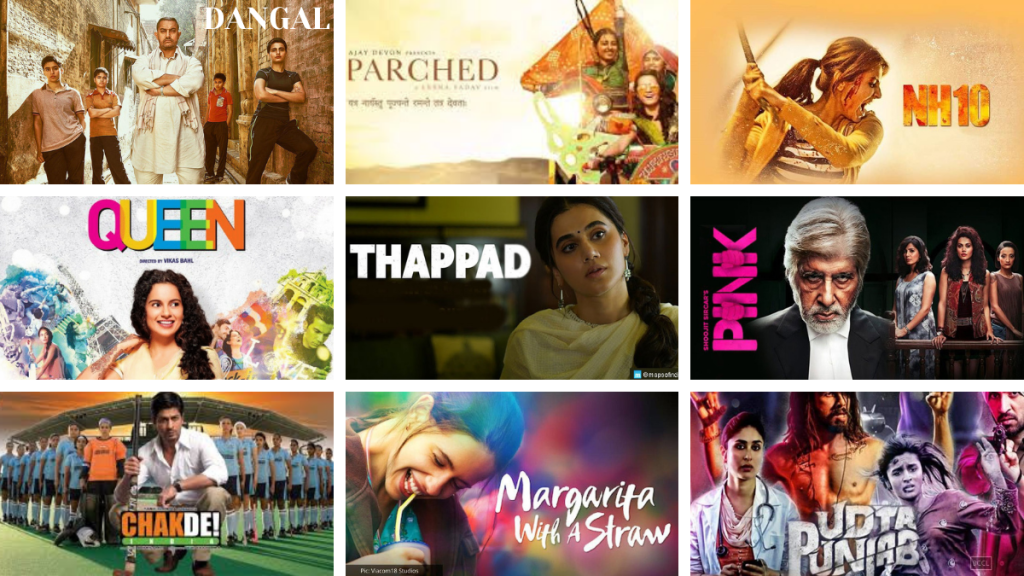
As India urbanized and societal norms evolved, Bollywood films reflected these changes. Audiences became more receptive to characters with conflicting desires, motivations, and internal struggles. The rise of Indian migration has significantly impacted contemporary Bollywood, pushing filmmakers to cater to a wider, global market. This has led to the emergence of “Diasporic Bollywood” films, a distinct category that offers unique opportunities to explore and potentially challenge traditional patriarchal structures within a transnational context. Despite the persistence of archaic power structures within the Indian film industry, mirroring societal realities, the increasing presence of female directors, producers, and writers is driving a shift towards a cinematic landscape that compels difficult conversations and amplifies the female perspective. Films like Highway, Lipstick Under My Burkha, Margarita With A Straw, and Queen exemplify this trend, venturing into unexplored narrative territories within mainstream media.
As India’s modernization unfolded, conversations about mental health gradually gained traction, and Bollywood films began to reflect this shift. Movies like Taare Zameen Par, Park Avenue, Barfi!, and Karthik Calling Karthik explored complex themes of dyslexia, schizophrenia, autism, and dissociative identity disorder. This cinematic engagement with previously stigmatized and unspoken issues contributed significantly to the rising awareness of mental health in a nation where such diagnoses were once shrouded in silence and neglect.
Historically relegated to comedic stereotypes in Hindi cinema, LGBTQ+ characters experienced a shift in positive portrayal following the landmark repeal of Article 377. Films like Shubh Mangal Zyada Saavdhan and Ek Ladki Ko Dekha Toh Aisa Laga served as crucial catalysts, opening doors for more nuanced and respectful representation of LGBTQ+ experiences within mainstream Bollywood narratives. Their success ushered in a wave of LGBTQ+-themed films, enriching India’s cinematic landscape with diverse and authentic narratives that celebrate visible queer characters and identities.
Conclusion
The influence of culture on cinema is a dynamic interplay that shapes the narratives, characters, and themes portrayed on the silver screen. In the case of Bollywood, this connection is particularly pronounced, as the industry is deeply rooted in the diverse cultural tapestry of India. Over the years, Bollywood has not only mirrored societal changes, but has also played a crucial role in influencing cultural norms and perceptions. The evolution towards morally grey characters in Bollywood films is not just a cinematic trend but also a reflection of the changing societal ethos. As cultural attitudes become more nuanced and open to shades of grey, cinema serves as a mirror that reflects these complexities. The acceptance of morally ambiguous characters in mainstream films indicates a willingness among audiences to engage with narratives that do not adhere to conventional black-and-white morality. This shift is indicative of a maturing cinematic landscape that acknowledges the intricacies of the human experience.
While navigating this intricate dance between cultural evolution and cinematic influence, the industry must remain vigilant against perpetuating regressive narratives or harmful stereotypes. The power of cinema to shape perceptions is immense, and with this power comes the duty to engage critically with both its advancements and pitfalls. Bollywood’s success hinges on embracing diversity. Collaborating with a mosaic of voices – cultural, social, and demographic – becomes crucial in this context. By actively seeking input from a variety of cultural, social, and demographic backgrounds, Indian cinema can ensure a more authentic representation of the complexities within society that resonate beyond borders. Bollywood’s global platform offers a unique opportunity to share its cultural tapestry, shaping a future where films challenge narratives, spark discussions, and bring underrepresented realities to the big screen.
Author’s Bio
Savya Atrey is a third-year student at Jindal School of Government and Public Policy at O.P. Jindal Global University pursuing BA (Hons.) Economics.
Image Source: https://girlupfiza.wordpress.com/2020/11/01/women-in-contemporary-bollywood-an-inspiration/
 NICKELED AND DIMED