
By Aarushi Suvarna
Abstract
This is part 2 of the article on Criminal Justice reforms in India. Part 2 of the article explores the multifaceted landscape of police accountability measures in India. It outlines both internal and external accountability mechanisms, including the roles of state institutions, public bodies, and independent agencies. Recent developments, judicial oversight, and legal challenges are discussed, shedding light on the complexities of implementing accountability reforms.
Since the establishment of the National Police Commission (NPC) in 1977, independent India has been on the search for police accountability reforms. The effectiveness of these measures is heavily reliant on the police’s functional autonomy and independence from political demands.
The internal accountability system contains laws and procedures established in the Indian Police Act of 1861, as well as different state police statutes and manuals. Internal accountability powers are granted to officials with the rank of superintendent of police (SP) and above under the Indian Police Act of 1861. If they discover that their subordinates have been negligent or unsuitable, they have the authority to fire, suspend, or demote the subordinate after conducting an investigation. However, because of the process-oriented complications and time needed, these procedures fall short of holding officers accountable due to perceived reputational damage; they are also seen as fruitless in a qualitative research study on police use of force and encounter deaths. The external system, on the other hand, includes accountability to state institutions (judiciary and executive), public institutions (civilian bodies, non-governmental organizations, media, and so on), and independent bodies (national or international grievance redressal bodies such as human rights commissions). Although they are envisioned as diametrically opposed to internal systems and so more independent, their usefulness in India is uncertain.
The quest for independent accountability mechanisms in India gathered traction during the Second Administrative Reforms (SAR), reaching a tipping point with the Supreme Court’s decision in Prakash Singh v Union of India (2006). This historic decision prompted the creation of the Model Police Act, 2006 (MPA), which attempted to reform the country’s policing protocols. The formation of Police Complaints Authorities (PCA) was a critical component of this reform. These powers were created to address concerns of accountability within the police force. The PCA was given authority at the state level to examine complaints about significant concerns such as custodial deaths, incidents of grievous harm, and rape charges involving police officials with the rank of Superintendent of Police (SP) or higher. PCAs were assigned to handle complaints against extortion, land or house snatching, and abuse of authority at the district level, especially for officers up to the rank of Deputy Superintendent of Police (DSP).
The improper application of Joginder Kumar v. State of UP (1994) and D K Basu v State of West Bengal (1997), a case that establishes a crucial accountability structure evidence of lack of accountability. The decision established 11 procedural protections against the rising number of human rights abuses committed while a person is being held. These included, among other things, writing down the clear identification of the officer making the arrest, creating a memorandum of arrest with the date and time, signed by a witness, and allowing the detainee to inform a family member, friend, or relative of their arrest, getting a medical checkup every 48 hours from an on-site doctor, and noting both major and minor injuries before detention. Implementing the decisions is all that is required. The ruling in Paramvir Singh Saini v. Baljit Singh by the Supreme Court in December 2020 is an important development. In all Indian police stations, CCTV cameras must be installed by law. The station house officer is responsible for doing adequate upkeep on these cameras. Posters in several languages must also alert the public to the existence of CCTV, their right to file a complaint with a human rights commission, and their ability to see CCTV footage in the event of a human rights infringement. Transparency, accountability, and the defense of human rights in law enforcement are all improved by this choice.
Consistently, the Indian Supreme Court has denounced police brutality, torture, and extrajudicial murders. Famous instances like Om Prakash v. State of Jharkhand (2012) highlighted the importance of accusers going on trial instead of using extrajudicial force. The court reaffirmed the harm that extrajudicial executions do to both human rights and the reputation of the police in PUCL v. State of Maharashtra and Ors. (2014). The SC issued 16 guidelines for the police during encounter deaths including essentially the registration of FIRs for deaths caused by police firearms, mandating magisterial probes, notifying NHRC/SHRC, informing the next of kin, surrendering officer’s weapon for formal forensic and ballistic analysis and so on.
2020 research by the Commonwealth Human Rights Initiative, on the other hand, indicated a mixed picture of compliance with these accountability requirements. Only one of the 28 states was judged to be totally compliant, while the other 23 were considered non-compliant and four were marginally compliant. Despite the advanced legislative structure outlined in the Model Police Act, the CrPC, and so on., the guidelines issued by the Supreme Court through various cases, illustrate the persistent difficulty in implementing and guaranteeing effective police accountability procedures across India. In the country’s quest for a just and transparent law enforcement system, the requirement for thorough and consistent accountability remains a significant concern.
India has had a troubled history with excessive police force ever since it won freedom from British domination in 1947. During India’s Emergency in the late 1970s, force was employed against political dissidents as well as to thwart separatist activities in Punjab, Kashmir, and Northeast India. Today, force is frequently carelessly used to disperse non-violent mass gatherings and peaceful demonstrators after police were accused of using excessive force to disperse left-wing radicals in the so-called “red corridor,” in the west of the country, in recent years.
Critics assert that Indian laws, some of which support or even promote police aggression, are the root of the issue. For instance, in conflict-ridden regions like the territory of Jammu and Kashmir, anti-terror legislation or special laws permit the use of violence to get information or uphold order. Although the Indian Evidence Act prohibits confessions in court, police are legally permitted to utilize admissions of guilt to start the recovery of stolen items, a result that is sometimes seen as equivalent to a conviction.
There are 158 police officers for every 100,000 people in India’s exhausted police force. Because of a shortage of personnel, insufficient investment in contemporary investigation techniques, and political pressure to obtain results, tortured confessions are sometimes the quickest, or only, option to settle crimes – even if they come at a lethal cost.
Strengthening the police force will cut down on occurrences of violence in detention facilities. Only 1.3% of the nation’s $18.9 billion police budget is allocated for training employees in the 2018–2019 fiscal year, while only 1.8% is allocated for modernization projects like building forensic science labs and new equipment. It is popularly believed that ‘less political control over the police would allow good officers to change the culture as the pressure from politicians was the biggest hindrance to investigations.
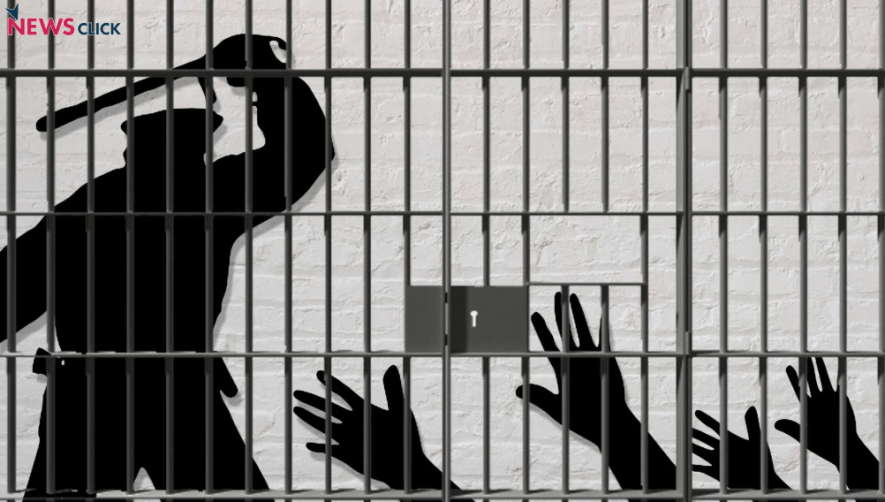
The NCAT study details a horrifying range of torture tactics, some of which have ended in death: hitting with a baton, hammering nails into the body, and spreading chilli powder in private regions. These occurrences are seldom reported in the national news. “No one cares. “People are numb to it, and many may even support it“. Torture is expressly prohibited in India, although it occurs often at police stations. There’s even a term for it: third-degree interrogation. Interrogation in the first degree is difficult. Physical assault in the second degree includes slapping and beating with sticks. Third-degree questioning entails physical torture.
Beating on the soles with sticks and dangling a guy from a bar like an animal corpse being spit-roasted were criticized as harsh practices that might lead to legal difficulties. Cops favored the ‘roller treatment,’ which involved placing a smooth wooden roller over the thighs of a prostate victim. Then two officers stood on the roller while it moved forth and backward, which was brutally uncomfortable yet did not leave any marks. In his book Curfewed Night, Kashmiri novelist Basharat Peer tells horrible instances of this type of torture.
India signed the UN Convention against Torture and Other Cruel, Inhuman and Degrading Treatment or Punishment. Still, it never ratified it as the prerequisites were that there had to be domestic anti-torture law. This, however, has not been passed by parliament as yet. “Torture” or even “Custodial Torture” are missing in the definition, even from the IPC. Nevertheless, Indian activists feel such a law might result in improved inquiry procedures and accountability.
India’s courts have attempted to remedy the situation via various rulings over the years by providing national and state human rights commissioners – quasi-judicial entities established to look into accusations of human rights breaches, including police torture – more authority. However, as several instances of torture demonstrate, police often find methods to avoid being held accountable. For example, surveillance cameras may malfunction, or torture may take place outside of their field of vision; magistrates may fail to check the accused for injuries and instead rely on police claims; and post-mortem reports may be altered. When the local police officers who are implicated provide the only information for the NHRC’s investigations, it loses all authority. With poor conviction rates and a police force that is not hesitant to use violence, victims of torture frequently decline to prosecute the police.
The Indian legal system has made remarkable attempts to rein in police misconduct, defend human rights, and foster a feeling of confidence and justice among its inhabitants, supported by historic decisions and progressive legislation. The road to thorough change, however, is still paved with difficulties. The necessity for ongoing attention and action is highlighted by implementation flaws, citizen ignorance of their rights, and sporadic cases of non-compliance with court orders. Policymakers, law enforcement organizations, and the court must navigate the ongoing issues of finding a balance between effective law enforcement and protecting individual freedoms.
Any change must address the “systemic problems afflicting the police and criminal justice system and the stresses it places on a policeman” in order to be successful. It becomes clear that improving police transparency and accountability in India is not only a moral requirement but also a legal one. It is a duty that must be shared by the government, civic society, and the general populace. The goal of a just, compassionate, and responsible criminal justice system is attainable, but it takes steadfast dedication, constant communication, and a common understanding of what constitutes justice for all.
Author’s Bio
Aarushi Suvarna is a third-year law student at Jindal Global Law School. Her areas of interest include Constitutional Law and Public International Law and has a keen interest in understanding the intersectionality of law, politics, and society.
Image Source: https://www.newsclick.in/Katihar-Death-The-Never-Ending-Saga-Custodial-Violence
 NICKELED AND DIMED