
By Shreya Agarwal
Abstract
Green trade forms an important component of Sustainable Development. However, in the recent past, the developed world has been implementing many unilateral trade protectionist policies under the guise of promoting “green growth”. The motive behind such policies is to provide a competitive advantage to domestic manufacturers over their global counterparts. Such policies then take the shape of a trade war, where countries compete to develop and protect new-age technologies for their competitive gain. While this may boost the country’s output in the short-run, it ultimately fails in the long run owing to the interdependence of countries in global supply chains and consumption. The article argues that such policies go against the core tenets of sustainable development which calls for equitable growth of all nations.
Introduction–
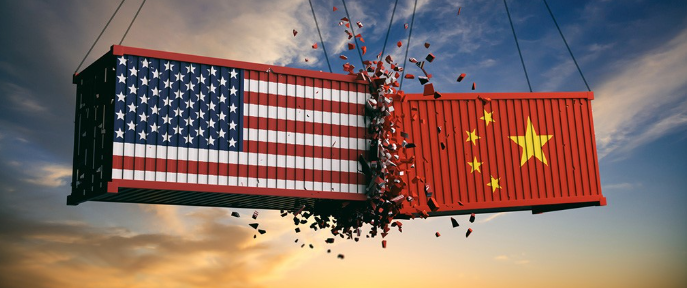
Trade, especially global trade, has proven to be a remarkable engine of economic growth and development. International trade gave rise to the concept of specialisation- where countries could specialise in a particular area to serve a particular market while buying those products from the international market which it itself cannot produce efficiently. This essentially came to be known as globalisation. However, recent events of pervading global implications like the coronavirus pandemic and Russian-Ukraine War led to the disruption of global supply chains and put a dent on the existing production and consumption patterns across the world. Such events, along with rising tensions between US and China have instigated a new trend in the international trade regime- the policy of trade protectionism, mainly drawn from a renewed interest of nations towards de-globalisation. What is interesting to note is how the concept of “green economy” is tied to this trend. Many countries like the United States of America, have launched various trade protectionist measures under the ambit of pursuing “green growth”. However, it is not too difficult a task to figure out the actual intent behind such policies.
Sustainable Development and Green Economy
Sustainable Development, as defined in the Brundtland Report is development that meets the needs of the present without compromising the ability of future generations to meet their own needs. It includes three main pillars of: 1) economic growth, 2) social equity, and 3) environmental protection which are now; also known as the triple bottom line of profits, people and planet by the UN’s Bruntland Commission in 1987. Sustainable trade in that respect, can be defined as being an agent in the international trading system in a manner that is consistent with the long term global goals of economic growth, environmental protection, and strengthening social capital. Green economy is an important concept within the broad framework of sustainable development. A green economy is defined as low carbon, resource efficient and socially inclusive; one which works towards reducing carbon emissions and prevents the loss of biodiversity through targeted public expenditure and policy reforms.
The Need for a Green Economy
The most obvious explanation is that without sustainable growth policies in place, the economic gains will diminish, while the social and environmental costs will become intolerable. However, from a broader economic perspective, it has become important for countries, especially developing nations to push domestic policies towards green growth as most multilateral development agencies like World Bank are now closely evaluating the sustainability of a country’s trade policies when deciding on critical aid packages and other forms of assistance or capacity building.
Trade Protectionism and Green Development
Most trade protectionist policies being followed by the developed nations are a result
of hyper globalisation and its associated negative effects like overdependence on global supply chains and shifting of manufacturing firms from high income countries to overseas. The cost of labour is cheap in low income countries , thus domestic manufacturing firms in developed countries often shift their production to low income countries to save on labour and other operational costs. This results in decreased domestic output of developed countries and also triggers job loss. Additionally, recent global events like stress on supply chains during the COVID-19 pandemic, China’s assertive trade policy, and the Russian aggression in Ukraine underlined the need to reassess the conventional trading policies to better suit domestic interests of the developed nations.
However, a recent trend has come to light where developed nations are using the argument of “green growth” to further their own trade interests and to increase their soft power as pioneers of new-age green development consisting of growth of new technologies. Policies like subsidies for consumers while buying domestically- manufactured or assembled environmental friendly goods are being introduced. Subsidies are also being given out to overseas firms if they agree to relocate to the given country- to boost domestic production and create more jobs in this sector. Additionally, tariffs, which is another powerful tool of trade protectionism, are being used by developed nations to impose a levy on carbon-intensive products from countries who do not have a price on carbon. For example, in March this year, India considered imposing retaliatory tariffs in response to the European Union’s Carbon Border Adjustment Mechanism (CBAM) policy which is being introduced by the EU to levy a carbon tax on iron, steel, and aluminum exports to the EU. The CBAM policy could potentially disrupt over $8 billion worth of Indian metal exports to the EU.
Recent Trade Protectionist Policies
Biden’s initiatives, like the CHIPS and Inflation Reduction Act include generous subsidy schemes to companies who manufacture in the US or build infrastructure using materials from the US. These measures are perceived by the rest of the developed world as incentives for their local multinational companies to relocate part of their production in the US in order to take advantage of these subsidies. The Creating Helpful Incentives to Produce Semiconductors and Science Act of 2022 (CHIPS) is designed to boost US competitiveness by catalyzing investments in domestic semiconductor manufacturing capacity. Spurred by the passage of the CHIPS Act, companies have announced nearly $50 billion in additional investments in American semiconductor manufacturing. Such laws serve the purpose of giving leverage to the US in the ongoing trade battle over advanced chip technology with China. These high-end chips are the critical components for the technology of the future—such as self-driving cars, artificial intelligence and EV chargers. Currently, The US wants to prevent China from buying these high-level microchips and from producing them locally. Thus policies which encourage domestic production and place restrictions on export make it difficult for other countries to gain access to such technologies.
Following suit with the rest of the world, India recently imposed restrictions on imports of laptops and PCs. The key ideology behind the move was to distinguish between liberalisation of free markets and liberalisation of imports. The restriction hopes to boost domestic manufacturing capabilities and address import imbalances with China.
Criticism of Trade Protectionism
Such policies have been criticised by the ministers of large emerging economies who have described them as discriminatory and against the principles of “common but differentiated responsibility”- a UN term meaning that developed countries, which are historically responsible for causing the climate crisis, should do more to address it than developing ones. Such policies ignore the fact that globally, different countries are developing at different rates, and hence, such policies would have the harshest impact on economies that are still, very carbon-dependent and struggling from the economic fallout of covid 19.
Trade protectionist tariffs and subsidies also deepen global inequalities. If firms start relocating their manufacturing to rich countries, it hurts developing nations’ economies through decreased export revenues or foreign investment. Charmi Mehta, a consultant with the Indian think tank Finance Research Group, raised concerns that such an import carbon levy would disadvantage Indian steel and iron-makers, damaging the economy and making it harder for the sector to transition away from fossil fuels. Moreover, developing countries need to access green technology and investments to grow along the rest of the world. Some developed countries have been providing companies with major subsidies for the research and development
(R&D) of environmentally sound technologies. Thus, relocation again puts developing countries at a disadvantage, especially since they lack the financial resources to match the developed
countries’ subsidies.
IMF chief Kristalina Georgieva at the G20 summit meeting in March stated that,“such green policies need to be carefully designed to avoid wasteful spending or trade tensions, and to make sure that technology is shared with the developing world”.
The Case for Multilateralism
Multilateralism has been up till now more efficient in dealing with climate change because it reduces the cost of the transition to carbon-neutral technologies through coordinated regulatory alignment and industrial specialization. For example, If countries open their EV markets instead of imposing import restrictions, their citizens will buy cheaper EVs from the most efficient producers. At least, this was the most significant argument put forth till now in favour of multilateralism- of developing efficient global supply chains. Even during the pandemic, within the European Union, patients from the countries facing more COVID cases were sent to the countries with less stressed healthcare systems, reinforcing the overall resilience of European healthcare systems faster and at less cost.
Conclusion
Unilateral trade protectionist policies cannot survive in the long run. It is not possible for countries to follow protectionism in the world which has become so heavily interdependent on each other. Ultimately, it is the developing countries that get the most negatively affected in the trade wars of the developed world. It can be argued that protectionism is one approach to boost development, it is definitely not the most efficient or equitable one. The international community will soon have to address the misuse of such policies under the guise of promoting ‘green development’.
Author’s Bio
Shreya Agarwal is a second-year undergraduate student at Ashoka University pursuing a major in Economics. Her interests lie in economics, finance and public policy- and the intersection among these domains.
Image Source: https://knowledge.wharton.upenn.edu/podcast/knowledge-at-wharton-podcast/u-s-china-tariffs/
 NICKELED AND DIMED