
By Rohit Muthiah
Abstract
Sovereign Wealth Funds (hereinafter called as “SWFS”) are highly private and tightly controlled investment funds of sovereign countries. The high-profile 1MDB scandal shed light on the dubious functioning of SWFS. In this article, I seek to explain the role of Sovereign Wealth Funds and the importance of regulating them.
Few would think of the laidback, palm-fringed Southeast Asian nation of Malaysia as being at the center of an international scandal. Malaysia is generally known for its image as a well-to-do, middle-income economy that capitalized on the Asian economic boom. It was only in 2018 that it was revealed how its newly established sovereign wealth fund, 1MDB, was used to swindle the country of billions of dollars that crippled its economy. Former British PM Gordon Brown called it the ‘theft of the century’. Nearly $4 billion of public money was siphoned off from the fund, with the prime minister himself receiving $700 million to his personal bank accounts.
The mastermind behind the infamous 1MDB scandal was Jho Low. Having attended the elite Harrow School and Wharton, Low was on a first-name basis with everyone from cash-rich Middle Eastern royalty to the who’s who of global finance and politics. Despite his short and seemingly non-existent track record, Low leveraged his extensive network of contacts and managed to convince the then-Malaysian Prime Minister, Najib Razak, to create a new sovereign wealth fund supposedly meant for the country’s economic development. However, the newly created fund was run not by professionals, but completely under the direction of Low, however he desired. In just a matter of years, Jho Low emerged as a global mover and shaker who seemed to have endless access to cash. Referred to as the ‘whale’ for his flamboyance, Low spent on everything from financing Hollywood movies like “Wolf of Wall Street”, to multi-million dollar yachts and Picasso paintings. Little did anyone know at that time, that all of this was money looted from the Malaysian taxpayer.
How did Jho Low come up with such a scheme and what was his inspiration? It was none other than the glitzy sovereign wealth funds of the Middle East, which controlled large swathes of money and wielded enormous power.
Sovereign Wealth Funds (SWFs) are state-owned investment funds that invest their money in global financial markets and large corporations, such as to ensure the country of diversified long-term returns, which is in turn used for domestic development. SWFs have existed since the 1950s but have only become increasingly prominent post the 2008 financial crisis, when SWFs acted as market stabilizers injecting liquidity into troubled financial institutions. Nowadays, sovereign wealth funds are the largest sources of private equity money and have become one of the largest and fastest-growing institutional investor groups worldwide.
SWFs can typically be divided into two kinds. One type of SWF is that of commodity and oil exporting countries, which look to diversify their revenues through the fund. This includes all the Middle Eastern countries. The other type of SWF is that of countries that have large fiscal and trade surpluses, such as Singapore.
Sovereign Wealth Funds currently control assets totaling around 8 trillion dollars. Of this, about $5.4 trillion is funded by countries with oil and gas exports, or in other words the Middle Eastern SWFs. For context, this is more money than the GDP of most countries bar China and the US.
That is a staggering amount of money at the disposal of a concentrated few with possible
political motives and must be treated with caution. If politicians and people with influence over the fund manage to exert pressure over its independent operations, SWFs can legitimately be disguised as supporting domestic development when in reality it is used to deepen the pockets of themselves and their cronies. The case of 1MDB serves as a classic example of how such funds can be used to aid crony capitalism and kleptocracy.
Several SWFs have also often come under the spotlight for corrupt practices. Even Norway’s pension fund which is known for its stringent anti-corruption guidelines was implicated in a Russian corruption case. Singapore’s Keppel Inc. had also admitted to paying bribes to secure overseas businesses. Singapore and Norway are said to run the most credible and transparent sovereign wealth funds. If they themselves are involved in murky deals, what about the less transparent ones?
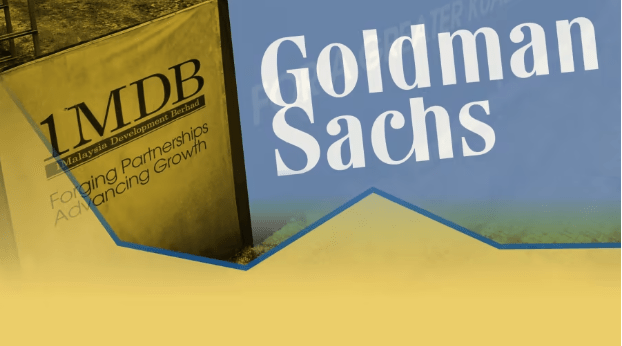
However, it is also important to note that it is not only the role of SWFs that is to be questioned. An expansive system of global financial behemoths, from JP Morgan to Goldman Sachs, facilitate whatever transactions SWFs make and they are to be equally blamed for this colossal scale of corruption. Even in the case of 1MDB, Goldman Sachs helped raise and structure a series of bond deals, which 1MDB then used in dubious ways. Goldman made hundreds of millions on advising the 1MDB bond deal. Matt Levin, a former Goldman employee, notes that “such a fee rate was a bit high for just underwriting sovereign-linked bonds but pretty normal for underwriting crime”. Goldman Sachs was eventually indicted for corrupt practices and settled with the Malaysian government agreeing to pay about $3 billion back.
Sovereign wealth funds sit at the intersection of high finance and high politics. These funds have become immensely intertwined with the global economy, having invested in everything and everywhere, from the busiest of airports to the most popular football clubs. As such it is imperative that proper regulatory frameworks are implemented and safeguarding measures are enforced. The 1MDB saga serves as a cautionary tale of what would happen otherwise. It became an international talking point so big that it led to the toppling of the ruling government which had been in power for 60 years. The prime minister was sentenced to 12 years imprisonment on fraud and embezzlement charges. Jho Low remains an international fugitive sought after by multiple law enforcement agencies.
Author’s Bio
Rohit Muthiah is a second-year student at Ashoka University, pursuing a degree in Economics and Finance.
Image Source: https://www.ft.com/content/8f33b9a0-e671-11e8-8a85-04b8afea6ea3
 NICKELED AND DIMED