
By Tejas Vir Singh
Abstract
The queer movement in India has gathered steam over the last decade, and made great strides in fighting for the recognition of queer people and to grant them rights; however, a hurdle they face is the lack of awareness amongst society and an unwillingness to accept them. Through popular culture in India, especially mainstream Bollywood movies, there has been some representation of the community on-screen. However, it tends to cater to stereotypes. Using Immanuel Kant’s idea of an ‘Enlightened Age’, the article seeks to discuss whether such representation is helping society become more ‘enlightened’ about the queer community.
Enlightenment and Queerness
Immanuel Kant, in his essay, What is Enlightenment, talks about what Enlightenment is; of ‘man being free to think for himself in the public domain without any restriction from despotic institutions such as the clergy or monarchy.’ He presents the argument that mankind is currently in a period of self-realisation; thus, an age of enlightenment. However, not everyone has had this self-realisation, nor has anyone attained complete self-realisation, for some restrictions still exist today when it comes to the limits of an individual’s right to think with reason. The reference to Frederick the Great of Prussia in his essay reminds the author not only of the emperor’s sexuality (with him being known to have male lovers in his teenage years), but also by and large, the LGBTQ+ movement.
LGBTQ+, which stands for Lesbian, Gay, Bisexual, Transgender and Queer, also simplified into the umbrella term ‘queer’, is a term to refer to such identities which fall outside the heteronormative and gender binary which has been imposed upon the society by despotic institutions which only allows people to obey this without questioning it. Largely, right-wing Hindu groups have been the most vocal against the community, claiming that such relations are immoral, usually citing the Manusmriti; despite the amount of information that is known about the existence of queerness in the subcontinent especially in the pre-colonial times. It should be noted that the current narrow-mindedness of Indian society has been shaped by British colonialism. Britain, under Empress Victoria, was infamously pro-abstinence; any reference or mention of the sexual act was avoided. This has led to the terming of ‘Victorian’ time thinking, of falling back on the thought of sex as highly taboo. Hoshang Merchant, in his book, Forbidden Sex/Texts, argues that Indians are now the ‘other Victorians’; our present society has embraced the Victorian thought from the colonial times and has made little effort to move on from it. In fact, the British themselves seem to have reached further ahead in this age of enlightenment of LGBTQ+ rights; the United Kingdom is seen as one of the most LGBTQ+ friendly countries in the world. Thus, the ‘despotic institution’ Kant mentions is in fact the tutelage left over from the colonial times; the British may have left India, but have left their Victorian thinking behind. This Victorian thought has now manifested itself in the ideas of right-wing nationalists, who now use that argument with great gusto to erase the identities of the queer community.
Legal Enlightenment?
After ascertaining the despotic institution, that is, narrow-minded Victorian thought, one can now analyse the process of enlightenment. In recent times, the queer movement in India has gathered steam and actively fights for their rights. The most notable example is of the reading down of Section 377 of the Indian Penal Code, which criminalized homosexual acts. This too, is a remnant of Victorian times. It was originally read down by the Delhi High Court in 2009, in the case Naz Foundation v. Govt. NCT of Delhi where consensual homosexual sex was decriminalized; however, this was reversed in Suresh Koushal and anr. v. Naz Foundation, only to be finally read down for good in the legendary Navtej Singh Johar v. Union of India case. Many have now been ‘enlightened’ that Section 377 went against the Fundamental Rights of the LGBTQ+, such as the Right to Equality, the Right against Discrimination on grounds of sex, the Right to Freedom and the Right to Life and Liberty. However, this is just the legal aspect. In terms of law and justice, the queer movement is making slow but steady progress while simultaneously fighting for more rights; the most significant of these being the right to marriage, which the central government has pushed back against, claiming it to be an ‘urban-elitist’ concept that has no place in Indian society. There is also the Transgender Persons (Protection of Rights) Bill, 2019, which goes against the right to self-identify, as set down by the legendary NALSA v. Union of India case, by providing for a ‘transgender certificate’ that also needs to be approved by the district magistrate, effectively not allowing transgenders to self-identify themselves.
Enlightenment or Stereotypes: Role of Mainstream Bollywood
It is also important to discuss popular culture, such as media that are regularly and widely consumed. The legal system may give the community rights, but the society in general needs to be accepting and welcoming to the queer community as well for a true ‘Enlightened Age.’ To an extent, the community has made a mark, but this has been quite recent, and unfortunately can steer into the stereotypical, especially in the Bollywood-dominated mainstream. An example from Bollywood that is popularly problematic, is Akshay Kumar’s Laxmii, which portrays him getting possessed by the ghost of a transgender person. The movie then follows a trajectory of continuously stereotyping the transgender community with Kumar acting feminine and him throwing a clap that is, in popular imagination, linked to the transgenders in India. It goes on to further present the transgender community as this alien and ‘other’ group; presenting the transgender act by Kumar as being done while being possessed by a ghost is the least effective way to enlighten the general public about an ostracized community. Dostana too, is a popular film that openly portrayed instances of homosexuality in Bollywood, yet, reduced it to two men pretending to be gay in a stereotypical way; something that would not have helped the psyche of 2008 India when it came to the portrayal of homosexuality.
On the other hand, we have Fire by Deepa Mehta, regarded as the first gay film in India that explores a lesbian relationship born out of two failed marriages, and thus allowing them to explore their sexualities. Ironically, the film that was done well when it came to representing the queer community faced backlash from the heteronormative world; cinemas were vandalized by people supporting the right-wing homophobia spread by the Shiv Sena. A more recent example of a film representing queer existences in India is Badhaai Do, which gives the viewer an insight into the life of two ordinary queer people that enter into a lavender marriage, a marriage of convenience to avoid stigma, to satisfy society’s heteronormative demands. However, its casting, like other movies mentioned before, of popular straight and cisgender actors raises questions as to why can’t actors that are part of the queer community be cast instead of mainstream actors. It is sobering to realise that even if the country is being ‘enlightened’ about the existence of the LGBTQ+ community, disillusions are simultaneously being spread by portraying the community as something for the enjoyment and entertainment of the heteronormative world; as long as the community acts in the stereotypical way assigned by the society, there are no problems. But, if they try to merge and mingle with the heteronormative and ‘normal’, instead of being a group that is the ‘other’, it is a problem.
Conclusion
The story of the queer community in India matches the argument by Kant; that it is the Age of Enlightenment; fellow countrymen are being sensitised about the queer community, with the help of legal and cultural elements, and shedding the ignorance left behind by the Victorians during the colonial time, and slowly accepting the community for who they are, after decades of repressing them. This is being done by not only law, where, for example, Indian homosexuals are no longer criminals in their own country but also a cultural element, cinema, where there is the portrayal and works that address the issues of the community while introducing their lifestyles to the heteronormative public. However, this is no Enlightened Age; homophobia and transphobia still run rampant in our society, transgressing on the dignity of the LGBTQ+ community. Our society propagates and feeds off destructive stereotyping, by only accepting the community if they fit their pre-made ideas and treating them as the ‘other’ on the sidelines of society, rather than accepting them for who they are, and as part of society. Indian society is still far from achieving an enlightened state of mind when it comes to the queer movement and existence.
Author’s Bio
Tejas Vir Singh is a second-year student at O.P. Jindal University currently pursuing a bachelor’s degree in law.
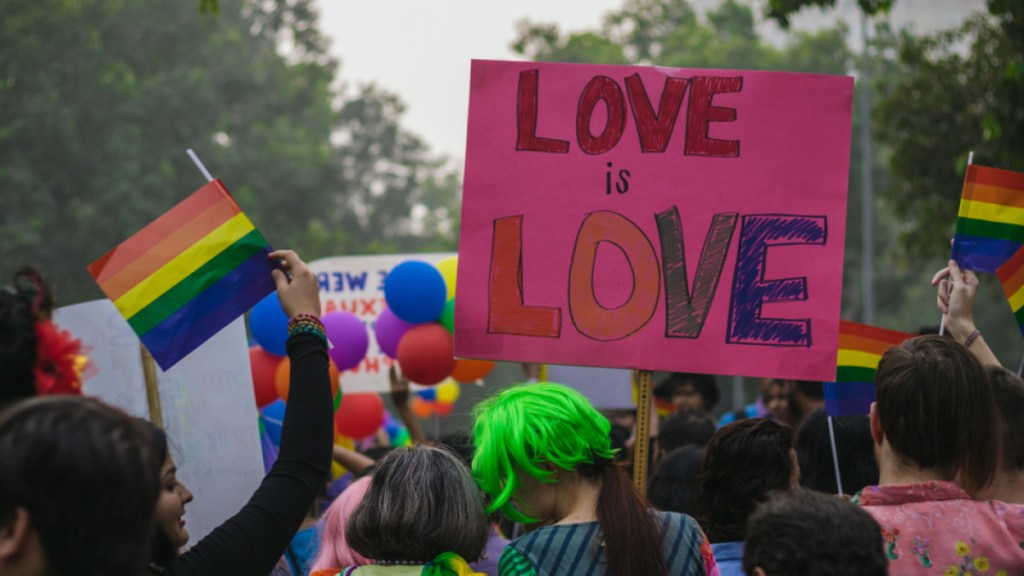
Image Source: https://www.travelandleisureasia.com/in/news/iconic-pride-parades-in-india/
 NICKELED AND DIMED