
By Anvita Sharma and Aditya Vaid
Abstract
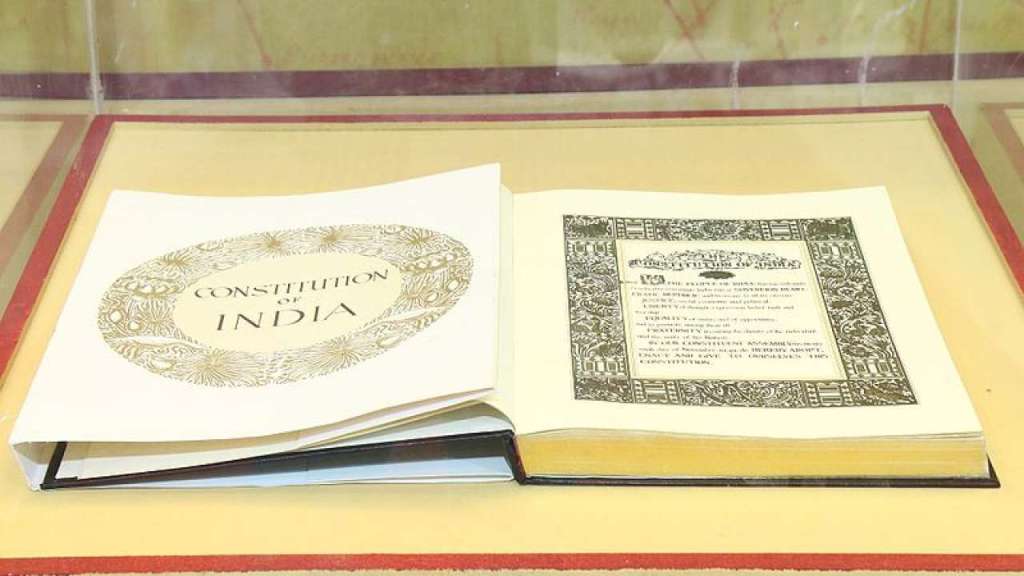
The principles of democracy and freedom are ones that are inherently mentioned in the preamble of the Constitution. The makers of the Constitution had enforced a duty on the three organs of the government to uphold the same and to institute change in the society in parallel with societal needs. Throughout the course of this article, the external concepts of democracy and independent judiciary have been kept in principle. It is delineated through various judicial pronouncements that the judiciary from time to time has gone beyond its interpretative role to uphold the fundamental rights of the citizens and to ensure a life of basic dignity. The article begins with the history and objective behind the separation of powers and then analyses whether they aim to realise the fundamental values of democracy.
History & Objective
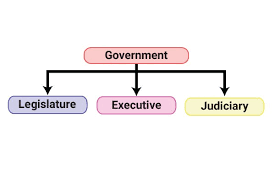
The precept behind the doctrine of separation of powers is to avoid the concentration of governmental authority in one body. A clear divide between the responsibilities guarantees the absence of autocracy in the democratic framework. The legislature enacts laws while the executive functions towards implementing these very laws, and the Judiciary safeguards the law. Historically, the doctrine of separation of powers originated in Greece, wherein it was Aristotle who classified the functions of the Government into three categories. However, in Aristotle’s analysis, the functions of these agencies were not sharply distinguished but varied and overlapped within themselves. In the 16th and 17th centuries, French philosopher John Bodin and British politician Locke further developed the theory of the division of powers, respectively. However, it was Montesquieu who through his book gave this doctrine a methodical formulation. He believed that liberty could not exist unless there was an absolute separation of powers. Meanwhile, Montesquieu advocated for a pure and rigid separation of powers between the triad, which ultimately formed the substructure for the American Constitution. In the Indian context, it was after Independence that this doctrine evolved. In the landmark case of Kesavananda Bharti v. Union of India, the doctrine of separation of powers is acknowledged as an integral part of the basic features of the constitution. The separation resulted in an efficient administration and protection of individual liberties.
In the Contemporary World
While the Constitution of India has laid down clear functions for each pillar of democracy wherein they act autonomously with minimal interference from others. In a recent case, the Bombay High Court ruled that the doctrine of separation of powers forms an integral part of the Constitution. By doing so, the judiciary has made a grave error by not recognizing the power of a harmonious governing organization rather than a conflicting trio. A member of the Constituent Assembly named Shri K. Hanumanthiya disagreed with the strict division of powers outlined in Article 40-A. Conflicts between the executive, judicial, and legislative branches of government are inevitable if we entirely separate them. Conflicts are fatal to the stability and advancement of any nation or government. Therefore, “harmony” rather than this triangular struggle is what is required in a governmental framework. If such a process is permitted to continue, the judiciary’s independence will eventually vanish completely. According to J.S. Mill, complete independence and isolation of the various government ministries would lead to frequent stalemates and overall inefficiency.
Moreover, separation of powers-based governments would be disjointed, discordant, and ineffective. One organ depends on the other for effective operation in real-world situations.
In contemporary times, state affairs may concern social, political, and economic issues, which imply a certain overlap between the trio to perform their respective functions efficiently. Through the landmark judgement of Bandhua Mukti Morcha v. Union of India the Supreme Court adopted the view that within its own sphere, the legislature may exercise judicial power, the executive may exercise legislative and judicial functions, and the judiciary may adopt a legislature character subject to certain limitations. Even as the leader of the executive branch, the president possesses the power to pass laws. For instance, while the parliament is not in session, the president may adopt an ordinance pursuant to Article 123, establishing the regulations in an emergency. In accordance with Article 103(1), the President of India also performs judicial duties. Judiciary also performs administrative actions while formulating the regulations as well as provides guidance for the subordinate courts. It is evident that while there are different functions assigned to each of them, there do exist special circumstances wherein functions overlap. This theory was clarified in the case of Indira Gandhi v. Raj Narain, wherein the court noted that the separation of powers under the Indian Constitution only applies in a broad sense. India’s constitution does not follow the same strict division of powers as the American Constitution. Evidently, in the 21st century, the doctrine of separation of powers has evolved from the ancient Greek meaning. It has progressed through various stages for India to adopt the current approach. In the case of Bhim Singh v Union of India and Ors, the Supreme Court criticized the doctrine of Separation of Powers and provided a more practical way forward. The Supreme Court took an intriguing stance on the idea, declaring that absolute separation of powers had no place in modern politics. Rather, separation of powers seeks to maximise the accountability of each instrument, and functional overlap does not violate the idea if constitutional accountability is maintained. This perspective is valid because it underlines the impracticality of the rigorous style of philosophy in the contemporary setting and is in line with current demands. The emergence of the field of administrative law necessitates a more harmonic integration of the activities of the instruments via administrative tribunals and delegated legislation in order to alleviate the burden on the State’s primary organs.
To put it simply, there exists a ‘sufficient’ difference between the three organs of parliamentary democracy in India. In Rai Sahib Ram Jawaya v. State of Punjab, the Hon’ble Court believed while the Indian constitution has not been absolutely rigid but the way the branches of the Government do not contemplate the assumption by one organ or part of the State of the functions that they essentially belong to another. The overlap does not in any way infringe upon the functions of one- another. Instead, it bridges the gap to ensure the smooth functioning of the government. In another recent example of an ego clash between the Judiciary and the Executive is the Supreme Court hearing on the urban homeless. The Supreme Court Judge, Madan B Lokur, publicly claimed that the Executive is attempting to deprive the Judiciary of its capacity to govern, using the term “the whip is broken.” Following the Law Minister’s comments, J. Lokur stated that the judiciary was “helpless.” Thus, strict implementation of the doctrine is undesirable. The way forward consists of a practical approach that is in touch with the felt necessities of time.
The doctrine of judicial separation adopted by India is a pathway toward achieving longstanding goals of equality, liberty, and fraternity. It is evident that while functional differences exist, all three organs share the goal of achieving the principles of democracy. The possibility of an overlap between the three branches during certain circumstances is in favour of the goal of a parliamentary system. Additionally, in present-day India, the doctrine of judicial review ensures a system of checks and balances which aids in maintaining the functional separation of powers. Both these doctrines go hand-in-hand to preserve the very spirit of the Indian Constitution. While the judiciary has been able to inject change into society to a certain level, it is important to acknowledge that there is still a long road ahead. India as a country is making huge strides on a global level, and the judiciary, as a guardian of the fundamental rights of the citizens, has to showcase the same level of progressiveness and change.It is delineated through various judicial pronouncements that the judiciary, from time to time, has gone beyond its interpretative role to uphold the fundamental rights of the citizens and to ensure a life of basic dignity.
Author’s Bio
Anvita Sharma and Aditya Vaid are undergraduate students at Jindal Global Law School
 NICKELED AND DIMED