
By Nakul Rai Khurana
Abstract
This article examines China’s recently enacted Law on Foreign Relations, which came into effect on July 1,2023. The law represents a significant step in President Xi Jinping’s consolidation of power, strengthening his control over foreign policy. It aims to safeguard China’s sovereignty, national security, and development interests since it is part of a larger string of initiatives by the Chinese parliament to help consolidate power.
Introduction
China’s National People’s Congress, the Communist Party’s legislative body, approved a fresh Law on Foreign Relations of the People’s Republic of China on June 28. This law became effective on July 1 and it aims to enhance President Xi Jinping’s authority over international relations amidst gripping tensions concerning its foreign policy. Since assuming incumbency in 2012, President Xi has steadily concentrated power in his domain, which has been heavily critiqued due to its authoritative nature.
The recently enacted law pertains to matters concerning foreign affairs and its primary objective, as outlined in its initial article, is to “protect China’s sovereignty, national security, and development interests”. The necessity for this legislation levitates towards the nonchalant argument that there are certain deficiencies in the existing legal framework related to Chinese foreign affairs. The legislation aims to accelerate the development of a comprehensive legal system for foreign affairs and enable China to effectively address the risks and challenges it may encounter.
It specifically calls for several key initiatives championed by Mr. Xi, such as the Belt and Road Initiative (BRI), the Global Development Initiative (GDI), and the Global Security Initiative (GSI). This development aligns with a larger political transformation occurring in China, which calls for speculation for the first time since the reform era (involving the de-collectivization of agriculture, the opening up of the country to foreign investment, and permission for entrepreneurs to start businesses in the 1970s), it has placed a greater emphasis on security rather than industrializing and enhancing developmental arsenal. This significant shift is expected to have lasting political and economic consequences in the long run.
The overarching goal of the law seems to officially endorse and enforce the primary objectives which would not be passed in the ordinary nature of bureaucracy. It aims to establish legal consequences for individuals or organizations found to be acting contrary to these objectives. Similarly, a border law was passed in October 2021, cautioning against any actions undermining territorial sovereignty and land boundaries.
The most pernicious attribute of the recently enacted legislation is the tactical shift of control of foreign policy in the hands of the communist party, quite explicitly. Such a move may call for political ramifications in the tumultuous climate of the Russian-Ukraine war with degrading foreign policy ties. Along with the legislation passed on border ties in 2021, the national consolidation of power under Xi-Ping’s hands may prove to be a worrying concern for India, especially after the recent confrontation between the two nations in December 2022, which took the lives of 24 soldiers of both militaries along the Line of Control (‘LOC’). Since the textual language of the law is heavily focused on perceiving anything contravening the sovereignty of China to be a threat, more extremist measures especially about border security can be expected since the power de facto lies behind one man now, and not the bureaucracy.
Since last year, the United States has imposed several sanctions on several Chinese companies and officials, alleging their complicity in human rights violations, although China denies these allegations. Additionally, last October, the Biden administration implemented stricter controls on the export of microchips to China.
The law does not provide any fresh approaches or resources to address the larger social or economic issues, rather it only indicates that China has the legal authority to enact “countermeasures and restrictive measures” in response to behavior that endangers its sovereignty, security, and development interests as well as contravenes international law or “basic norms of international relations.”.
It requests that interdepartmental coordination and collaboration be strengthened by state entities responsible for carrying out Xi’s vision. It is permitted for the State Council, which oversees the ministries of the Chinese government, to “establish related working institutions”.
The law also states that China would adhere to “high-standard opening-up”, protect foreign investment coming into the country, and promote international economic cooperation. This reiterates Xi’s and Premier Li Qiang’s repeated assurances that China is still open to foreign trade, despite facing significant economic barriers from the United States.
Although the law largely remains ambiguous towards its internal constitution; or what it aims to achieve, a deeper understanding points to it as a measure whereby President Xi tries to resurrect Beijing on the global stage within a thin veil of national sovereignty, which could rather have been done through diplomacy or dialogue.
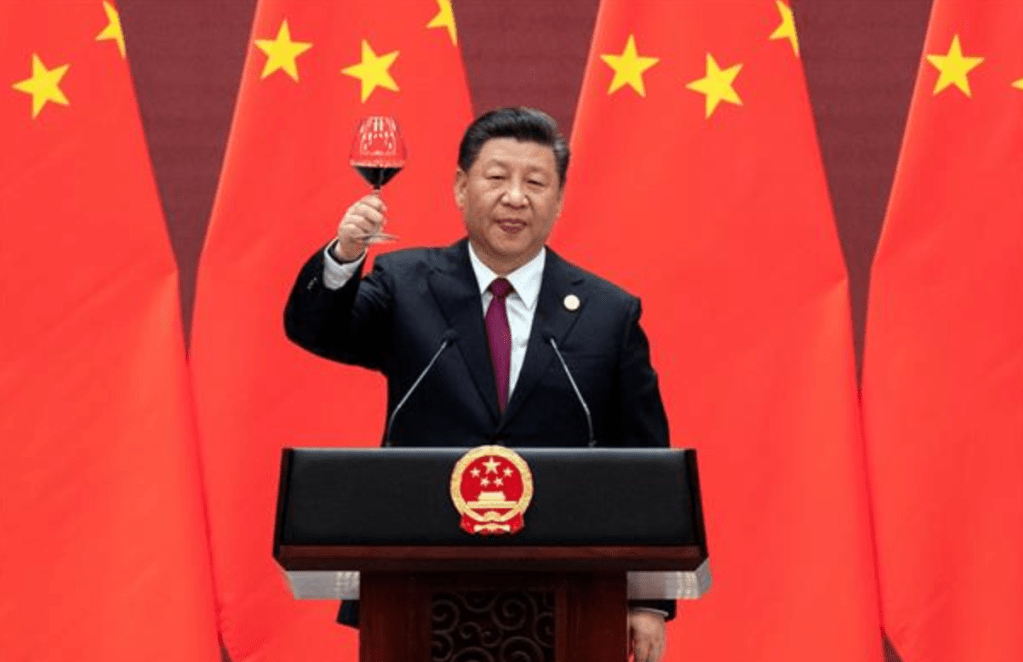
Image Source: https://www.tribuneindia.com/news/world/china-passes-new-land-border-law-amid-military-standoff-with-india-328958
About The Author
Nakul Rai Khurana is a second-year law student at Jindal Global Law School pursuing his bachelor’s in arts and law. His interests lie in legal and social developments around the world.
 NICKELED AND DIMED