
By Muskan Agarwal
Abstract
The two-finger test was held unconstitutional by the Supreme Court in the year 2013. However, it is still prevalent in many parts of the country and is still practised by medical and police personnel time and again. This paper will delve into the history of the test and analyse how this patriarchal test came into being and is still being practised. This paper will also analyze various landmark judgements and guidelines with respect to the test.
Introduction
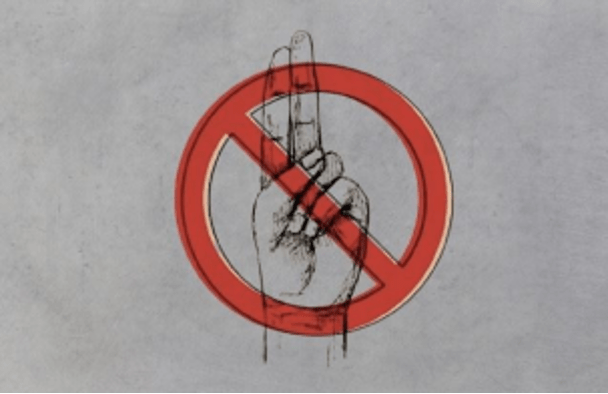
The two-finger test, also known as the Per Vaginum(PV), is a physically intrusive procedure in which a doctor inserts two fingers into the vagina of a rape victim to determine whether the hymen is still intact. A doctor performs the two-finger test on a rape victim to examine the flexibility of her muscles and the “laxity of the vagina”. It also ascertains whether or not she has engaged in sexual activity and establishes whether she initiated the assault that resulted in the rape. In cases of sexual assault and when those matters reach the court, the medical evidence of prior sexual relationships is used to refute rape allegations, either to imply that a victim lied about the rape, to imply that the rape was not harmful, or to imply that the victim is morally repugnant and so should not be entitled to justice.
The Indian Ministry of Health published guidelines for the care of sexual assault survivors and victims in March 2014. According to the Guidelines, the size of the vaginal introitus has no influence on a case of sexual assault, and the Per-Vaginum examination or the “two-finger test, must not be undertaken to establish rape or sexual violence. Only adult women could get a Per Vaginum examination when it is truly necessary. Yet, neither have the Guidelines been enforced nor have they been adopted legally by the medical community. The two-finger test is an extremely needless medical procedure that violates people’s rights to privacy and dignity. In X v. Hospital Z, the Supreme Court cited Article 8 of the European Convention on Human Rights, which provides the following definition of the right to privacy: ‘Everyone has the right to respect his or her private and family life, home, and correspondence’.
History and the Justice Verma Committee:
Both fingers are inserted into the vaginal in this 18th-century old procedure. When one finger is inserted into the vaginal cavity with difficulty, it is assumed that the victim was a virgin, however, when two fingers are inserted, it is assumed that the victim is accustomed to engaging in sexual activity. In the 1970s, Indian women were subjected to virginity tests as part of the British immigration process when there was a possibility that an individual might be already married. If they weren’t already married, applicants were expected to be virgins. In several Indian societies, the virginity test is still established to determine the chastity of women before marriage. In nations without doctors, testers are frequently older women or anyone else who can be trusted to look for a hymen. This is typical among the African tribes that administer the test.
Men and women are under unequal social pressure to stay virgins until they are married because of virginity testing. Virginity tests reinforce these negative stereotypes by operating under the sexist assumption that women are largely accountable for all sexual behaviour and transgression. The Maharashtra state government declared its intention to criminalise virginity testing for brides in 2019, referring to the practice as a form of sexual assault. So, similarly, in the medical test, the two-finger test is conducted to determine whether a woman is habituated to sex or not. Sex and the ‘moral character’ of women are linked and their source can be found in the Indian Patriarchal views.
On 16th December 2012, the entire nation was shocked to its core after hearing the details of the Nirbhaya gang rape. To implement stronger legislation and penalties for the perpetrators of heinous acts, the Justice Verma Committee was established on December 23, 2013. The committee covered and discussed every topic related to women and child safety. And during one of these debates, the topic of the virginity test came up. The committee reported: “It is crucial to underscore that the size of the vaginal introitus has no bearing on a case of sexual assault, and therefore a test to ascertain the laxity of the vaginal muscles which is commonly referred to as the two-finger test must not be conducted. On the basis of this test observations/ conclusions such as ‘habituated to sexual intercourse’ should not be made and this is forbidden by law.”
Landmark Judgements:
The Supreme Court ruled in Lilu Rajesh and Anr v. State of Haryana (2013) that the two-finger test should not be applied because it is unconstitutional and that the victim’s prior sexual history should not be taken into account when determining the victim’s consent or the quality of the consent given by the victim. However, just a few months after the Justice Verma Committee report on April 20, 2014, a Dalit girl was gang-raped and thrown out of a moving bus in Singrauli, Madhya Pradesh. The Madhya Pradesh police, after performing the two-finger test, concluded that the girl was addicted to sexual intercourse and made a statement to the press. Habitual sexual activity is linked to inviting sexual assault upon oneself. In the infamous Tuka Ram v. State of Maharashtra or the Mathura Rape case, the sessions court acquitted both the accused and stated that since Mathura (the victim) was used to sexual activity, to satisfy her sexual needs, consented to it. The supreme court upholding the session’s court decision, acquitted the accused(s) due to a lack of “vaginal injury”.
In the 2020 case of State of Gujrat v. Rameshchandra Ramabhai Panchlam, the court analysed that the test itself is one of the least scientific examination techniques utilized in the context of sexual assault and also asserted that it is unscientific (the same was labelled by the Ministry of Health and Family Welfare). The court ruled that if a victim is accustomed to sexual activity prior to the assault, it has no influence on whether she gave her consent when the rape occurred. According to Section 155 of the Indian Evidence Act, a rape victim’s credibility cannot be questioned on the grounds that she is “of generally immoral character.” The court relying on the apex court judgement of Lilu alias Rajesh case, declared the two-finger test to be unlawful because it infringes the victim’s right to privacy, physical and mental integrity, and dignity.
While restoring conviction in a rape-murder case in The State of Jharkhand versus Shailendra Kumar Rai @ Pandav Rai a bench of Justices DY Chandrachud and Hima Kohli said, “The so-called test is based on the incorrect assumption that a sexually active woman cannot be raped. Nothing could be further from the truth – a woman’s sexual history is wholly immaterial while adjudicating whether the accused raped her.” Justice Chandrachud described the test as “patriarchal” and “sexist”. In addition to re-traumatizing and re-victimizing women, Justice Chandrachud remarked that the test was “based on a false concept that a sexually active woman cannot be raped.” The bench further stated that it is unnecessary to determine if the elements of Section 375 of the IPC (rape) are present in a given situation when a woman is “habituated to sexual intercourse”. The assertion that a sexually active woman cannot be raped underlies the so-called test.
In the 2023 case of SR. Sephy V. CBI & Ors. Justice Swarana Kanta Sharma held that the virginity test on a female accused under investigation is in violation of Article 21 of the Constitution. The court observed that the test is “archaic and irrational”. The virginity test is not mentioned in the law’s explanation as a method to be employed in the medical examination of an accused person to establish the facts that might provide evidence, the court had opined.
Conclusion:
As a result of the two-finger test courts throughout the nation continues to find justifications to ignore the testimony of rape victims. Rape trials frequently feature characterizations of the victim, faulty views of consent, and reliance on unrelated circumstances to ignore important evidence. The two-finger test infringes on the autonomy and human rights of rape survivors. The existence of prior sexual intercourse does not render rape charges invalid. It is patriarchal and repressive to assume that rape victims must provide evidence to support their allegations. The apex court cited the UN Declaration of Basic Principles of Justice for Victims of Crime and Abuse of Power 1985 and the International Covenant on Economic, Social, and Cultural Rights 1966 which stated that rape survivors are entitled to legal recourse that does not re-traumatize them or violate their physical or mental integrity and dignity. In order to reduce violence against women, the United Nations Human Rights, UN Women, and the World Health Organization (WHO) advocated for a ban on the two-finger test in 2018. They described it as a traumatising, often painful, and medically unjustified practice that must be stopped. Despite the government providing rape test kits to all medical institutions in response to the Verma committee’s recommendations, the two-finger test is still used in India and other nations.
Private and public hospitals should be informed of the Ministry of Health and Family Welfare’s directives. This problem can be resolved by extensively sensitizing and training medical and police services officials.
About the Author
Muskan Agarwal is a second-year student of BA-LLB (five years integrated course) at the Jindal Global Law School. Her areas of interest include public policy, corporate laws, and arbitration laws.
 NICKELED AND DIMED