-

Youth in Uniform: Examining the Promise and Perils of the Agnipath Scheme
Read more: Youth in Uniform: Examining the Promise and Perils of the Agnipath SchemeForging a new path in service to the nation, the Agnipath Scheme stokes youthful ambition while kindling the fires of patriotism. Promising fresh energy within the ranks, this initiative balances dreams of duty with the reality of brief, four-year service. Yet, a question arises: will the scheme elevate the aspirations of the youth, or will…
-

Intersectionality in India’s Legal Framework
Read more: Intersectionality in India’s Legal FrameworkThis article discusses the inclusivity of intersectionality in Indian legislations, expanding on its efficiency through judicial decisions and the effect of not taking intersectionality into consideration. The article also discusses the further scope for intersectionality in India’s legal scenario and recent developments related to this inclusivity.
-

Infrastructure Development and Trade Potential: The Case of India-Middle East-Europe Economic Corridor
Read more: Infrastructure Development and Trade Potential: The Case of India-Middle East-Europe Economic CorridorThe India-Middle East-Europe Economic Corridor (IMEC) marks a significant shift in US and EU strategies for Middle East trade, aiming to enhance connectivity and economic integration. It will feature a railway line improving ship-to-rail transit, offering India direct access to European markets. Pledged collaborations at the G20 summit in 2023 include enhancing trade infrastructure. The…
-

The Complexity of India’s Military Industrial Complex
Read more: The Complexity of India’s Military Industrial ComplexIndia’s journey towards military self-reliance has been shaped by its historical, financial, and geopolitical challenges. Initially dependent on first-world countries for defence technology due to financial constraints and bureaucratic inefficiencies, India gradually transitioned towards self-reliance. The 1962 Sino-Indian conflict and the 1971 war with Pakistan were pivotal moments that highlighted the need for indigenous defence…
-
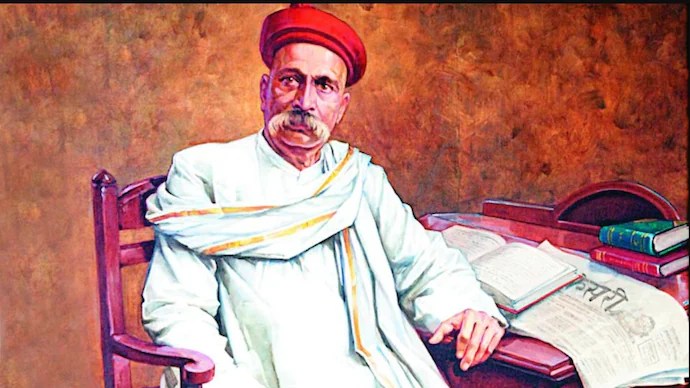
Awakening Swa: Lokmanya Tilak and Socio-Political Enlightenment
Read more: Awakening Swa: Lokmanya Tilak and Socio-Political EnlightenmentThis article examines the profound impact of Lokmanya Tilak, often referred to as “The Father of Indian unrest,”. India’s struggle for self-rule during the late 19th century, positioned him as a catalyst for socio-political awakening. Tilak called upon the Indian populace to shed the chains of colonial subjugation and reclaim their agency through the movement…
-

Beyond Binary Boxes: The Invisible Struggle of SOGIE-Dalit Identity in India
Read more: Beyond Binary Boxes: The Invisible Struggle of SOGIE-Dalit Identity in IndiaThis paper examines the complex intersectionality of SOGIE (Sexual Orientation, Gender Identity, and Expression) and Dalit identities in modern India, challenging the prevailing tendency to address discrimination through single-axis frameworks. Through analysis of personal narratives and legal precedents, including the landmark Navtej Singh Johar judgement and the NALSA verdict, the paper argues that the current…
-

A New Chapter?: Exploring the Potential of India-Pakistan Relations Post-Jaishankar’s Visit
Read more: A New Chapter?: Exploring the Potential of India-Pakistan Relations Post-Jaishankar’s VisitBy Prof. Tridivesh Singh Maini Introduction External Affairs Minister S. Jaishankar’s visit to Pakistan, to attend the Shanghai Cooperation Organisation (SCO) Summit held in Islamabad on October 15-16, 2024, drew attention for several reasons. Most importantly, this was the first visit by an Indian Foreign Minister to Pakistan after nearly nine years. In December 2015,…
-

Rights vs the Reality: The Legal Gaps in Protecting India’s Female Doctors
Read more: Rights vs the Reality: The Legal Gaps in Protecting India’s Female DoctorsBy Suhani Sharma and Nandita Purvi “I measure the progress of a community with the degree of progress women have achieved.” – B.R. Ambedkar The safety of female doctors in state-run hospitals has become an urgent and pressing issue in light of the recent Kolkata rape case. Despite increasing awareness and legal…
-

Tackling the contemporary “Aaya Ram Gaya Ram”
Read more: Tackling the contemporary “Aaya Ram Gaya Ram”There’s a popular phrase “Aaya Ram Gaya Ram” and let’s just say Nitish Kumar is the modern-day embodiment of it. Are there laws to stop elected politicians like him? Yes, an anti-defection law exists in our Constitution. Then why doesn’t it apply to Nitish Kumar and many other politicians like him? This is exactly what…
-

Confronting the Crisis of Rape Epidemic in India; Challenging the Culture of Impunity in India’s Rape Epidemic
Read more: Confronting the Crisis of Rape Epidemic in India; Challenging the Culture of Impunity in India’s Rape EpidemicThis article explores the reality of sexual violence against women in India, where official data shows a woman is raped every 16 minutes. Despite strides in women’s rights, the pervasive rape culture—fueled by societal silence, stigma, and entrenched patriarchal attitudes—continues to put women at risk. The discussion highlights how cultural norms often shift the blame…
-

Anwar’s Aftermath: A Retrospective Reassessment
Read more: Anwar’s Aftermath: A Retrospective ReassessmentIn this article, I examine the jurisprudence following Anvar and how the Courts have treated the operational applicability of the ruling, arguing that a retrospective application is the only position good in law. I further submit a more radical vision, suggesting a return to the position in Navjot Sandhu, which recognised that Section 65-B must…
-
REFORMING OR REPEATING? THE INTENDED OR UNINTENDED CONSEQUENCES OF INDIA’S CRIMINAL JUSTICE REFORMS
Read more: REFORMING OR REPEATING? THE INTENDED OR UNINTENDED CONSEQUENCES OF INDIA’S CRIMINAL JUSTICE REFORMSThe overhaul of India’s criminal justice system through the Bharatiya Nyaya Sanhita (BNS), Bharatiya Nagarik Suraksha Sanhita (BNSS), and Bharatiya Sakshya Adhiniyam has been criticized for failing to achieve ‘decoloniality’. Despite claims of indigenization and democratization of the criminal justice system, these new laws either retain most of colonial-era provisions or make them more terrorizing…

Nickeled & Dimed
Penny for your thoughts?
We are accepting articles on our new email: cnes.ju@gmail.com
 NICKELED AND DIMED