-

Rethinking ISDS: Regulatory Chill and the Case for State-State Dispute Settlement
Read more: Rethinking ISDS: Regulatory Chill and the Case for State-State Dispute SettlementBy — Shreya Maheshwari Abstract Investor-State dispute resolution (ISDS) is currently facing a legitimacy crisis owing to its lack of transparency and regulatory chill. The article argues that these structural gaps in ISDS justify a shift towards State-State Dispute Resolution (SSDR) especially for developing countries as ISDS undermines their ability to regulate effectively thereby putting…
-
Age, Ability, and Autonomy: Rethinking Vulnerable Data Subjects under India’s Data Protection Regime
Read more: Age, Ability, and Autonomy: Rethinking Vulnerable Data Subjects under India’s Data Protection RegimeBy — Srisoniya Subramoniam Abstract The Digital Personal Data Protection Rules, 2025 is a comprehensive framework on data protection and mark a significant step in Indian legal history. Recent developments in the digital field have exacerbated the necessity for such frameworks. But the most vulnerable amongst them are the children and the disabled groups, who…
-

Informed Consent in the Age of Algorithms: Rethinking Consent under India’s DPDP Act
Read more: Informed Consent in the Age of Algorithms: Rethinking Consent under India’s DPDP ActBy — Sai Ruchitha Abstract India’s Digital Personal Data Protection (DPDP) Act 2023 makes ‘informed consent’ the central tenet of the legal processing of personal data. Nevertheless, the use of AI and machine learning calls into question the practicality of providing informed consent due to the lack of clarity and dynamism in machine learning technology…
-
Informed Consent or Legal Fiction? Digital Literacy and Privacy under India’s DPDP Rules
Read more: Informed Consent or Legal Fiction? Digital Literacy and Privacy under India’s DPDP RulesBy – Shreya Maheshwari Abstract Digital Personal Data Protection (DPDP) Rules, 2025, were notified on 14 November 2025. These rules aim to provide a citizen-centric framework for privacy protection by providing consent notices in simple language under SARAL principles of simplicity, accountability, authenticity, and lawfulness. This article argues that the requirement for a detailed itemised…
-
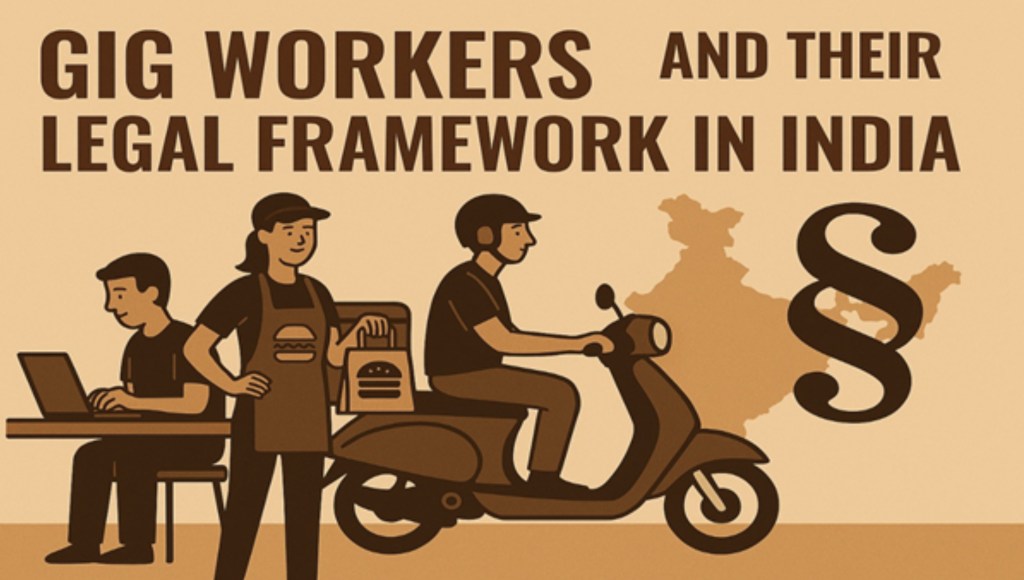
Social Security for Gig and Platform Workers: Promise or Illusion?
Read more: Social Security for Gig and Platform Workers: Promise or Illusion?By — Srisoniya Subramoniam Abstract The gig and platform economy has had a rapid expansion recently, which has fundamentally altered traditional employment relationships. The older labour laws were incompetent in addressing such flaws, but the new codes, especially the Social Security Code of 2020 has been capable of addressing certain issues and providing recognition to…
-

The Paradox of Progress: Social Security Reforms Without Worker Security
Read more: The Paradox of Progress: Social Security Reforms Without Worker SecurityBy – Sai Ruchitha Abstract This article critically evaluates the Social Security Code, 2020, focusing on its impact on gig workers, women domestic workers, and fixed-term employees in India. While the Code expands coverage and aligns several provisions with ILO standards, many protections remain discretionary rather than enforceable rights. The reforms represent progress in principle…
-
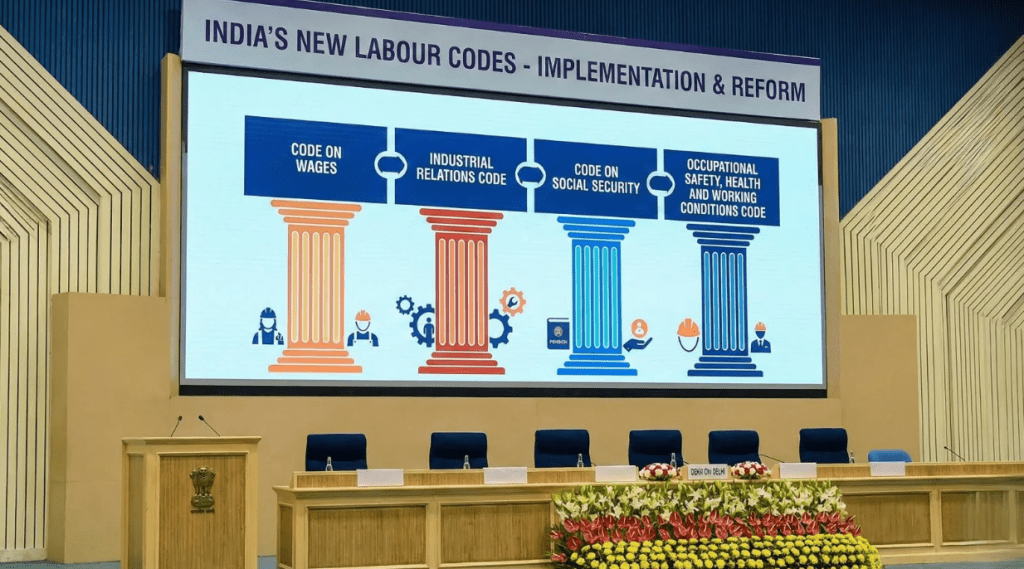
Centralisation through Codification: Federal Concerns under India’s New Labour Code
Read more: Centralisation through Codification: Federal Concerns under India’s New Labour CodeBy – Aasmi Bali Abstract The recent labour law reforms used in India were summarised into four Labour Codes that were launched with the objective to simplify compliance, facilitate ease of doing business, and standardise labour regulation. This article, however, argues that the codification process has also been instrumental in enabling a pronounced centralisation of…
-
Re-examining Job Security and Labour Flexibility under India’s Industrial Relations Code
Read more: Re-examining Job Security and Labour Flexibility under India’s Industrial Relations CodeBy – Shreya Maheshwari Abstract The four new labour codes, including the Code on Wages, 2019; the Industrial Relations Code, 2020; the Code on Social Security, 2020; and the Occupational Safety, Health and Working Conditions Code, 2020, were introduced to ensure social security and dignity of workers while promoting industry growth. However, the regulations under…
-

Intellectual Property in Startup Exit Strategies: Legal Dimensions of M&A, Acquisitions, and IPOs
Read more: Intellectual Property in Startup Exit Strategies: Legal Dimensions of M&A, Acquisitions, and IPOsBy – Sai Ruchitha Abstract: This article evaluates the central role of intellectual property in shaping the success of startup exit mechanisms in India. It highlights how IP maturity influences deal valuation, regulatory approval, and investor decision-making in M&A transactions and IPOs. By examining statutory requirements, due diligence practices, and cross-jurisdictional contrasts, the study shows…
-

India’s Mediation Act, 2023: Symbolic Reform or Structural Change
Read more: India’s Mediation Act, 2023: Symbolic Reform or Structural ChangeBy – Shreya Maheshwari Abstract The Indian Mediation Act, 2023, was a legislative step by the government for transforming Indian dispute resolution mechanisms. While it is a progressive reform for reducing the backlog of overburdened Indian judiciary, having nearly 50 million pending cases, along with promoting collaborative and cost-effective justice in the country, compared to…
-
Personality Rights: A Legal and Social Conundrum
Read more: Personality Rights: A Legal and Social ConundrumBy — Srisoniya Abstract Personality rights safeguard an individual’s identity against unauthorised commercial use. Personality rights attach to an individual, particularly someone well-known in the public eye, such as a celebrity, whose identifiable traits may be misused for monetary gain. This article explores the scope of personality rights through perusing the existing statutory framework and…
-

Cultural Commodification or Legal Empowerment? WTO’s GI and India’s TKDL
Read more: Cultural Commodification or Legal Empowerment? WTO’s GI and India’s TKDLBy – Srisoniya Subramoniam Abstract Geographical Indications (GIs) are important tools within the World Trade Organization’s framework, as they protect products linked to origin and tradition. While the intention was to safeguard indigenous heritage, debates persist over whether such measures have inadvertently transformed culture into a commercial asset. This article examines this dual nature of…

Nickeled & Dimed
Penny for your thoughts?
We are accepting articles on our new email: cnes.ju@gmail.com
 NICKELED AND DIMED