-

Gendered Borders: Feminizing Vulnerability & Masculizing Threat
Read more: Gendered Borders: Feminizing Vulnerability & Masculizing ThreatBy – Anisha Jyotirmyayee Abstract This article conceptualises borders as gendered social institutions regulating mobility through narratives of protection. It theorises borders as gendered metaphors themselves and characterizes this in the reality of gendered borders of feminizing vulnerability and masculinizing danger. Drawing on the theory of bio politics of Michel Foucault, it argues that the…
-

The Two Genders and Other Administrative Fairy Tales
Read more: The Two Genders and Other Administrative Fairy TalesBy -Siddarth Poola Abstract The modern state insists that it is neutral committed to equality. It also insists, with remarkable confidence, that humanity comes in two neatly packaged options. This article examines how the gender binary functions as a foundational administrative technology of the state, structuring law, policy, data in ways that systematically erase identities…
-

Gendered State and Parochial laws: The Rape that a State Commits
Read more: Gendered State and Parochial laws: The Rape that a State CommitsBy – Manushree Mahat Abstract The gendered state spills over into law and policymaking when it comes to gendered-based violence(GBV)- which is predominantly observed in the language of sexual violence and rape laws. While the scope of definition of rape, and the severity of its consequential punishment has expanded over the years–it still remains largely…
-

Protecting Women, Preserving Hierarchies: Paternalism and the Gendered Indian State
Read more: Protecting Women, Preserving Hierarchies: Paternalism and the Gendered Indian StateBy – Kadambari Chand Abstract This article conceptualises the idea that while the modern state’s policies are cloaked in the rhetoric of protecting women, in reality, they undermine their bodily and sexual autonomy, relegating them to the status of subordinate subjects of the state. This subordination is brought by using both formal legal systems and…
-

Artificial Images, Real Harm: How Deepfakes Enable Gendered Violence
Read more: Artificial Images, Real Harm: How Deepfakes Enable Gendered ViolenceBy – Anisha Jyotirmayee Abstract: The rapid expansion of deepfake technology has introduced new forms of digital harm that disproportionately affect women. While deepfakes are commonly framed as a problem of misinformation, their most prevalent use recently has been the creation of different kinds of non-consensual sexual content, depicting a form of gendered digital violence.…
-

Dignity Beyond Law : Haq- Critique of Secular Compromise
Read more: Dignity Beyond Law : Haq- Critique of Secular CompromiseBy – Akshara Gupta Abstract Haq is a courtroom drama based on the real-life case of Shah Bano (1985), which aims to examine the gap between law and gender within religious communities in the country. The film, through its female protagonist, tries to present the current lacunae in the social institutions as well as formal…
-
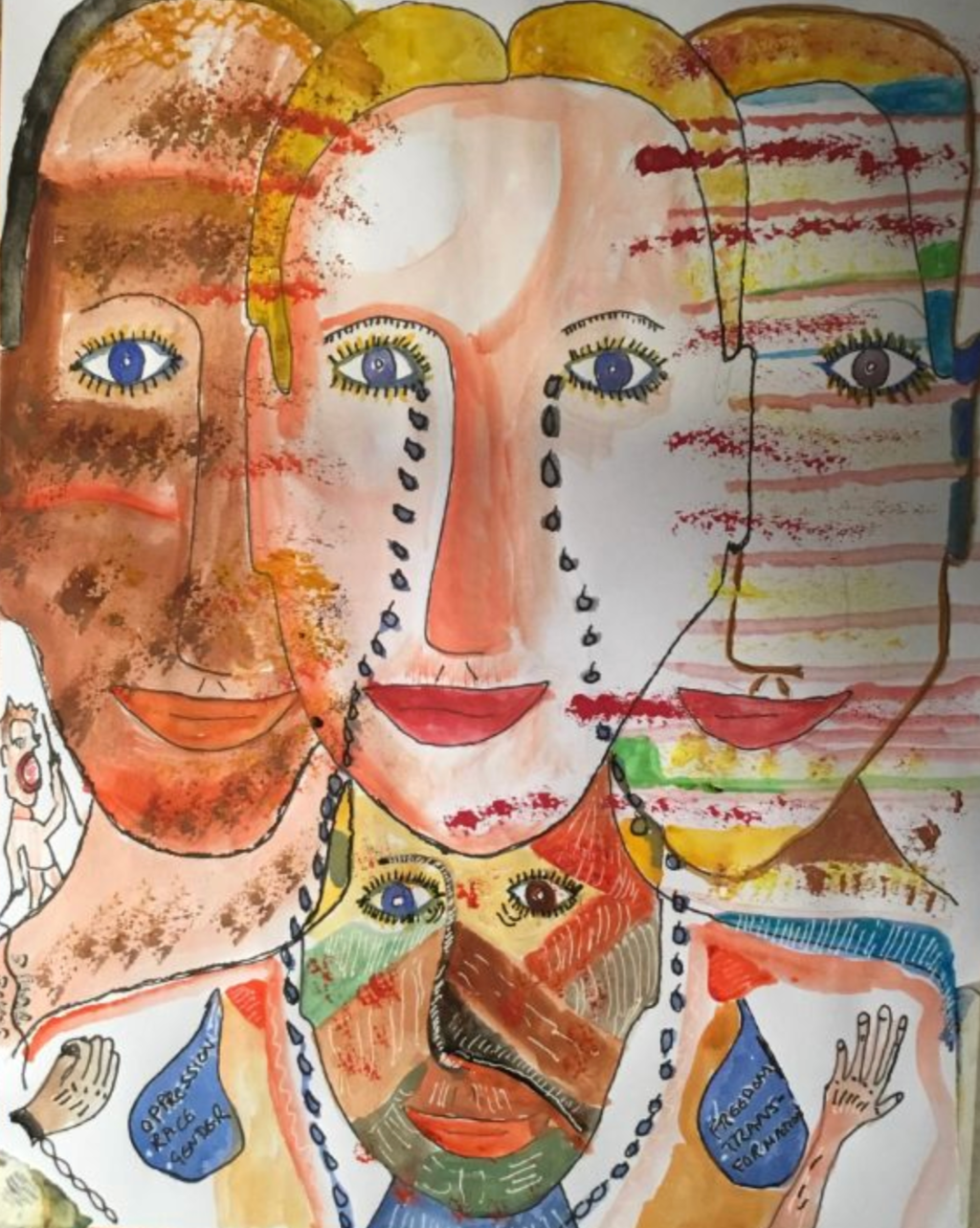
The Algorithm Has a Gender, and It’s Judging You
Read more: The Algorithm Has a Gender, and It’s Judging YouBy – Siddarth Poola Abstract Artificial intelligence is routinely framed as a neutral decision-making tool that merely reflects the data it is trained on. This framing collapses under scrutiny when AI systems are examined through the lens of gender expression and power. Drawing on research by UN Women, UNDP, Nature, Stanford, ORF, and investigative journalism.…
-

Marital Rape and Primitive Accumulation in India: Part 1
Read more: Marital Rape and Primitive Accumulation in India: Part 1By – K.S. Prathignya Abstract: This article applies a Marxist-Feminist framework to understand how marital rape unveils the reality of what bodily autonomy is regarded as in India, displaying how it inherently shapes the discourse around women’s personal sovereignty. It will argue that marital rape is used as a tool to continue the primitive accumulation…
-

The Politics Written on Skin: Reclaiming Bodily Autonomy as Feminist Politics
Read more: The Politics Written on Skin: Reclaiming Bodily Autonomy as Feminist PoliticsBy – Chinmayi J. Abstract A fundamental issue in feminist and gender justice discourse is bodily autonomy. However, concepts such as the state, capitalism, caste, race, religion, and patriarchy all interact to shape this unequal distribution of autonomy. This article explores bodily autonomy as a contentious area within the gender and social spectrum, contending that…
-

Women and Romance: The Concept of a Soulmate
Read more: Women and Romance: The Concept of a SoulmateBy — K.S. Prathignya Abstract: This article examines how certain romantic concepts such as the ‘soulmate’ often restrict the mobility of a woman’s autonomy. This leads to the strengthening of marriage as an institution due to the bargaining of a woman’s autonomy becoming a life-long process. Introduction Love refers to an emotion which includes strong…
-

Fire and the Flames of Post-Colonial Feminism
Read more: Fire and the Flames of Post-Colonial FeminismBy – Muskan Hossain Abstract Deepa Mehta’s Fire (1996) remains a landmark of post-colonial feminist cinema, challenging the patriarchal family and exposing the fragility of cultural nationalism. Through Radha and Sita’s intimate rebellion, the film critiques how women’s independence after 1947 remained bound to tradition and sacrifice. The backlash against Fire revealed how women’s desires…
-

Over Socialisation mistaken for empathy: A critical analysis of the portrayal femininity in film
Read more: Over Socialisation mistaken for empathy: A critical analysis of the portrayal femininity in filmBy – K.S. Prathignya Abstract This article examines how cinema portrays and promotes qualities of over socialisation as a part of feminine standards, but often describes it as empathy instead. It argues that this internalisation of gender norms is a gradual process. Through a cross comparison between two forms of cinema, there is a connection…

Nickeled & Dimed
Penny for your thoughts?
We are accepting articles on our new email: cnes.ju@gmail.com
 NICKELED AND DIMED