
By – Manushree Mahat
Abstract
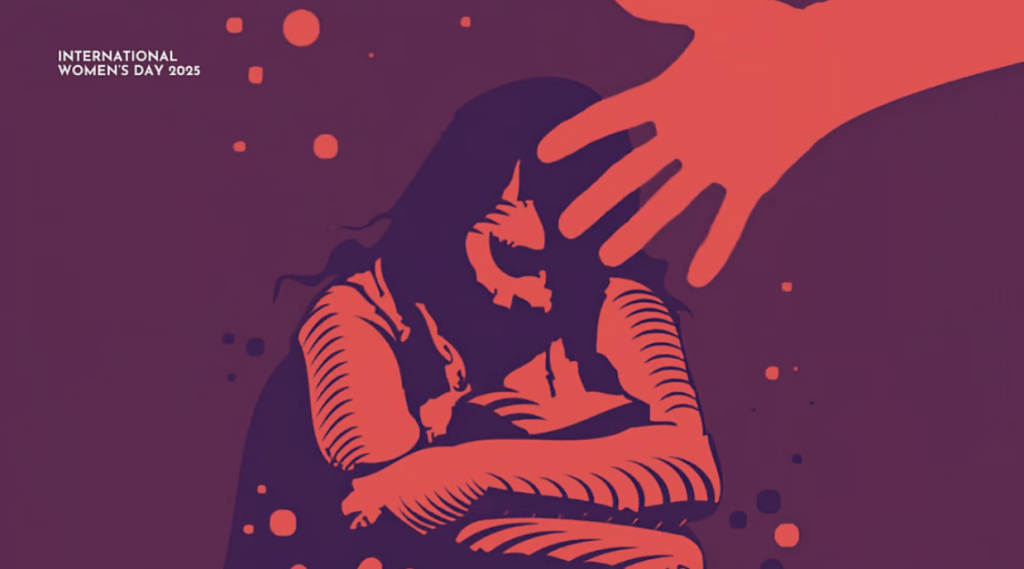
The gendered state spills over into law and policymaking when it comes to gendered-based violence(GBV)- which is predominantly observed in the language of sexual violence and rape laws. While the scope of definition of rape, and the severity of its consequential punishment has expanded over the years–it still remains largely narrow in its perception of sexual violence. With this article, the author would like to argue that rape laws remain largely limited and lenient in many states around the world–an extension of the gendered state showing itself in law and policymaking. Drawing on from legal realities of crimes like marital rape, sexual violence men, women and queer-identifying individuals, the author will argue that the limitations of rape laws, the process of receiving justice itself, the inability to alter a parochial definition of rape, largely endangers the victims of this patriarchal system, where the state itself becomes complicit in the act of rape and sexual assault.
Introduction: The limited definition of rape, and what constitutes rape
In 2025, in a ‘landmark’ decision, the government of France amended the definition of rape and sexual assault to include ‘consent’ in its legal definition. This decision was propelled by the highly publicised rape trial of Gisele Pelicot, who was raped and sexually assaulted by over 72 men (50 of whom were convicted), through her own husband, who would regularly drug her during these incidents, while raping her himself. The fact that a ‘developed and modern’ country like France would not have ‘consent’ in their legal dictionaries until 2025, to define rape, shows how sexual and gender violence is often sidelined in lawmaking.
Many countries like Italy, Latvia and Romania, still use coercion, and a proof of resistance to define rape. Under these definitions of rape, victims who have been assaulted under the influence of drugs and alcohol, or have been taken advantage of in a vulnerable position, or simply were unable to voice out their lack of consent, are completely deprived of their path to justice.
The state in this regard literally assumes that consent is a given for any man. When a woman doesn’t explicitly vocalize her lack of consent, the assumption is that a man can take it. The state essentially reproduces and perpetuates parochial ideas of subservience, by dismissing the language and nuances of consent. To make matters worse, marital rape is not even considered rape in many countries like India–which is another singular example of victimization where the state is literally an active member and not just an observer, but an aggressor by specifically providing marital exception to rape.
Furthermore, countries like Saudi Arabia puts the burden of proof on the women to prove rape. In 2007, a married woman and her male friend were gang raped by a group of men. While the rapists were convicted, the woman and her friend were also sentenced to 90 lashes–citing ‘illegal mingling’ as their reason. For the state, the ‘purity’ of a woman precedes the sexual violence she has been subjected to, and one can even argue that the state itself reduces the value of women to sexual objects. In the gendered state, the identities of people are segregated into ‘ideal’ gendered roles, recycling patriarchal norms.
Victims of sexual violence often undergo ‘secondary victimization’ by state apparatuses that are complicit in victim-blaming, and abandoning victims when they need continued support from state and institutions. In the case of the gang rape of woman in Saudi Arabia–the victim was continuously asked about the nature of her relationship with the man she had been raped alongside. This is a common act of ‘second rape’ committed by actors of the state, like the judiciary who question the ‘character’ of the woman who has been raped, instead of the rapists themselves.
Marital Rape: Justice Denied
The Bharatiya Nyaya Sanhita (BNS) provides an exemption to sexual violence, if such an act is committed between a married couple. The revocation of consent in a married institution is patriarchy at its finest; that a law specifically provides an exception to a man to do as he wants with his partner, demonstrates how a woman’s voice is quite literally treated as white noise in the process of lawmaking. It begs the question–just why exactly are the repercussions of a violent act justified in a married dynamic? Isn’t the state legitimising the patriarchal norms of subservience, by taking the autonomy and voice of a married woman–into the hands of her husband, who it seems can exercise full autonomy of her body by law? Furthermore, this decision from the supreme court is explained away by ‘not wanting to destabilise the institution of marriage’. This goes on to show how marriage is viewed as an untouchable institution when it comes to the treatment of women. While states often regulate marriage through marriage certificates, divorce, and even the control of reproductive health–they choose to uphold patriarchal values when it comes to rape. The sexual power and autonomy of a woman is snatched away.
Queer identities and sexual assault
Now that we have delved into the dynamic of rape and sexual assault between a ‘man’ and ‘woman’, it is important to discuss the widespread elimination of queer identities in legal dictionaries. Countries like India still define rape as occurring against a woman by a man, while a research revealed that most of the 22 countries in the League of Arab States(LAS) still define rape as ‘a man having sexual relations with a woman without her consent’–which not only erases male victims, but also eliminates sexual assault of people not identifying under these strict binaries.
Noted in a research by Mazursky, Tener, Nadan and Aviram has also shown us that people from queer communities feel the pressure of being victim-blamed by society for their sexual assault even more. Legal definitions of domestic violence often don’t include same-sex couples, while many countries still criminalise same-sex relationships. The gendered state shows itself in the gender strata where queer individuals who have been extensively vilified and criminalised for expression of their identities, now face its consequences through erasure of their legal rights.
Sexual violence against men: When the justice system doesn’t take rape of men seriously
In 2024, Rebecca Joynes, a 30-year-old high school teacher was found guilty of sexually abusing two 15-year-old boys. The boys who had been sexually assaulted and victimised by their own teacher, had to then read comments from people stating that they should be happy that a young female teacher was into them. The reality of male victims of sexual abuse is slightly different–they are either met with disbelief when they reveal their assault, or manipulated to take it lightly and be ‘proud’ of the violence committed on them. This is often based on the narrow perception that only women can be raped–often putting male victims on a dilemma of disbelief regarding their own assault.
Society’s perception of ‘manhood’ is closely linked to toxic masculinity, which attributes ‘toughness’ and ‘aggression’ as the epitome of masculinity. Toxic masculinity puts down femininity, but it also creates a black hole for men asking for help. Because ‘toughness’ is masculine, emotionality is suppressed in toxic masculinity–and because men are ‘tough’, they cannot be subjected to violence like sexual abuse.
Under patriarchy, women are viewed as passive subjects of society–therefore under this system, only women can be the object and victims of rape. The very conception of men as ‘unrapeable’ therefore can also be attributed to patriarchy–where this system doesn’t think that a man can be subjected to victimisation on a sexual level. A research conducted in the UK also revealed that male victims of sexual abuse find the Criminal Justice system ill-equipped to handle their victimisation, and instead found them to be re-traumatising. The gendered state perpetuates and recycles patriarchal values by its routine inability to rightfully punish sexual offenders based on pre-conceived notions of gendered behaviour.
Conclusion: State as a primary victimiser
We can argue that the state, in its complicity of re-victimising rape victims, commits an act of rape itself. Rape is a physical violation of the body, and the psyche–and the gendered state that willingly chooses to turn a blind eye to their gendered laws is systemically raping the victims by failing to protect them. Victims are raped by their rapists, and raped further by a system that blissfully denies them justice.
Although ‘secondary victimisation’ has been previously discussed in this article, I would like to argue that the state itself is also a primary victimiser. Victims depend on the state and its laws to hand them justice–but when the very laws that are supposed to protect them abandon them, it is a betrayal and a victimisation of the highest order.
Author bio:
Manushree Mahat is an amateur writer based in Kathmandu. She has experience in culture, lifestyle, and social journalism, and also dabbles in fictional storytelling once in a while.
 NICKELED AND DIMED