
By – Varsha M
Abstract
In 2018, the closure of the Miteni chemical facility in Italy was a positive step by the state governments and was hailed a win in the fight against public health following decades of PFAS in the Veneto region of Italy. But the environmental effects of this plant were not limited here. This article discusses the manner in which the production machinery and technical skills of Miteni have been transferred to India, and, today, there is the same nature of PFAS production issues in the industrial regions of Maharashtra. Based on this case study, we learn the meaning of pollution havens and regulatory arbitrage, in which we see that polluting industries that have been redirected to the Global North are mostly relocated to the Southern states with less regulating standards.
Introduction
It was a victory for public health in 2018 when European regulators finally closed down the Miteni chemical plant in Trissino, Veneto, Italy. However, simply closing down the plant failed to prevent the danger of pollutants from finding a new home. Now the technology, equipment, and patents associated with the manufacturing processes of per- and polyfluoroalkyl substances (PFAS) have moved abroad, with the same type of manufacturing being established in the Indian state of Maharashtra. This is a reflection of the tragic trend of dangerous industries, which are considered unviable in the Global North, moving to the Global South, where they are received with less stringent environmental regulations and populations that are more vulnerable.
The Italian catastrophe
Since the 1960s, Miteni plant and its former corporations have operated on the same location as they continued to make fluorinated chemical intermediates (PFAS) decades afterwards. The chemicals are also known to be used in pharmaceuticals, agrochemicals and specialty chemical uses. In 2010 research studies have found the plant to be the major source of PFAS contamination of ground water and surface water in large portions of the Veneto region. Later, the results of the court and media inquiries pointed out how at least approximately 300, 000 to 350,000 individuals had been impacted by the years-long, controlled discharge of the PFAS pollutions, particularly given that its toxicity and permanence is a well-known fact. It is a significant health issue of the population with its connection to increased risks of certain cancer, thyroid disease, reproductive harms, etc.
The Miteni plant was forced to stop its operation and declare bankruptcy in 2018 under the growing regulatory pressure and criminal investigation. The Trissino plant was then closed down and the task of cleaning up the environment was transferred to the government. In any case, the production of the PFAS was to come to a stop, but the legal cases were not.
In June 2025, in the long-standing PFAS criminal case, the Court of Assize in Vicenza issued the verdicts. Eleven of the previous executives and managers associated with Miteni and their affiliated parent companies were convicted of polluting the environment and other offenses and sentenced to jail terms, which they are expected to appeal.
From Trissino to Lote
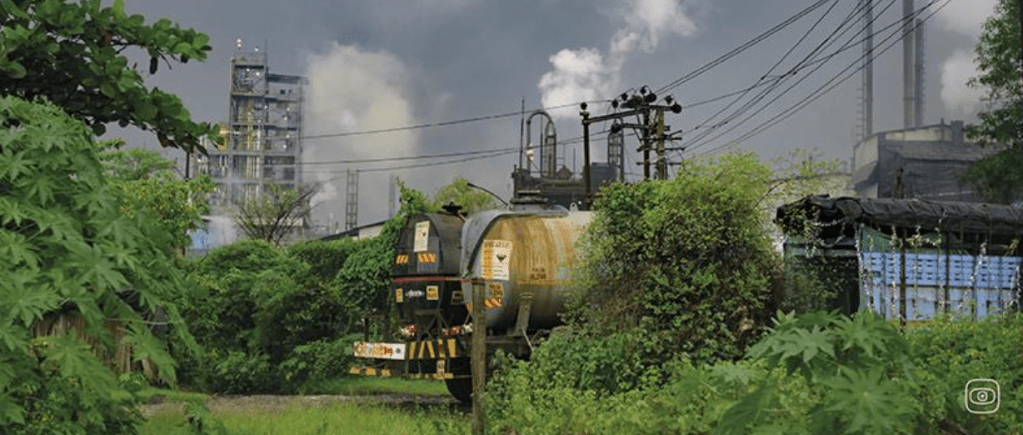
Following the bankruptcy of Miteni, its assets, including patents, technical know-how, and production machinery, were put up for auction. Investigative reporting in 2024 and 2025 reveal that these assets were acquired by Viva Lifesciences in 2019, a subsidiary of Laxmi Organic Industries. The Indian chemical company was looking to enter the fluorochemicals market, and the company had then started production in industrial locations in Maharashtra, including the Mahad and Lote industrial areas in Raigad and Ratnagiri districts, which are industrial estates bordering the fragile Koyna Wildlife Sanctuary.
Functionally, the manufacturing has extended the operational life of a European PFAS facility by decades, under different regulatory frameworks and far from the communities originally impacted by the pollution.
Why this matters: pollution havens and regulatory arbitrage
PFAS are sometimes called “forever chemicals”. They are man-made substances widely used by industry to manufacture many consumer products, such as electronic devices, paint, cars or cosmetics. However, they are a major health concern since they persist in water, soil, and human bodies for decades. They have very often been associated with increased risk of some cancers, reduced fertility, and impaired immune functions. In 2023, an investigation by the Forever Pollution Project estimated that almost 23,000 mostly industrial sites across Europe were contaminated by such “forever chemicals.”
Italy, and other EU authorities, horrified by these ecological and social costs after long protests by citizens, managed to phase out the PFAS production. However, selling the machinery has become a way for corporations to capitalize or realise value by externalising the environmental risk. This depicts the classic pollution haven and regulatory arbitrage problem, which is a corporate practice of utilising more favourable laws in one jurisdiction to circumvent less favourable regulation elsewhere, allowing relocation of hazardous production, and avoiding the legal and financial consequences they would face in the Global North. As a result, environmental degradation moves away from politically empowered populations and toward communities with fewer resources to resist or seek redress.
Although India has environmental statutes and pollution control boards, PFAS are not uniformly monitored across the states, and there is no regulatory framework for PFAS in India as there is in the EU. This blind spot in regulation means that the risk of harm is higher if PFAS manufacturing is allowed to continue without proper containment and monitoring.
Potential impacts on people and planet in Maharashtra
Mahad and Lote have industrial areas with villages that are supported by agriculture, fishing and ground water. They are also sensitive areas that are ecologically sensitive and very near forest corridors and reserved areas of wildlife. In this case, the contamination of PFAS would not be restricted only to the factory. It would flow across rivers, infiltrate aquifers and come in crops.
However, to the employees that work in these facilities, the risk is even closer. The studies conducted in Europe and the U.S. have repeatedly detected a greater concentration of PFAS in the blood of chemical plants workers, even decades before the affected area. However, to the workers in India the limits of the occupational exposure to these chemicals is very loosely defined.
More importantly, the harms of PFAs are hardly instantaneous. The cancer clusters, reproductive issues and immune system failures are developed with time and this may even be decades after exposure. The unfortunate reality about this is that by the time that a community can find causality, the corporations might already have restructured, divested or even fled out of the region altogether. Then, the social costs, both in terms of spending on healthcare and lost livelihoods, and polluted land, are incurred by individuals and state.
The accountability gap in global environmental governance
The case of Miteni to India shows the issue of the lack of accountability. Domestic courts are able to penalize the evils committed within the nation but there exists minimal international mechanism to restrict the exportation of hazardous plants or technology. Although Basel Convention and other international treaties restrict the export of hazardous wastes, the sale of property and equipment in the name of the purportedly legitimate industrial projects might be beyond the scope of these arrangements.
The possible solutions may be enhanced cross-border due diligence to corporations, regulating and monitoring PFAS in India, restricting equipment exports to prohibited or heavily regulated chemistries, and civil society campaigning to urge corporations to disclose their assets and clean-up their liabilities.
Conclusion:
The Miteni case is not just an Italian scandal, or an Indian industrial story. It is a policy and ethical dilemma; is it even possible to prevent the dumping of environmental loads on the most defenseless populations by the markets and the regulators of the world? Otherwise the answer will be recorded in the ground water. Better domestic controls on PFAS in India, global corporate responsibility, and citizen oversight of transfers of assets will be urgent issues, otherwise the expenses of a country will be replicated in another.
Author’s Bio
Varsha M is a third-year law student at Jindal Global Law School and a columnist in the Environment & Social Issues cluster at Nickled & Dimed. Her interests lie in environmental governance and climate justice.
 NICKELED AND DIMED