
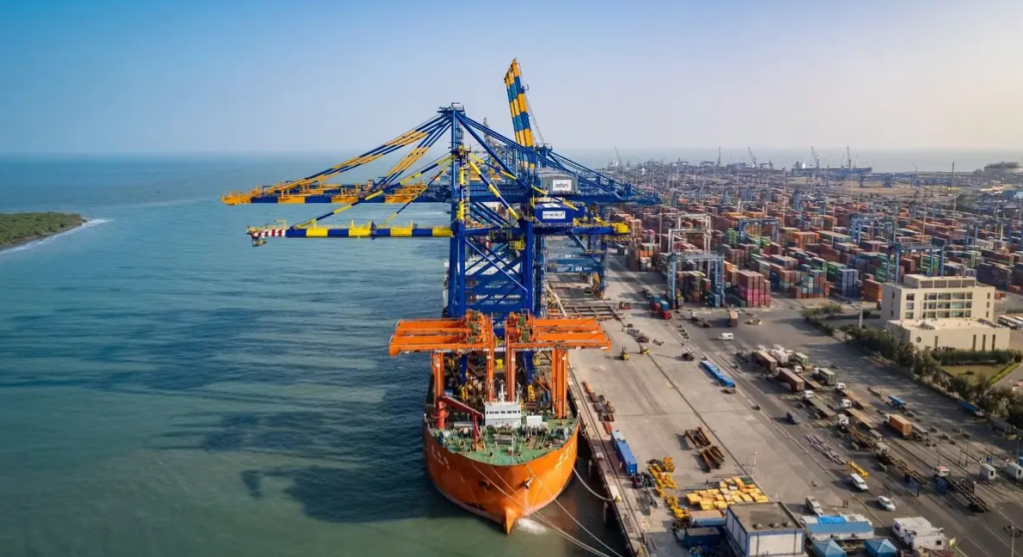
By – Shreya Parameshwaran
Abstract:
The Adani Group’s Vizhinjam International Seaport in Kerala, India, exemplifies the conflict between unrestrained industrial ambition and the social and ecological realities of our time. From the very beginning of construction in 2015, the large-scale building of breakwaters and the dredging of the sea which continue today have caused and accelerated coastal erosion, the displacement of fisherfolk communities and the destruction of marine ecosystems. This project added to the deepening vulnerabilities in the Global South, regions where climate-sensitive livelihoods exist unprotected, it mirrors asset and inequalities in climate vulnerable regions of the Sundarbans in Bangladesh. Calls for accountability, compensation, and redesign for the restoration of ecological integrity underscore the violence of unequal development.
Introduction
Industrial mega projects often promise to invigorate the economy of developing regions, but they extract a high toll from vulnerable people and ecosystems. For example, the Adani Group’s Vizhinjam International Seaport in the state of Kerala, India, illustrates this complexity. With the promise of becoming a $2.5 billion-dollar deep-water trade facility that will revolutionize trade in the region, Vizhinjam has instead initiated destructive coastal erosion, the displacement of fishers, and the degradation of ecosystems. This example illustrates how the development for infrastructure in the Global South, especially in the context of climate change, deepens poverty and environmental destruction; a pattern of asset loss and increasing inequality described in climate vulnerable regions. Vizhinjam, with construction extended into 2026, operational Phase 1, and continuing protests, demands attention for the cost of suffering to people and the planet that it comes with.
These projects often impose disproportionate negative impacts on the Global South. They are built under the promise of growth, when in reality, they are removing people. For example, Vizhinjam is India’s deepest transshipment hub. It aims to capture global shipping traffic with little to no dredging due to the natural depths of the hub. However, the scale of the mega-project is problematic, especially with the 40-year lease that the Adani group has with the Kerala state government. It prioritises the construction of more ports, amplifying the poverty traps of the region through deteriorating livelihoods, further impoverishing the environment. Dissent is mirrored, and oversight is demonstrated in the systemic failures of the climate finance adaptation processes.
How Vizhinjam Triggers Dual Crises
The erosion of coasts due to 3-km breakwaters that change wave patterns has submerged homes and beaches in villages such as Valiyathura, Pozhiyoor, and Thekkumbhagam. Over 600 families have been evicted and are packed into relief camps. The government offers no adequate land compensation, and locals refuse offers of Rs 10 lakh flats because they would break community ties. Shore seining fisherfolk report that turbulent waves are smashing their boats, which resulted in three deaths in 2021 alone.
These processes perpetuate indebtedness and migration. Daily income reductions compel the divestment of sea-going and fishing paraphernalia, akin to rural poverty traps caused by intractable rainfall, where smallholder farmers must borrow against unharvested crops. Women face the greatest burdens: collecting water that is more distant, tending the sick from unclean water, and pulling girls out of school to work to support families. The informal sector, which constitutes 90% of the coastal economy of Kerala, has no social security, which exacerbates vulnerabilities.
Protests reveal repression: 2022 sit-ins met baton charges, tear gas, and over 1,000 arrests, stifling voices without land titles. Compensation disputes persistRs 2.22 crore distributed in 2023 to pre-2015 affected, but many deemed ineligible, fuelling distrust.
Planetary Assault Exposed
Dredging and sediment disruption have eroded 2.62 sq. km. of shoreline since 2006 with a rapid increase after 2015. Erosion north of the port, per concessionaire reports, reached alarming rates. Marine life is affected: increased turbidity smothers fish spawning grounds, while changed currents threaten corals and biodiversity in a highly fished zone.
EIA issues are compounded as initial clearances glossed over sediment models and outright rejected activist appeals at the National Green Tribunal. Operational studies are absent, but the construction phase data already signals habitat loss. The climate synergy here is also concerning; basin sea level rise and tropical cyclones will exacerbate damage to hard structures, as witnessed with Kerala’s 50-year shoreline retreat. Industrial impact here also mirrors the Global South’s manufacturing pollution, further compounding the resilience deficit.
Case Study: Valiyathura’s Vanishing Horizon:
The Valiyathura fisherfolk illustrate the crisis. The coast was once an area safe for docking and fishing, now it destroys homes every night. Waves hit 100m inland and strand boats. Livelihood committees, by 2016, recorded 126 partial job losses, compensated, and minimally, at 2 lakh rupees, but new claims remain stagnant. Families, like those in the protests of 2022, demand project stops, complete rehabilitation, and independent audits.
This is like how the Sundarbans salinity functions: the adult migration leaves women/children in an even worse off state, straining social cohesion. The economic paradox is striking port employment is for the more highly skilled outsiders while locals remain un- or under-skilled even when there is a gap.
Policy Shortfalls and Financial Fiascos
Kerala’s administration attributes no responsibility to the mentioned cause, referring to the project compliance reports stating `no degradation,’ and hires for consultancy the project advocates. Adani asserts the advantages of nature overshadow the impacts, but he is without the secrecy — clandestine agreements are free of accountability. This is consistent with national patterns: industry green cover reductions for 2025 prioritize pace over ecological consideration.
Vizhinjam’s construction represents a global contradiction with just transition: the renewables shift more loans than grants create budgetary stresses which adaptationally divert, e.g. resilient harbors or early warning systems.
Pathways to Reparative Progress
Limit demands on expansion. redesign breakwaters for sediment bypass, monitor on-the-spot. Compensation must equal losses: land for land, training, land, assistance for diversified fisheries. Wider fix mirror established demands: climate-smart infra + social protection + community focused grants for loss/damage.
Strengthen locals through tenure rights, gendered support, and veto in EIAs. High emitters’ reparations and debt relief linked to resilience build fiscal space. Vizhinjam’s midcourse pivot might model equity, but denial risks irreversible harm.
Conclusion
Vizhinjam Port exemplifies the danger of unchecked industrialism in climate fragile areas: short-term profits, long-term erosion of sustainability, and passing on the costs to the poorest. Without reparative, robust EIAs, community vetoes, and bottom-up financing, such projects will deepen divides in the Global South and reverse development in the face of rising seas and intensified storms. Policymakers must prioritize the people and the planet, and make sure the growth is regenerative, not extractive. The stakes are existential for the coast of Kerala and for so many frontlines around the world.
Image Source : https://keralaports.com/kerala-takes-action-to-purchase-300-acres-close-to-vizhinjam-port-for-industrial-development/
 NICKELED AND DIMED