
By – Shreya Parameshwaran
Abstract
The Global South suffers from poverty driven by climate change. Loss of climate-sensitive jobs, weak social safety nets, and low national fiscal capacity create vulnerability. We identify mechanisms of impoverishment from asset loss due to disasters, health impacts, and many others. World Bank projections alarmingly predict up to 100 million additional people in extreme poverty by 2030. In the Sundarbans of Bangladesh, recurrent floods and salinity driven migration of the adult population erodes the livelihoods of women and children. Informal workers and smallholders also experience wage losses due to heat and irregular rainfall. This deepens existing inequities. Effective solutions require interconnected global priorities: decarbonisation, climate positive adaptation through social protection and resilient infrastructure, and reparative, grant-focused climate finance including debt relief and resiliency finance to communities. Absent decisive action from high-income countries and just redistribution of damages, climate stressors will reverse development for the most impacted. This article explores these mechanisms via detailed pathways, case study on the Sundarbans, sectoral impacts on the labor-agriculture nexus, gendered burden, finance gaps, and policy pathways for equity and resilience.
Introduction: Climate Crisis Fuels Poverty
The threat of climate change is ever present, and so is the threat of climate change deepening inequality and pushing people into poverty. The majority of the world’s wealth is in a limited number of high-income nations; however, the majority of climate change’s negative socioeconomic impacts are felt in the Global South, which is highly dependent on climate-sensitive livelihoods. Also, the Global South has weak social safety nets and even weaker fiscal policy space to respond. This creates a cycle of extreme poverty and socioeconomic devastation. Climate impacts destroy people’s assets and income, forcing them to sell everything they own to survive, while the government’s budget shrinks, making recovery increasingly difficult from a socioeconomic standpoint. Government’s budget shrinks, making recovery increasingly difficult from a socioeconomic standpoint.
This is particularly worrying. The projections by The World Bank and United Nations Development state that without strong adaptation and mitigation planning, tens of millions and in some models, over 100 million people will be pushed into extreme poverty due to climate change by 2030. For many, these projections may feel extreme. However, these projections consider the impact of climate disasters such as frequent storms, intense droughts, and extreme heat on poverty and weak governance, which, in combination, undo years of progress on combating poverty.
Core Mechanisms and Sundarbans Case
How does climate change cause poverty? The climate crisis and poverty are interlinked in several different ways. The most evident is the loss of shelter and assets due to climate disasters such as floods, hurricanes, and wildfires. Such loss is followed by a period of extreme scarcity and destitution. The next mechanism is repeated climate impacts on production. Time and time again, the yields of crops, fish, and livestock decline due to climate change. The next mechanism is the gradual impact of increasing heat, sea levels, and salinization of soil on the value of productive assets. Another major pathway also covers the impact of significant climate stress and the spread of vector-borne and waterborne diseases. Such health issues increase the burden of medical expenses as well as reduce the availability of the labor force. Finally, the international climate finance that countries in the global south depend on is inadequate. Governments are forced to cut back on investments that reduce poverty in the long-term. The emergency responses to the impacts of climate change must take priority. These various mechanisms reinforce each other, making poverty and recovery even more difficult.
Case Study: Sundarbans and Coastal Bangladesh. Bangladesh’s Sundarbans and low-lying coastal belt demonstrates exposure and vulnerability succinctly. Bangladesh is low-lying and flood and cyclone liable. Millions depend on flood sensitive agriculture, coastal fishing, and informal labor along the coast. Storm surges and salinization from sea level rise are recurrent and in these situations, land becomes economically futile for cultivation. Land use for agriculture becomes contaminated. Drinking water becomes contaminated, and land becomes cultivatable. Urban migration for creating shanty suburbs and poor, precarious jobs. This is the social and economic toll of household indebtedness, productive asset diminishment, and educational and nutritional impacts across generations.
Heat, Labor, and Rural Debt Traps
Heat and labour, an invisible poverty multiplier. Increased ambient temperatures causes poverty in unappreciated ways, as it slowly diminishes the daily earnings of millions of outdoor workers. This is the case for agricultural laborers, construction workers and informal vendors, who make up majority of the Global South economies. Loss of productive hours occurs as heat stress causes slow work, and sometimes, complete work stoppage. Heat stress causes the International Labour Organization to begin estimating income and productivity loss due to heat exposure. To the regions of the world where daily wages are very low, large percentage losses in working hours cause loss of household income and, greatly, loss of household welfare. Chronic heat stress, in the long run, diminishes income earning potential and increases disposable health expenditure, poverty traps are reinforced.
Agriculture, debt, and the rural poverty trap Smallholder farmers in the Global South rely on seasonal rainfall and weather patterns to grow their crops. Rain patterns can be erratic and accompanied by droughts and heat waves, which can reduce the yields and quality of crops. This in turn can decrease the incomes of farmers and cause food prices to rise. When food prices rise, farmers and their families can borrow money to cover their needs. When harvests don’t produce crops to sell, the debt keep increasing and farmers end up losing their land, livestock, and tools to pay their debts. This debt can lead to poverty and in some cases, people can start moving to new areas to escape the debt, and in some areas of the world, farmers are committing suicide. This shows how important the climate and debt are in connecting environmental shocks and poverty.
Gendered Burdens and Policy Failures
Women, children, and the unequal burden the impacts of climate change are gendered: In many Global South contexts, women still bear most of the responsibility for water, fuel, and caregiving, which become more time-consuming and dangerous when resources are scarcer. In the wake of climate shocks, households tend to prioritize men’s jobs and children’s immediate consumption over the education of girls, which creates an enduring loss of human capital. The most acute impacts of malnutrition and waterborne diseases which are health shocks that climate change exacerbates hit children, and can drastically limit their cognitive development and earning potential. The intergenerational gendered impacts of climate change deepen its poverty amplifying impacts.
Unmet policy promises and financial constraints, two systemic failures worsen climate-induced impoverishment. International climate finance, while increasing, is still underdelivering on promises. It often prioritises mitigation over adaptation and loss-and-damage assistance needed most by poor countries. Second, loan-based financing (as opposed to grants) exacerbates poor countries dire debt situations. The UNFCCC’s Loss and Damage Fund (established at COP28) acknowledge the need to recognise irreversible harms. However, operationalizing the most politically and logistically complex criteria adequacy, predictability, and accessibility is still a challenge. Communities are still paying for the adverse impact and risk caused by climate change without finance that is responsive to their vulnerabilities and the decisive local circumstances.
Policy Solutions
What effective responses look like preventing climate-driven descent into poverty entails three interconnected policy priorities. First, one must address climate change by striving for mitigation i.e. limiting global warming means less intense storms, extreme heat, and slower rising of sea levels. Warming of the planet will happen no matter what, so the fewer the degrees of warming, the better the outcome. Second, adaptation investments must be scaled and targeted. Climate-resilient infrastructure, early warning systems, climate smart agriculture, social protection floors, legal protection of tenure and land those who possess it, and tiered protective legal systems at the community and household levels reduce vulnerability. Third, fairness in the international finance architecture must improve within the community protective measures for loss and damage funding, adaptation grants, debt relief linked to investments in resilience, and local control of the techno transfer. Empowering community agency specifically the indigenous communities, women, and informal workers is necessary for effective solutions.
Conclusion: Unequal Disruptor
Climate change is not an equal-opportunity disruptor. It amplifies pre-existing inequalities, undermines fragile livelihoods, and shifts the costs of a historically created problem onto those least responsible. The Global South is on the frontline for millions, climate shocks are already a poverty-making force. The moral and pragmatic imperative is clear wealthy emitters must cut emissions and fulfil finance commitments, while national policymakers and development partners must prioritize adaptation and social protection that keep people out of poverty when the next storm, drought or heatwave hits. Otherwise, the hoped-for gains of development risk being eroded, generation by generation.
About the Author
I’m Shreya Parameshwaran, a law student dedicated to the intersecting fronts of social and environmental justice. My journey in the legal field is driven by a commitment to upholding human dignity, protecting land sovereignty, and challenging the systemic inequalities that endanger both people and the planet. I am passionate about using legal research and writing to amplify the voices of marginalized communities on the frontlines of ecological conflict. Whether through documenting land rights struggles, analysing policy failures, or advocating for international solidarity, my work seeks to bridge the gap between legal theory and lived reality, striving to build a world where the law serves as a steadfast tool for dignity and protection for all.
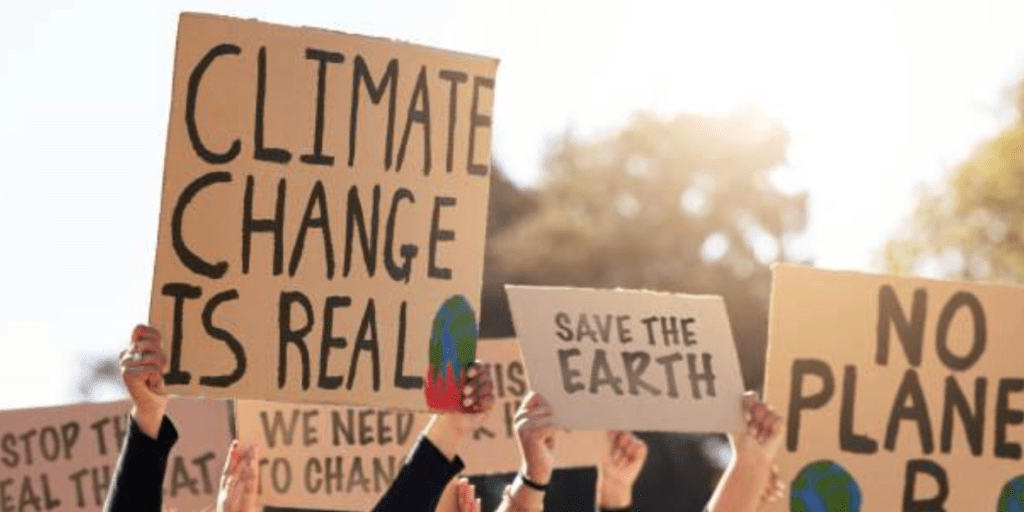
Image Source : https://www.istockphoto.com/photos/climate-change
 NICKELED AND DIMED