
By — Sumedha
Abstract:
Earthquakes are often described as natural disasters, yet their human consequences are profoundly shaped by social, economic, and political structures. This article undertakes a comparative case analysis of Japan’s 2011 Tōhoku earthquake and Afghanistan’s 2023 Herat earthquakes to examine how inequality determines disaster outcomes. Despite comparable seismic hazards, recovery trajectories diverged sharply due to differences in governance capacity, aid access, infrastructure, socioeconomic safety nets, and gender norms. Drawing on UN, World Bank, Red Cross, and expert reports, this article demonstrates that disasters disproportionately burden marginalised populations, particularly the poor, elderly, and women.
Earthquakes and Inequality: Case Analysis of Japan vs Afghanistan
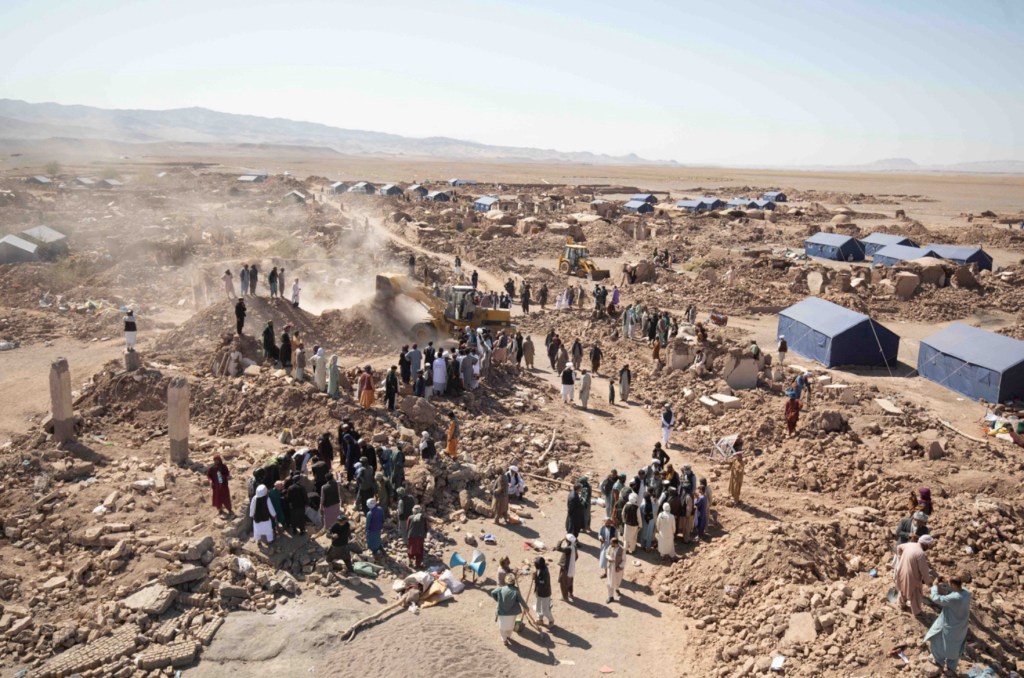
Earthquakes are indiscriminate in where they strike, but the suffering they inflict is shaped by society. In Japan and Afghanistan, two very different earthquake-prone nations the outcomes of seismic disaster could not be more divergent. Japan’s 2011 Tōhoku earthquake and tsunami killed 20,000, yet recovery was swift and government-led while Afghanistan’s 2023 Herat quakes, by contrast, claimed 1,500 lives and compounded an ongoing humanitarian crisis. These contrasts owe less to geology than to social and economic factors like governance, infrastructure, income inequality, gender norms, and aid access. We examine how these forces intersect with earthquakes to magnify risks for the poor. Drawing on case studies, UN/Red Cross reports and expert analyses, it is clear that disasters hurt the poor and vulnerable the most.
Governance, Aid and Response
Government capacity also diverges. Japan’s democratic institutions and financial wealth allowed massive mobilization after 2011. Within days 91 countries and international organizations pledged aid; search-and-rescue teams from dozens of nations deployed, and Japan’s own Self-Defense Forces launched relief for millions. Critically, Japan’s authorities could quickly coordinate these efforts. The World Bank, UN and NGOs flowed in alongside Japanese NGOs, leveraging both high-tech and ground networks. As a result, within a year most displaced families had decent temporary housing and rebuilding plans in place.
By contrast, Afghanistan’s governance crisis has sapped the relief effort. After the Taliban takeover in 2021, nearly all international funding halted. The U.N. reports that half of Afghanistan’s 42 million people already needed food aid before the earthquake. When the Herat and Kunar quakes hit, donors were reluctant to send cash or personnel into Taliban-controlled zones. The WFP’s helicopter lifeline was grounded due to funding cuts and border closures slowed supplies. Even agencies that remained face Taliban-imposed restrictions like bans on women aid workers. The net effect results in rescue teams struggling for basics. Unlike Japan, Afghanistan’s government cannot compel the international community to backfill gaps, nor can it tax a robust economy to pay for reconstruction.
These governance differences intersect with aid access. In Japan, even poorer districts got government grants to rebuild. While social spending debates emerged after the disaster, Tokyo ultimately promised to fund Kesenuma or Sendai as much as needed to restore infrastructure. Local NGOs and charities also supplemented aid where needed. In Afghanistan, however, aid distribution is contested terrain. The Taliban distrusts independent groups, and many NGOs must submit to male-led oversight. As one analysis noted, women and girls cannot leave home without a male relative so even UN convoys with food or blankets sit idle if no men show up. Simultaneously, donor governments have tied aid to Taliban behavior; cutbacks to humanitarians disproportionately harm women and girls.
Socioeconomic Inequalities
Income disparities also create a huge impact on who lives and who dies. Japan’s wealth still masks internal inequality: its relative poverty rate is one of the highest in the OECD. The 2011 disaster struck a region that was itself economically lagging; social scientists warned that “working poor” would suffer most. In fact, outside the directly destroyed areas, many urban poor in Tokyo lost jobs due to industry disruptions, compounding hardship. Older people on fixed pensions (17% of the population) were particularly at risk: news reports from 2011 noted that Japan’s elderly “bore the brunt of the initial impact” of the quake and tsunami, unable to flee or re‑establish livelihoods.
However, even Japan’s vulnerable did receive safety nets: unemployment benefits, housing subsidies, and new public housing were provided by the state. By comparison, pre-quake poverty in Afghanistan is endemic. Over half of households live in deep poverty, many on subsistence farming. When homes and fields vanish, there is no government cushion. The World Bank found the 2023 quakes caused millions in direct damage, which was just over 1% of Afghanistan’s GDP, but that figure hides the human cost. Afghan rural families lost their meagre savings, livestock, and grain stores simultaneously. Later, hunger has soared with crops ruined by droughts, floods and earthquakes, nearly 80% of households reported food shortages. In Japan, even the poor have access to hospitals, water, and social insurance. In Afghanistan, many earthquake victims live in villages with no clinics and health facilities close by. Those who survive the tremors then must brave cold winters with no shelter; in Japan, surviving evacuees at least had insulated shelters and kerosene. A UNDP assessment of the recent earthquake noted urgently that these communities need earthquake-resistant, affordable shelter, a need unheard of in Tokyo, but acute on an Afghan mountainside.
Gender and Demographic Impacts
Gender dynamics further twist the comparison. In Japan, disaster planning has historically been male-centered and only 10% of disaster committee members nationwide are women. This oversight has harmed women in practice as studies show in Japan women often evacuate with dependents and end up with higher mortality. After 2011, women composed most of the dead, partly because older women in fishing villages lacked mobility. Japan has since moved on gender inclusion in disaster planning, but remains constrained by broader social inequality. In a way, Japan’s cases illustrate the point that even in a rich country, gender gaps mean tragedies befall women disproportionately.
In Afghanistan, gender is an even stronger unimaginable fault-line. Taliban orthodox rules on women’s mobility and employment have dramatically worsened the quake’s toll on females. UN reports emphasize that women and girls continue to bear the brunt of the Afghanistan earthquake. Many were trapped by culture and law, Afghan women often must be escorted by a male to see a doctor or leave a building. When earthquakes leveled homes and killed men, widowed women were often left unable to travel to relief centers for aid. Tragically, WHO estimated that around 90% of health workers in quake zones are men, meaning female survivors could not even receive medical care as the Taliban policy forbade male doctors from treating women unaccompanied.
This has an inherent prosecuting environment that has systemic roots. Afghanistan ranks among the worst on gender equality globally, whereas Japan, despite its own shortcomings, is far closer to parity. The net effect results in gender apartheid amplifying during a disaster. In Japan, new policies are pushing more women into relief teams and shelters and in Afghanistan, the very structures that empower communities to survive have been dismantled. This results in the majority of people injured or killed being women and girls, a cruel testament to inequality.
Climate Change and Compounding Crises
While earthquakes are geophysical, climate change looms as a backdrop that compounds vulnerabilities. In Japan, extreme weather already strains infrastructure and budgets. The World Bank notes climate change is also increasing hazard exposure in Japan. Tokyo’s disaster agencies now prepare simultaneously for quakes and record storms. Similarly, Afghanistan is grappling with climate shocks even as the earth shakes.
These crises overlap as earthquake victims in Afghanistan were already hungry and homeless from floods/drought; Japan evacuees in 2011 faced cold snaps and radiation exposure. And response systems are taxed. For example, in September of 2023, Japan battled a late-season typhoon and hurricane-level rain while still recovering from an August quake, a reminder that disasters don’t come alone. In Afghanistan, 2023’s quake-hit provinces have endured monsoon flash floods and a harsh winter on top of Taliban sanctions. Humanitarian agencies warn that disasters will increasingly be unprecedented in a changing climate.
Conclusion
The stories of Japan and Afghanistan offer a stark lesson which is that nature’s fury is often met with society’s fault lines. The 2011 Tōhoku disaster and the 2023 Afghan quakes remind us that where you are poor, isolated or marginalized, the ground shaking may be deadly, but the lack of social safety nets makes it much worse. In Japan, structural investment and social solidarity saved countless lives. In Afghanistan, by contrast, compounded crises left survivors virtually on their own. This underscores that pre-existing weaknesses, such as poverty, gender inequality, and weak institutions, exacerbate the earthquake’s physical impacts and slow recovery.
About the Author:
Sumedha is currently a student at OP Jindal Global University in her third year of law school. With a strong interest in social sciences, she is keen to explore topics of intersections of climate and society. She is looking forward to explore and enhance her writing and knowledge on the socio-legal field.
Image Source: https://www.afghanistan-analysts.org/en/reports/economy-development-environment/nautres-fury-the-herat-earthquakes-of-2023/.
 NICKELED AND DIMED