
Abstract
Climate change is a global issue, but the causes and consequences of this problem can be understood as extremely unequal. In this article, we will explore climate change in the Global South and how this region is disproportionately affected by climate change, despite its least contribution to global greenhouse gas emissions. By relating climate change and climate colonialism, this article states that the transfer of power in climate change in the past continues in the present, and is responsible for increasing climate change vulnerabilities in the world. By using examples from the Philippines and Hong Kong, this article proves that climate change will punish poverty, through phenomena such as heat, floods, and displacement, as people in poverty cannot afford the resources for climate change adaptations. Additionally, in this article, climate debt and climate reparations will be dealt with to provide insights into the problem of climate financing, which focuses more on loans rather than addressing the issue of injustice. Therefore, there is a need to transform climate action from a charitable response to a responsibility-oriented and equitable form of climate governance.
Introduction
Climate change is not only an ecological issue, but it is also universally recognized as a danger that threatens human beings without regard to geographical boundaries. It causes a rise in temperatures, weather extremes, rising sea levels, irreversible damage to ecosystems, and makes national economic developments unsustainable. However, the causes and consequences of this worldwide threat are clearly unequal, where those who contribute least to climate change are the ones who suffer the most consistently from the ramifications of this climate phenomenon.
This imbalance has been described as climate injustice, and even climate colonialism, which recognises the disproportionate impacts of climate change on low-income communities and those of colour around the world, who are least responsible. This is not just an environmental problem but a political and moral one where historical injustices are reproduced through a climate crisis, with unequal development, extractive growth, and the concentration of power in the Global North.
Climate Change to Climate Injustice
Climate change is fundamentally driven by the accumulation of greenhouse gases. These emissions act like a blanket wrapped around the Earth, trapping the sun’s heat and raising temperatures. Energy, industry, transport, buildings, agriculture, and land use are among the main sectors that cause greenhouse gases.
In the past two centuries, it has been observed that industrialised countries in Europe and North America have accumulated and built their wealth through carbon-intensive growth, as they released a vast number of emissions into the atmosphere. The US is responsible for 40% of the current climate change breakdown, and the EU is responsible for 29%, as per research studies. In aggregate, the Global North is responsible for 92% of excess global carbon emissions.
The climate injustice does not only lie in the scale of these emissions, but also in the disproportionate distribution among those who contribute most to climate change and those who face its burden. The global north has been able to reap the benefits of its early industrialization, while the Global south is facing the most severe impacts of climate change. Additionally, these are the economically vulnerable regions because of their historical experience of colonialism.
Unequal Impacts: Who Pays the Price?
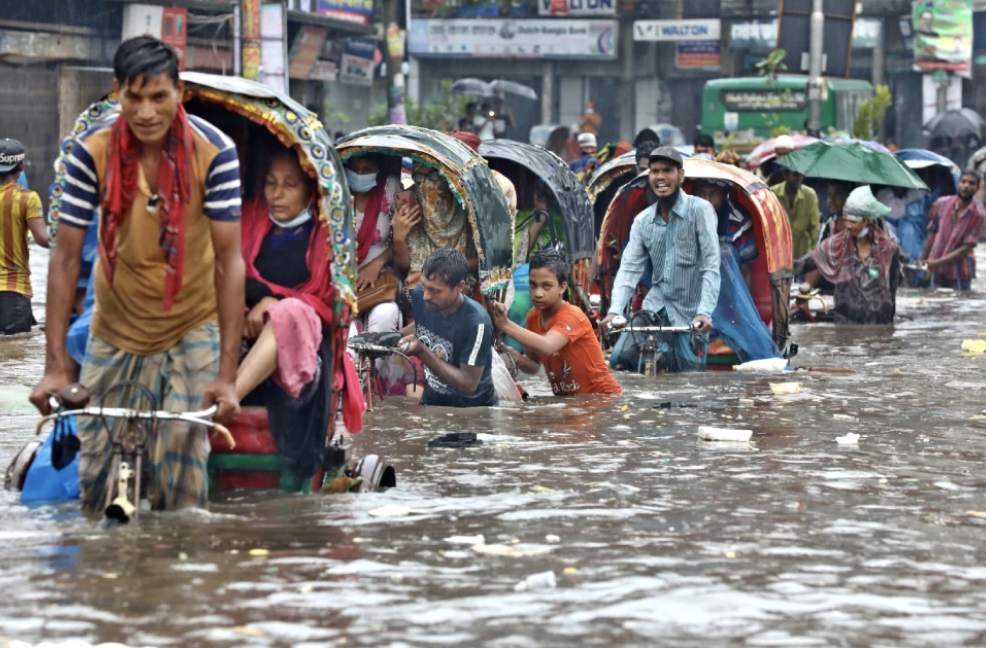
The effects of climate change are not equal. Wealthier countries like those belonging to the Global North are often able to protect themselves from the more severe impacts of extreme climate through means such as air conditioning, well-insulated homes, and cooling centers. The effects of flooding damage can also be absorbed by insurance companies and disaster funds allocated by governments. On the contrary, the poorer countries that are affected by the same climate shifts will be devastated by the effects due to a lack of these measures.
Heat waves also have a profound impact on the pace of a country’s economic and industrial development, due to the destruction of crops and food, along with a reduction in productivity among workers. In contrast, flooding leads to the destruction of vulnerable informal settlements and small business premises. Additionally, droughts lead to the movement of communities in search of jobs and water sources. All such instances can be said to have geographical consequences, but in reality, climate change highlights the inequalities of our world in terms of socio-economic conditions and disproportionately harms the already poor sections of society.
Punishing the Poor, Not the Excess
North America is only home to 5% of the world’s population, yet they emit 18% of the total CO2 emissions globally. On the contrary, Africa is home to 16% of the total population of the world, but they only emit 4% of the total CO2 emissions.
Correspondingly, despite the fact that the Philippines represents only 1.41% of the population of the world and has also made only a meager contribution of 0.35% to the overall greenhouse gas emission, the country still suffers from some of the most severe consequences of climate change. The area is also one of the cyclone-prone regions of the whole world; thus, it also has frequent events of strong typhoons, landslides, and floods triggered by the vulnerability of the area to the effects of climate change. Notably, this has resulted in massive loss of human life and people’s displacement influenced by the vulnerability of the population to natural hazards and the low ability of the area to adapt to climate extremities.
In the context of Hong Kong, the people living in subdivided flats, also identified by the name ‘cage homes, are becoming increasingly prone to health hazards, with the rising temperatures in the warmer seasons in Hong Kong becoming a severe concern. Most occupants can’t afford ventilation or air conditioning, intensifying heat stress in addition to the lack of space in the overcrowded flats and the high cost of electricity. As per studies, almost half of the subdivided faults see temperatures exceeding 30 degrees Celsius, increasing the risks of overheating and dehydration. Even though such low-income communities tend to consume less overall energy due to economic limitations, they still suffer more from climate change-induced heat, highlighting how climate change punishes poverty more rather than excess.
Climate debt and reparations
The existence of these inequalities has given rise to the concept of climate debt. This refers to the idea that developed countries owe a debt to the developing countries since they are the ones responsible for the vast majority of global emissions and ecological devastation, while the underdeveloped countries struggle to adapt to the resulting climate changes. This accounts for the historically prominent greenhouse gas emitters and countries that took longer to industrialize, who barely scratched the surface in comparison. This is why countries like India and China, the current first and third largest emitters globally, have requested the northern countries like the US and other historical polluters in COP26 to provide more climate financing. This reframes climate finance not as charity, but as responsibility.
It is also closely related to the idea of climate reparations; it demands consistent financial, technological, and institutional support that would need to be provided in the face of irreversible climate harms. In practice, these commitments fall far short, with most climate finance given as loans rather than grants, further increasing the debt burdens of developing countries without repairing injustice. Funding pledges more often than not come up short of promised amounts, leading to the reinforcement of distrust between the Global North and the Global South.
Conclusion
Climate change may be a global issue, but its burden continues to be shared unequally. This is because the issue of the climate crisis underscores the long-existing universal inequalities, given the fact that the groups that have contributed least to the degradation of the planet are experiencing the worst possible effects, while the ones with the greatest responsibility to adapt to the crisis are those who contributed the most to the problem. In other words, we will not be able to reverse the extractive and colonial dynamics that materialize the climate crisis if we fail to acknowledge the responsibility and the inequalities inherent to the current situation. Accordingly, until we are able to do so, the Global South continues to pay the price for the crisis that is not of its choice.
Author’s Bio
Varsha M is a third-year law student at Jindal Global Law School and a columnist in the Environment & Social Issues cluster at Nickled & Dimed. Her interests lie in environmental governance and climate justice.
Image Source<<https://www.fairobserver.com/world-news/bangladesh-holds-the-world-accountable-to-secure-climate-justice/>>
 NICKELED AND DIMED