
By – Varsha M
Abstract
E-waste is now surpassing 62 million tonnes annually, and is often recognised as part of our circular economy. However, the reality of informal e-waste recycling shifts toxic burdens onto poorer communities in the Global South. Women and children are especially vulnerable to exposure to poisons like lead and mercury that are byproducts of the process. Furthermore, the contamination of air, soil, and water that makes its way into our food chains, impairing health and ecosystems. This article advocates for safer recycling, stronger regulation, and the urgent need for moral accountability of consumers in our fast-paced digital world.
Introduction
According to UNITAR, “A record 62 million tonnes of e-waste was produced in 2022, up 82% from 2010; and this is on track to rise another 32%, to 82 million tonnes, in 2030”. Much of this waste originates from the phones, laptops, and gadgets that define our very lives in the 21st century. We view technology as a symbol of progress and the future; however, we are often oblivious to the afterlife of these devices, which tells a darker story – one of smoke, toxic chemicals, and human suffering. The glowing screens that connect our world come at the expense of invisible casualties.
Toxic Colonialism
Much of the e-waste globally flows from the global north to the global south; this phenomenon is termed “toxic colonialism”. The wealthier nations benefit from the rapid technological turnover, whereas the poorer nations end up bearing the brunt of it in terms of safety, health, and environmental costs. The disposal cost and eco-friendly regulations for e-waste are much stricter in high-income countries, so most e-waste ends up being illegally passed to low to middle-income countries (LMICs) for recycling. However, the industrial infrastructure and recycling tend to be substandard, so the workers have to adapt to crude informal methods to recover e-waste, which often results in negative and irreversible impacts on local, regional, and even global ecological environments. Those who work in proximity to recycling face significant costs to their health and quality of life. Behind the impressive idea of a “circular economy” looms the casualties of e-waste recycling experienced by the most marginalized groups.
E-Waste and Child Health
According to the World Health Organization, pregnant women and children are among the most vulnerable groups impacted by toxins released from informal e-waste recycling due to their unique vulnerabilities. Many toxic chemicals released can cross the placenta of mothers and also contaminate their breastmilk, for example, mercury. These chemicals seep into our bodies upon inhaling the fumes or through the consumption of contaminated food.
Fetuses and young children are especially vulnerable due to their rapidly developing bodies. Substances like lead and mercury found in e-waste disrupt central nervous system development during pregnancy and childhood, while also affecting structural development and function of the lungs. Such impacts create irreversible harm and impact their long-term quality of life.
Livelihoods in the Toxic Economy
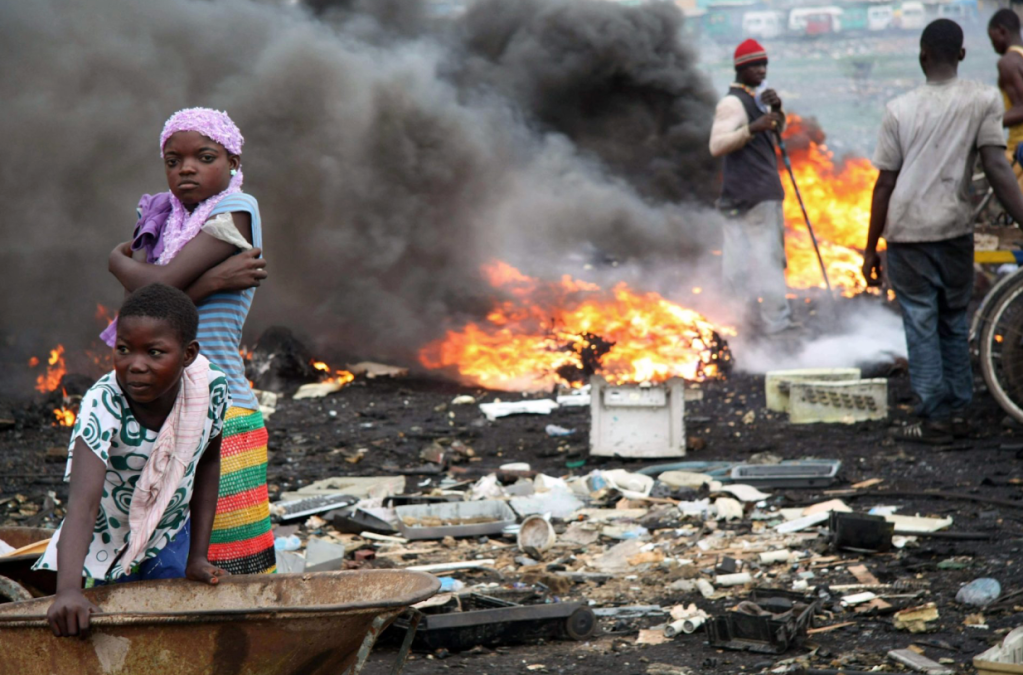
Even though e-waste provides opportunities for economic benefits, many civilians (low-income earners, settlers, children, and people with minimal education) are exposed to negative health effects. Why, then, do families continue this dangerous work? The painfully simple answer is survival. In many places, ranging from Delhi’s Seelampur (home to India’s largest e-waste recycling hub) to Ghana’s Agbogbloshie (one of the world’s largest electronic waste dumps, in Accra), e-waste is one of the few accessible sources of income due to poverty, lack of education, and weak regulations. In India, an informal e-recycling worker interviewed by Deccan Herald admitted that “There are people who use specialised equipment that protects the metals, but one machine can cost about Rs 2 lakh”. However, this is not an affordable option as even with a high volume of e-waste, the workers are only able to earn about Rs 450 to 500 per day. This makes it impossible to take up sustainable and formal means of recycling.
A worker in Agbogbloshie tells Bloomberg that “There are skin diseases and ailments in the area, but the worst problem is respiratory illnesses, because the amount of pollution here is so high”. On top of this, health risks continue to enter the food chain. The area of Agbogbloshie is home to one of the largest food markets in Accra, where haggard livestock roam freely and graze on the toxic dumpsite.
Researchers in a 2018 report by Ipen and the Basel Action Network have found that Agbogbloshie contains some of the most hazardous chemicals on Earth. According to their analysis, consuming only a single egg in the Agbogbloshie scrap yard and slum would exceed the European Food Safety Authority’s limits on chlorinated dioxins 220 times.
For the workers at the bottom of the pyramid, the question isn’t whether working with e-waste is harmful; it is whether they can afford not to work with it. The recycling paradox is that what sustains livelihoods in the short term silently erodes communities in the long term.
The Environmental Damage
Informal e-waste recycling activities like open burning and heating are most hazardous due to the toxic fumes and pollutants released. They contaminate the air, soil, dust, and water at recycling sites and in neighbouring communities. Once the pollutants reach the environment, they travel significant distances from the polluting source, eventually exposing even those in faraway areas to the hazardous substances.
When such substances seep into the soil, crops become more susceptible to absorbing them, resulting in reduced agricultural productivity and a range of health issues. Additionally, heavy metals from E-waste, such as mercury, lithium, lead, and barium, seep further into the earth, eventually reaching groundwater. They eventually enter rivers, ponds, and lakes, leading to acidification and contamination. This makes entire aquatic and terrestrial ecosystems vulnerable to collapse and also harms communities far from recycling facilities, where even finding safe drinking water becomes increasingly difficult.
Conclusion
E-waste recycling is celebrated as a “green” approach in the circular economy. However, it exists at an uneasy intersection of technology, inequality, and survival, exposing the most vulnerable communities to toxic food, air, and futures. From Delhi to Accra, people entrust their livelihoods to dismantling our discarded devices, as they do so at the cost of dismantling their health and environment. Our challenge ahead is not only about creating better technology or stricter regulations to govern such processes, but about confronting the moral cost of our fast-paced digital age. With the world’s growing appetite for electronics, it becomes more challenging to prevent the illegal dumping of electronic waste and its tragic impacts on places like Agbogbloshie. Thus, we must take responsibility for the afterlives of our devices, and ensure safer recycling, stronger regulation, and above all, a shift in how we value both people and the planet.
Author’s Bio
Varsha M is a third-year law student at Jindal Global Law School and a columnist in the Environment & Social Issues cluster at Nickled & Dimed. Her interests lie in environmental governance and climate justice.
Image Source: <<https://www.pureearth.org/project/ghana-protecting-every-childs-potential/>>
 NICKELED AND DIMED