
By- Arpita Sondhi
Abstract
Fast fashion has long been viewed as the epitome of unsustainable consumption patterns and exploitative labor practices. During the thirteen years between 2010 and 2023, there was an increase of nearly 0.9 billion garments sold in the French market. In June 2025, the French Senate greenlit a Bill that aims to curb fast fashion in the country, making it a groundbreaking step towards curbing the inevitable negative environmental and social consequences of the global fashion industry. This article aims to explore the origins of the bill, its key features, and its potential impact on the fashion world.
Introduction
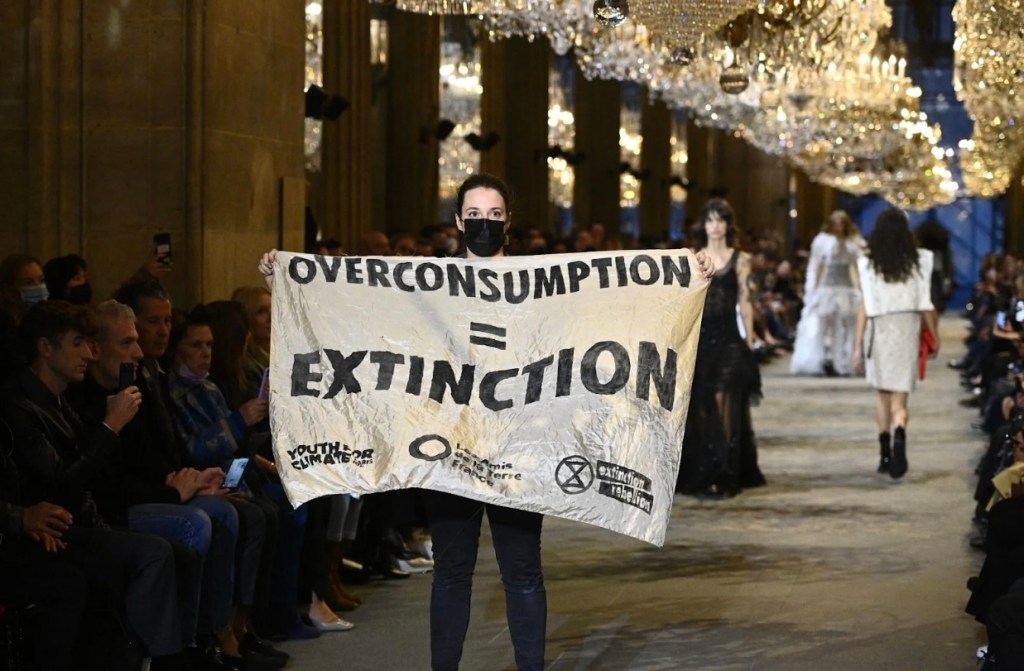
One of the long-standing poster children of over-consumption and capitalism has been fast fashion. Fast fashion is essentially the mass production of clothing at an accelerated pace and extremely low costs. The term was coined in the early 1990s by the New York Times to describe the speedy 15-day process, from design to sale, undertaken by Zara. More recently, Chinese companies such as SHEIN have been able to achieve this feat in just 10 days.
While this sounds like the perfect model for capitalist producers, as it allows for a substantial increase in profit margins, the fast fashion industry also happens to be notoriously known for contributing to exploitative labor practices and unethical consumption patterns, with little to no regard for the environmental costs.
The environmental impact of fast fashion is evident, as seen in the skyrocketing levels of greenhouse gas emissions, rapid depletion of the Earth’s natural resources, alongside immense pollution throughout ecosystems. As of 2019, the fashion sector has contributed nearly 10% to global carbon emissions and has emerged as a leading source of microplastic pollution in the world’s seas and oceans. Additionally, as per the UN Framework Convention on Climate Change, the total greenhouse gas emission from the production of textiles exceeds those of both international flights and maritime shipping, standing at a staggering 1.2 billion tonnes. Furthermore, it is predicted that emissions resulting from the manufacturing of textiles will increase by 60% by 2030.
These statistics continue to paint a harrowing picture of the current status of the fast fashion industry.
History of the Bill and why it was introduced
France, often considered to be the epicentre of the fashion industry or the ‘Fashion Capital of the World’, has taken a significant step by proposing an ambitious anti-fast fashion bill.
First introduced on 14th March 2024 in the French National Assembly, the bill formally defined fast fashion, proposed banning fast fashion advertising, and strengthening penalties for environmental harm caused by the production and promotion of fast fashion. On the 10th of June 2025, with overwhelming support of 337 votes in favor and 1 vote against, the bill was passed in the French Senate. The next step in the legislative process will take place during September 2025, when the bill will be moved to a committee of senators and deputies. Furthermore, in order to ensure compliance with the regulations of the European Union before the bill is finally adopted, the European Commission also has to be notified.
Pannier Runacher, the Minister of Ecological Transition, Biodiversity, Forests, Seas and Fisheries of France, termed fast fashion a “triple threat”, stating it as a contributor to environmental degradation, promoting over consumption, and adversely impacting France’s local textile industries.
Key Features of the Legislation
The main targets of the bill are the Chinese mass-production giants such as SHEIN and Temu, which have been at the forefront of fast fashion mass production and regularly flood the French market with their products. The proposed imposition of compulsory sustainability disclosures, eco-taxes, sanctions, advertising bans, among others, makes this bill one of the most far-reaching and robust legislative responses to the escalating issue of overproduction and environmental and social harm of the industry. However, it is argued that the bill proposed to the Senate Commission was weaker than the original.
Firstly, the Bill aims to impose bans on advertising of fast-fashion products by influencers, along with imposing sanctions for the same. It would mandate companies to disclose the true environmental impact of engaging with their products as well. Another way is to enforce mandatory eco-scores. The main idea behind these eco-scores is to penalise fashion companies that have major negative environmental effects. The impact that products of a specific company have on the environment will be evaluated, based on which they will be given an eco-score that will be used as the basis to impose penalties. For instance, companies with extremely low eco-scores will be taxed up to 5 euros per product in 2025. This can rise to 10 euros by 2030. Furthermore, it imposes a cap of 50 percent of the price of the product (essentially meaning that the price of the penalty has been capped at 50 percent of the price of the product).
The revised version of the bill proposed by the Senate distinguishes between ‘ultra’ and ‘classic’ fast fashion. Ultra fast fashion essentially includes these platforms that produce garments at a large scale and flood the French markets, selling at extremely low prices, while classic fast fashion includes brands such as Zara and H&M, which are established and based in Europe. The companies categorized under ‘classic’ fast fashion are not bound by the same provisions that the ‘ultra’ fast fashion platforms are. Many have seen this as a political move to protect the local French and European producers, as many local French brands have recently been liquidated, which can, to some extent, be attributed to the competition posed by SHEIN, Temu and other fast fashion brands.
Implications
While it is widely accepted that this law is a progressive step, there are polarising opinions on whether it does enough or if it will truly do any good in the future. “[The law] sends a signal to all fashion labels that their business models need to mainstream environmental considerations as they are in the sight of regulators,” says Professor Justine Nolan, Director of the Australian Human Rights Institute, University of New South Wales. The law is also seen as a mechanism to protect domestic producers in France, who often found themselves at a disadvantage due to the availability of cheap and easily accessible substitutes.
On the other hand, critics argue that the scope of the law is narrow and that they criticise the differentiation the law makes between Asian fast fashion companies (such as SHEIN and Temu) and European companies, such as Zara, H&M, and Kiabi, which find themselves largely unaffected by the provisions. Several environmental organizations and critics, including Pierre Condamine, have viewed this legislation as a missed opportunity, arguing that it doesn’t even begin to scratch the surface or address the true impact of fast fashion, especially as it leaves out companies that produce articles that represent nearly 90% of the clothes in the French market.
Furthermore, Elizabeth Cline, Professor of fashion policy and consumerism and sustainability at Columbia University, states, “I wish I could say these anti-fast fashion policies were motivated by an interest in protecting the environment and in shielding young people from aggressive marketing, but they’re mostly a reflection of conservative, anti-China and protectionist posturing.” The full extent of the implications of the law will fully come into light only in September 2025, when the law will undergo further scrutiny under the eyes of a joint committee.
Conclusion
As of today, France discards nearly 35 articles of clothing every second, shedding light on a much more unsettling and alarming pattern of overconsumption that drives the fast fashion industry. To summarise, this bill represents a major milestone in the regulation of fast fashion. Although a step in the correct direction, just like any legislation, it is far from perfect. The legislation will be scrutinized by a joint parliamentary committee in September 2025 to finalize the details of the law. The introduction of this bill has placed France as a ‘test case’, setting a global precedent which will, in many ways, define the future of fast fashion.
About the Author:
Arpita Sondhi is an incoming third-year law student at Jindal Global Law School, with a keen interest in entertainment, media, and corporate law.
Image Source- https://culted.com/france-fast-fashion-bill-law-2025/
 NICKELED AND DIMED