
By – Mani Meghana Godavarthi
Abstract
Agriculture was always considered a sustainable practice, but it is also a cause of environmental degradation and resource depletion. While agriculture remains the backbone of India’s rural economy and global food security, historical and modern practices have contributed to biodiversity loss, soil erosion, and pollution. Despite the promise of AgriTech, the sustainability that the world aims to achieve is limited to logistics and supply chain rather than innovation that reduces environmental contamination affecting quality of life. It is essential to promote and embrace technological advancements in production and other areas, and restore the balance between human quality of life and planetary health.
Introduction
George Washington once purportedly said,“Agriculture is the most healthy, the most useful, and the most noble employment of a man.” Today, the question we need to ask is – is it the most sustainable yet?
Agriculture and its allied sectors contribute significantly to the GDP (Gross Domestic Product) of India. It is the largest source of livelihood in the country, especially in the rural areas, with 70 percent of rural households being dependent on it. It is categorically clear that the entire world is dependent on agriculture for sustaining life. However, agriculture also plays an antagonistic role in the attempt to bring about sustainability and a healthier planet. As far as 7000 years ago, the climate began warming when rice paddies spread in China, producing methane gas. Widespread deforestation in Europe to create farms 6000 years ago yielded a similar result. Scientists have found evidence of deforestation and pastoral farming resulting in the alteration of soil composition from the Bronze Age. All this evidence is indicative of how a major part of historical agricultural practices had an incredibly damaging impact on our environment.
Agriculture as a cause of environmental concern
Today, agriculture is the leading source of pollution and resource depletion in the world. The agricultural sector consumes about 69 to 70 percent of the planet’s freshwater. Almost 1.7 billion acres of land were used for production in 2016. Toxic farm chemicals such as pesticides and fertilizers poison water, air, and soil, the three primary elements essential to sustain life. This poses a conundrum – are we farming to sustain life, or to end it? Lands need to be cleared to plant and harvest. The removal of natural plants and animals native to a particular place to plant crops leads to biodiversity loss. Biodiversity loss leads to degradation of topsoil, which, according to the United Nations, has already depleted a third of the topsoil on the planet and warns that as much as 90 percent of the world’s topsoil could be lost by 2050. This is important because erosion of topsoil and nutrient depletion causes the soil to become infertile. This forces the producers to expand into surrounding lands and forests, further depleting the quality of soil. Parallelly, it causes socio-economic concerns by pushing poor farmers, dependent solely on farming as a livelihood, into further poverty, considering a fall in production due to poor quality of soil, along with economic inflation together proves burdensome. The meagre produce is contaminated due to excessive use of chemical fertilisers and insecticides, which are used to make up for the poor composition of the soil, depleting their health and the consumers’ health. These people then spend money to employ hospitals and take medication, which goes into the capitalists’ pockets, who then use the same money and resort to activities that are further detrimental to the environment. There seems to be no space for the environment to breathe and recuperate.
Although agriculture has its challenges, it is not all bad and has its merits. Agriculture releases greenhouse gases into the atmosphere and slows down climate change through carbon dioxide (CO2) exchange. However, it must be monitored closely to achieve the best results. At a surface level, awareness can be spread, urging farmers to approach farming sustainably. Encouraging farmers to adopt crop rotation (changing crops planted in each field after the growing season) and crop selection (planting indigenous flora that are more resilient to local environmental conditions). Suggestions like planting cover crops to prevent erosion and promote soil health and, tilling the soil while covering part of the surface with crop residue to reduce erosion and conserve soil while replenishing the nutrients in the soil at the same time and promoting natural methods of pest control rather than resorting to chemical substitutes must also be provided. Awareness must be spread about the role technology plays in achieving better yields, and technology must be made accessible to farmers of all scales.
Technology and the Agricultural Industry – Its Role and Limitations
Technology has proved its importance time and again as a means to an easier and advanced life, and also to improve the quality of life. It has been making waves across sectors, revolutionising the practices domestic to such sectors like AgriTech, which is currently growing rapidly. “AgriTech” has been growing in India with a tenfold growth in the past three years. According to the Government of India, these startups have been making a significant impact in precision farming that increases efficiencies and reduces environmental impact by accurately applying resources like water, fertilisers, and pesticides, and lauds it, ignoring the impact these farm chemicals have on the soil. One can argue that it still reduces the possible impact by limiting it. Although limitation is considered a significant progress, I believe that the primary aim should be prevention to achieve the highest result and not merely limiting it. Many AgriTech startups have developed online marketplaces that analyse crop-related problems and provide curated solutions.
To further understand the state of AgriTech in India, we can list the top ten AgriTech startups in India, in no particular order:
- KhetiGaadi – It is an Agri-commerce marketplace that makes buying, selling, and renting farm machinery easy.
- Crofarm – It is an app that facilitates a digital supply chain between farms and businesses.
- Farm2Farm – Grows and delivers organic microgreens.
- MeraKisan – Assists farmers in selling their produce directly to consumers.
- FreshoKartz – Provides soil advisory services and farm fresh produce.
- Stellapps – Digitized the dairy supply chain.
- Ninjacart – Fresh produce supply chain
- Intello Labs – Food and Agri supply chain, and aims for it to be transparent.
- BharatiAgri – Provides a platform to educate farmers digitally.
- Bombay Hemp Company (BOHECO) – Research and production to promote industrial hemp.
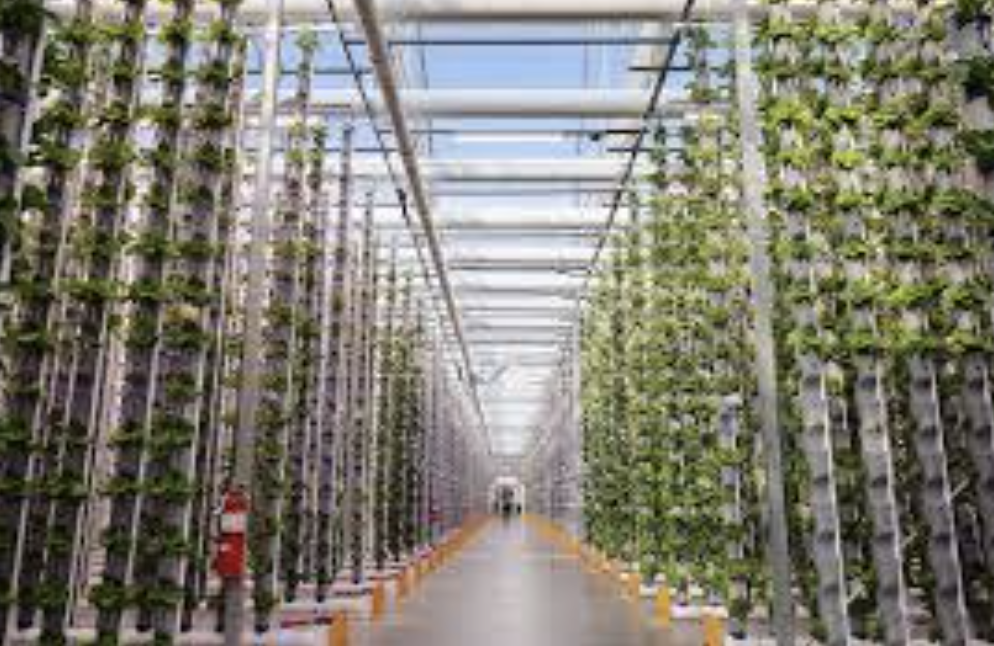
More than half of this list focuses primarily on digitising the supply chain and providing online marketplaces. Several AgriTech firms focus on the final phase of delivery by using AI and data-driven decisions to predict demand, supply, and technology. However, there is a lack of innovation in production or production-aiding-focused technology and method formulation, the last being vertical farming. For example, a system that analyses the soil sample provides information on the nutrient content and suggests the best crop to plant in that condition to replenish other nutrients, as different vegetation supplies different nutrients and removes different nutrients might prove more helpful to a farmer. This paucity of such kinds of tech is also fuelled by the lack of investment in such innovations. This often stems bias that such technology is barely profitable, resulting in farmers falling back on existing practices that are harmful to the environment.
Conclusion
Agriculture contributes to a number of leading environmental concerns. The leading cause of biodiversity loss is deforestation. Experts think that freshwater demand will exceed supply by 40 percent by 2030. Agricultural runoff containing chemical pollutants poses a risk to fauna, especially aquatic life. While we strive for a sustainable future, the question remains: have agricultural practices truly become sustainable? The lack of innovation in creating sustainable agricultural production methods ends up sustaining the problem of unsustainability, as traditional methods often degrade soil, water, and biodiversity over time. While agritech startups hold great promise, their overwhelming focus on logistics and delivery, rather than addressing core issues in production, limits their potential to boost us into a sustainable future, especially with the lack of faith of investors in agritech, in general, highlights the fragility of models that do not tackle the foundational challenges of agricultural sustainability. To ensure a sustainable future for agriculture, technological innovations such as precision farming and vertical farming need to be prioritised and implemented to prioritise long-term environmental health, economic viability for farmers, and equitable access to resources. By reorienting efforts towards these goals, we can create a resilient agricultural ecosystem capable of feeding future generations sustainably.
Author’s bio
Mani Meghana Godavarthi is a second-year BBA LLB student at Jindal Global Law School. She is interested in Constitutional Law, Criminal Law, and Company Law. She is also fascinated with the working and implementation of environmental laws in the context of businesses.
Image Source : https://www.edengreen.com/blog-collection/what-is-vertical-farming
 NICKELED AND DIMED