
By – Mani Meghana Godavarthi
Abstract
Africa is rich in natural resources and has an exceptional potential to become a global leader in the renewable energy sector. However, the situation in this region is highly paradoxical, as despite its high potential, it attracts very low investment. Low investment caused by poor local development has led to the prevailing poverty in the region, wasting the available resources, and pushing the region into further poverty. This article aims to examine four key barriers to potential investment in the renewable energy sector in Africa that limit access to clean energy for millions and examine its social implications.
Introduction
Africa is the second-largest continent and is highly biodiverse, with a diverse range of megafauna, or large mammal species. Located at the centre of the Earth and stretching from the northern temperate zone to the southern temperate zone, it is rich in natural resources, with an estimated value of $6.5 trillion according to African Development Bank President Akinwumi Adesina. Africa has around 30% of the world’s mineral reserves, 12% of the world’s oil, and most importantly, 8% of the world’s natural gas reserves. However, only less than 6% of the total energy is being harvested. Despite being rich in renewable energy resources, which are untapped and have high potential to switch to renewable energy, Africa receives only 2% of the global renewable energy investment. Most recently, the African Development Bank, World Bank, and Mission 300 (an initiative to scale up access to electricity in the sub-Saharan region) came together and aimed to provide access to electricity to 300 million people by 2030. This article is aimed to examine the key barriers to potential investment in the renewable energy sector in Africa that limit access to clean energy for millions and examine its social implications.
The Renewable Energy Landscape in Africa
Before discussing the barriers to the investment, it is essential to understand and map the renewable energy landscape in Africa. Renewable energy is “energy derived from natural sources that are replenished at a higher rate than they are consumed.” Africa retains the potential for generating 11 Terawatts of solar power. Interestingly, 11 terawatts could not only satisfy India’s total energy requirements but also yield a surplus. It can generate 350 GW of hydropower, 110 GW of wind energy, and 15 GW of geothermal energy. Despite this vast energy potential, Africa remains the most energy-deficient continent. Africa is poor, and is poorer in terms of energy. Despite having around 18% of the world’s population, Africa surprisingly accounts for less than 6% of the world’s energy consumption. Access to electricity is one of the biggest with 42% of the population lacking access to electricity in 2022. One of the biggest reasons why Africa is in this paradoxical situation is that most of its resources are exported rather than being consumed domestically. There is a lack of public finance to invest in energy infrastructures, and this has increased the continent’s dependence on investment to kickstart its renewable energy production. Countries are investing in projects and initiatives that focus on boosting renewables, with South Africa introducing Du Plessis Dam Solar PV2 park and the upcoming Sounda Hydropower Plant in Congo among a few. In 2024, around 21 countries generated at least 5% of their electricity by harnessing solar energy, with 7 countries generating more than 10%. Despite these steps, Africa’s expansion into renewables still leaves a lot of room for improvement.
Barriers to Investment
- Infrastructure Challenges
The infrastructure gap is one of the most pressing barriers to sustainable economic growth in Africa, but investors look for a stable core and core-plus assets to invest in the continent. While Africa seeks investment to overcome their gap. A lot of communities across Africa lack access to an electricity connection. Meeting the existing infrastructure gap not only aids in boosting investment but also improves the quality of life for the people; in fact, infrastructure deficit reduces economic growth in Africa by 2% annually. Transport costs in the region are among the highest in the world because of underdeveloped road networks. This raises overall costs and makes transport less affordable, reducing demand and strongly discouraging investment in the region.
- Political and Regulatory Risks
Political instability in countries like Sudan has severely impacted investor confidence in the region. Such a political landscape also causes regulatory uncertainties, such as sudden changes in laws. This form of political volatility, paired with economic uncertainty, also causes fluctuations in currency values among other things, deterring investors. Furthermore, research showed that trade openness directly correlates with investment inflows, and it is often determined by the political landscape of a country.
- Financial Constraints and Risk Perception
Green energy investment is considered to be riskier than fossil fuels due to its being relatively new and capital-intensive. Although Africa would mark an attractive opportunity for investments in green energy, infrastructure, and IT sectors, the post-COVID pandemic left many African countries economically volatile, increasing the risk perception for investments. Africa’s infrastructure financing faces a gap of 68 billion to 108 billion dollars each year. Many of the countries in this region struggle to meet their financial obligations, particularly resource-dependent and resource-intensive countries like Nigeria and Angola, which discourages investment in the region. Perception also plays a crucial role in shaping investment patterns in the region key role in that those who have already invested tend to view the market as highly attractive, often ranking it among the most promising destinations. In contrast, those without prior engagement often regard it as one of the least appealing regions for investment, highlighting a significant perception gap that influences investor behaviour.
- Administrative and skilled labour challenges.
Bureaucracy has been a challenge in Africa for ages. There are two specific aspects to this- local content regulation and taxation that hinder foreign investments, among other things. Additionally, Africa has a significant shortage of skilled human resources. Especially, in the renewable sector, only 76,000 jobs are created, which indicates that a majority of Africans do not have developed skills, and practical experience is essential to cultivate skills that are particularly vital in the green energy sector. There have been significant efforts made to bridge skill gaps in Africa, but we need a rigorous improvement in the availability of skilled labour to effectively tap into the green energy sector.
Social Implications of Limited Investment and Ways to Improve It
There is a serious lack of access to energy in this region, and this has drastically reduced access to many essentials and has severe implications on a myriad of aspects, including health, education, and sustainable development across the area. Lack of electricity is perhaps the biggest concern in this region since it is the lowest of any region in the world. Africa’s energy poverty can be addressed by developing clean and green energy that can be cheaper and cleaner than fossil fuel alternatives. Further, energies like solar energy, which are available in abundance, are inaccessible for many, especially in African regions where solar installations are usually found in middle to upper-class areas. However, African nations are now introducing grassroots-level programs and collaborations, especially the Mission 300 Africa Energy Summit, where the nations aim to bring critical reforms to the energy sector.
Starting at the grassroots level, introducing community-led initiatives and showcasing existing ones—like vocational training and better education—that help reduce risks for investors can significantly boost investor confidence. Additionally, it is important to implement regulatory reforms and establish clear policies on investments and related laws. Efforts should be taken to improve local financial institutions to improve domestic financing. Schemes should be introduced to ensure the full potential of the available resources is tapped into.
Conclusion
Despite having vast renewable energy potential, Africa’s resources remain underutilised due to various barriers such as infrastructure gaps, political instability, financial constraints, and administrative challenges. These challenges hinder the potential investment in the region, leaving millions without access to basic energy sources such as electricity, which, down the line, fuels social inequalities in access to health, education, and economic opportunities. Addressing these challenges is crucial for Africa’s sustainable development, as renewable energy can provide affordable, clean alternatives to fossil fuels while fostering economic resilience and reducing inequalities. The solution to overcome these hurdles is to harness Africa’s untapped energy resources to improve investment in renewable energy infrastructure that aids in reducing the continent’s energy poverty and drives economic growth. Governments, private investors, and international organisations must collaborate to mobilise resources and create such environments that foster investments for renewable energies, and governments must implement stable regulatory frameworks and strengthen financial institutions to attract investors. Grassroots initiatives, vocational training programs, and strengthening local financial institutions can help bridge the skill gap and ensure equitable energy access while reducing the dependency on external investments at the same time. Additionally, international organisations must prioritise Africa in renewable energy investments, recognising its potential to become a global leader in clean energy. Addressing the barriers to renewable energy investment in Africa is critical for the region’s sustainable development.
Author’s bio
Mani Meghana Godavarthi is a second-year BBA LLB student at Jindal Global Law School.
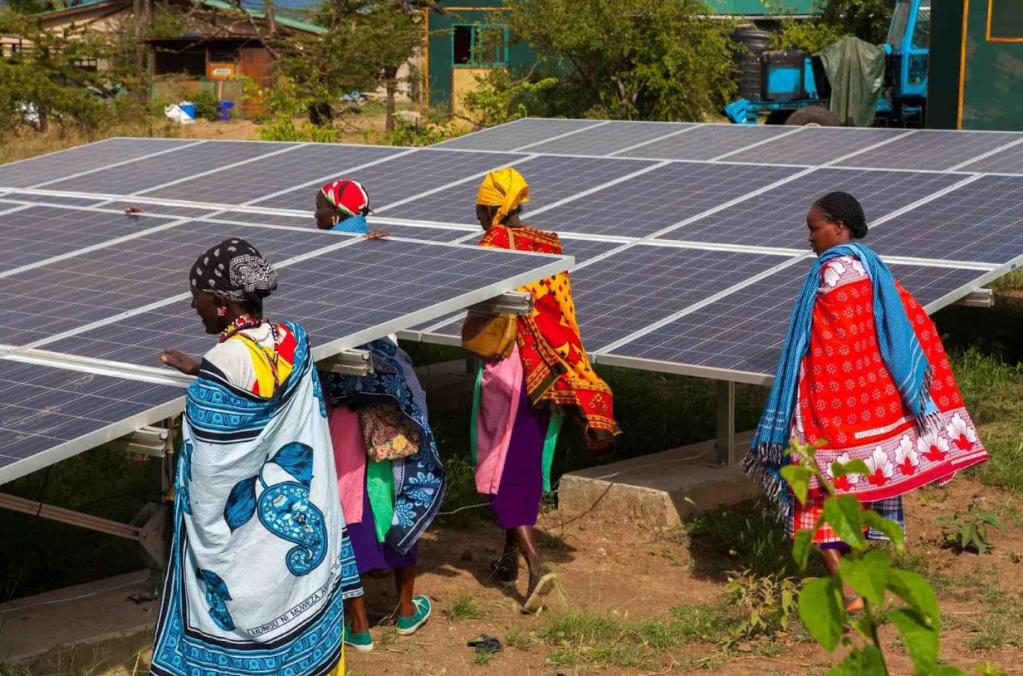
Image Source : Development of renewable energy in Africa: the continent’s future as the world hub of green economy
 NICKELED AND DIMED