
By : Vaidehi Sharma
Abstract
This article examines the digital indoctrination of teenage boys into toxic masculinity through online subcultures, as depicted in the series ‘Adolescence’. It explores the Manosphere and the incel subculture, and analyses how recommendation algorithms can steer impressionable adolescents toward harmful online communities. The article emphasises the urgent need for parental and institutional intervention to prevent harmful behavioural shifts in young minds.
Introduction
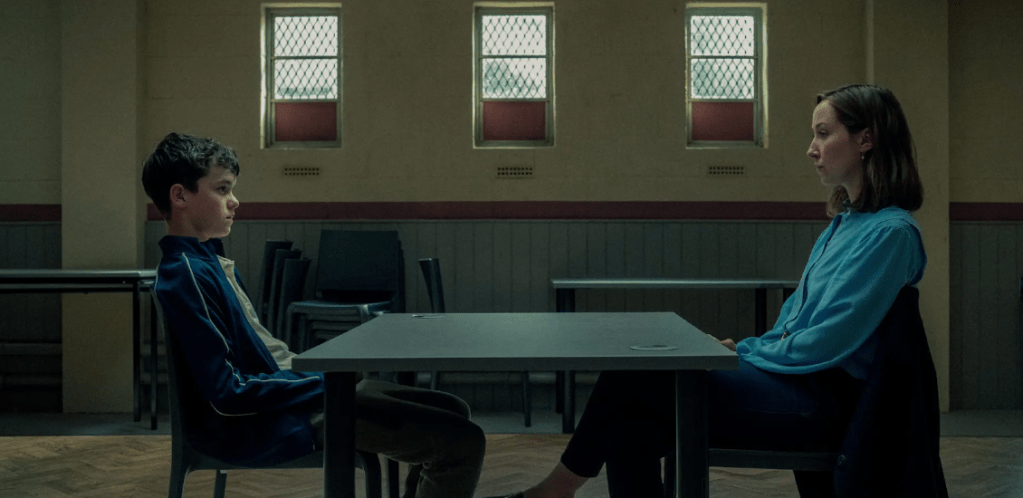
The new crime drama Adolescence, released on 13 March 2025, has garnered immense viewership worldwide and sparked important conversations about the unchecked online indoctrination of young, impressionable children. Set in the United Kingdom, the series follows 13-year-old Jamie Miller, who is arrested for the murder of his classmate, Katie. The central question driving the story is why he did it. As the series unfolds, we see how Jamie’s perception of himself, masculinity, and other women—shaped by the content he interacts with on the internet—fuels his actions.
Adolescence is inspired by knife crimes and other violent acts being committed by teenage boys against teenage girls in the U.K. This motivated the writer to explore ‘what is happening to our young men’ and to portray how pressures from the online world shape their view of masculinity and what it means to be a man.
Adolescence is not the first to highlight how online radicalisation can drive young men to dangerous actions—especially against women in their proximity. However, it has captured the attention of youth and parents alike, and must serve as a wake-up call to adults who remain ignorant of the dangerous internet algorithms that can hook their child.
This article aims to explore how subcultures in the digital world are fostering and propagating a dangerous idea of masculinity, which hinges on patriarchy, misogyny, and resentment towards women, and the urgent need for vigilance by parents and educational institutions to avoid uninformed indoctrination of malleable young minds.
Understanding the Problem: Deep Diving into the Toxic Online World
In the online landscape, teenagers are among the primary users of social media. Social media can be a space where children make friends, form connections, and explore their interests. However, it takes neither time nor effort to stumble into—and fall prey to—unhealthy online communities. Adolescence makes references to the Manosphere, a quintessential example of such a community. The Manosphere is a network of online forums sharing the goal of promoting masculinity. Branded as spaces to empower men and promote self-improvement, they blatantly celebrate and glorify misogyny and toxic masculinity. They hinge on the belief that society is structured to oppress and disadvantage men, blaming feminism for every experience of failure, rejection, and isolation that a man may face.
This Manosphere extends to self-proclaimed “Sigma” and “Alpha” males on the internet who present themselves as self-improvement influencers, claiming to have decoded how to achieve success while navigating a world that is fundamentally against men. In the guise of advice, such influencers serve blatant sexism on a silver platter. These forums promote age-old patriarchal values and weaponize masculinity—men must be emotionally detached, aggressive, and dominant over the women around them. Men must “grind hard” to achieve success, but success is measured only by wealth, power, and women. Women are discredited, undermined, and reduced to mere rewards of that success. A sign of a true, successful man is having many women who are subservient to him. Any woman who challenges misogynistic values is viewed as a threat, and physical or emotional violence to “keep women in their places” is deemed justifiable.
Incel (involuntarily celibate) subculture—a part of the larger Manosphere—is characterized by feelings of sexual entitlement. The premise of incel culture is that the “red pill” of truth reveals that women “deny” them sexual satisfaction. They hold that women’s selectiveness in choosing their sexual partners demonstrates female privilege, and that men, not women, should control the sexual dynamics of society. Once again, they put the blame onto feminism for advocating women’s sexual agency and choice. In Adolescence, Jamie’s schoolmate alludes to the 80-20 rule, a “call to action” by the Manosphere. It suggests that 80 percent of women are attracted to only 20 percent of men, hence “getting” women is hard. Employing manipulation, deception, and aggression to “get” women becomes understandable, the logic goes, because otherwise one might end up alone.
The Manosphere in this way doesn’t just demean and commodify women; it fosters hatred and resentment towards women. They become obstacles who refuse to give men what they want and are seen as enjoying a privilege they don’t deserve. It also promotes a skewed perception of how a man should be: not emotional, always strong, and never dependent.
Falling Prey to the Algorithm
Coming into contact with such harmful content is easy. A teenager who has yet to find his place in his peer circle, is lost, frustrated, feeling detached, has low self-esteem, or is simply looking for community and meaning, is particularly vulnerable to it. Once he encounters and shows interest in such deceptively empowering content and “supportive” communities—which certainly aren’t scarce—the algorithm doesn’t take long to respond. Its main goal in the attention economy is to keep him hooked, flooding his feed with more of the same content: more grindsets, more misogyny, and more resentment.
Why This Demands Our Attention
At a young age, one’s brain is still a “work in progress” and will be moulded by the environment to which it is exposed. With screen time at an all-time high and young children spending considerable time glued to their phones and scrolling relentlessly, the digital world—and the content one consumes on social media—becomes an integral part of that environment.
Constant exposure to the ocean of aggressive misogyny and sexism eventually leads to internalisation of such toxic traits. The digital and real worlds do not stay confined to their own watertight compartments. Research from schools in Australia and the United Kingdom reveals an increase in “sexism, sexual harassment, and misogyny” by schoolboys directed toward both their peers and their teachers. This intensification of behaviour is once again tied to the Manosphere.
In India, the most infamous example of harmful conduct breeding within a community of young men on social media is the “Bois Locker Room” incident. Screenshots of an Instagram group chat among boys aged 15–17 were leaked, showing them sharing pictures of girls. Their conversations ranged from rating and sexualising bodies to discussing sexual harassment against them. This goes to show how the internet is riddled with toxic spaces that encourage harmful behaviour.
The Solution: Where do we start?
Unbridled access to social media, excessive consumption, and algorithms feeding non-stop toxicity form a deadly combination. A complete restriction on a child’s internet access is impracticable, and social media usage will only continue to rise. Harmful content is here to stay, and it will keep appearing on their feed in one form or another. However, our hands are not tied—the key is increasing vigilance by parents and educational institutions.
While it’s hard to control everything a child views on their phone, parents must acquaint themselves with how algorithms work and the dangerous narratives their child is exposed to. Fostering a respectful environment of trust and understanding—and initiating open conversations about what a child sees on social media—will help regulate how they interact with that content.
Many of a child’s behaviours unfold in their school life, and education plays a huge role in shaping their views and personality. Educational institutions must also recognise the importance of a healthy digital diet and teach children about the dangers of algorithms—and how to navigate them safely.
Parents and teachers, while respecting children’s personal space, must be mindful of behavioural patterns toward the opposite gender, as much of this can be a direct manifestation of the content they’re consuming online.
Adolescence brilliantly showcases how parents’ ignoring their child’s sudden aloofness, drastic changes in attitude, and remaining ignorant of what goes on within the four walls of their room can have serious consequences. Parenting and guidance in a digital age face new challenges and must evolve to tackle them.
Author’s Bio
Vaidehi Sharma is a second-year BA LLB student at Jindal Global Law School.
Image Source: https://time.com/7267884/adolescence-netflix-explained/
 NICKELED AND DIMED