By : Navya G Giraddi
Introduction: The Sleeping Giant of Antarctica
“We are the first generation to feel the impact of climate change and the last generation that can do something about it.”
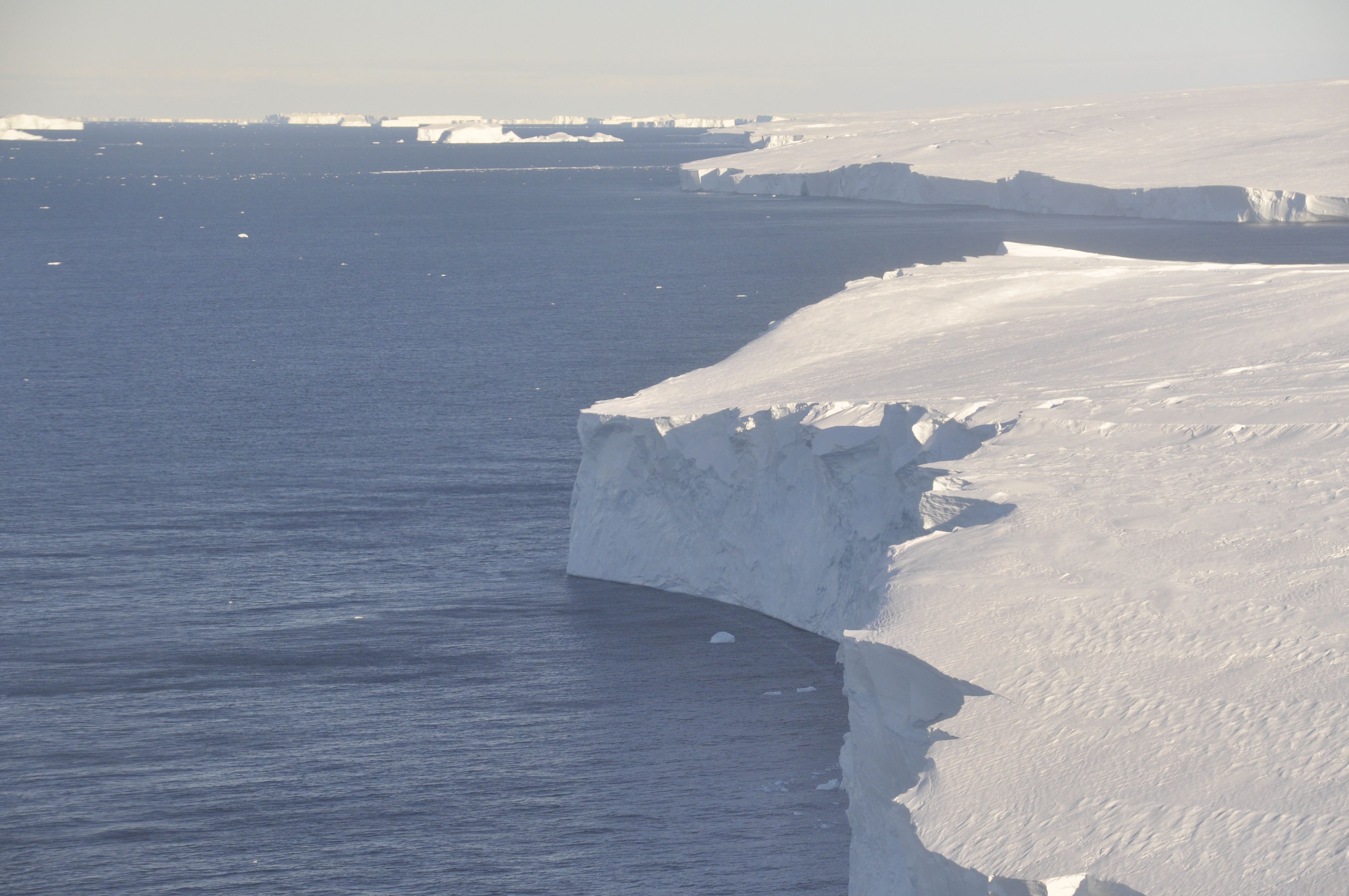
Such were the words of Barack Obama, ex-president of the United States of America, in his 2014 UN speech- and now, more than ever, his words resonate. Climate scientists around the world believe that if one wants to know the state of the global climate, one must visit Antarctica. Approximately 1000 miles away from the McMurdo Station, where most Antarctic scientists get their fuel, food, and flights, lies the Thwaites Glacier – more popularly known as the Doomsday Glacier. This Glacier is melting away everyday, courtesy of ever-rising global temperature, raising the sea level. Currently, the Thwaites Glacier contributes to about 4% of global sea level rise. It holds enough ice to raise the sea levels by over two feet. This glacier cannot be overlooked, because the question is not about whether it will collapse – it’s about when it will collapse.
The Thwaites Glacier in West Antarctica represents one of the most significant climate threats humanity is facing in the 21st century. This massive ice formation – comparable in size to the state of Florida or the island of Great Britain – is currently contributing approximately 4% of annual global sea level rise through its accelerating melt.
What makes Thwaites particularly concerning to glaciologists is its role as a linchpin stabilising the much larger West Antarctic Ice Sheet (WAIS). The glacier acts as a natural dam, slowing the flow of inland ice into the ocean. If Thwaites were to collapse entirely, it could trigger the destabilisation of the entire WAIS, which contains enough ice to raise global sea levels by an astonishing two feet. Such an event would reshape coastlines worldwide and displace hundreds of millions of people from low-lying regions.
The urgency of understanding Thwaites’ behaviour cannot be overstated. Between 2011 and 2021, satellite measurements showed the glacier’s flow speed increase by 30%, with some sectors now moving at rates exceeding 4 kilometres per year. Radar observations reveal that the glacier’s grounding line – the critical point where ice loses contact with bedrock and begins to float – has retreated 14 kilometres since 1992, with the rate of retreat accelerating in recent years. These changes are occurring faster than most climate models had predicted, suggesting we may have underestimated the glacier’s vulnerability to climate warming.
The Glaciology of Collapse: Understanding Thwaites’ Unique Vulnerability
The Thwaites Glacier exhibits several unique characteristics that make it particularly vulnerable to rapid collapse. Unlike most glaciers that rest on bedrocks sloping upward toward the interior of the continent, Thwaites sits on what glaciologists call a “retrograde slope” where the seabed beneath it gets deeper as one moves inland. This unusual topography creates a dangerous feedback mechanism known as “marine ice sheet instability” (MISI).
The MISI process works as follows: as warm ocean water melts the glacier’s underside, the grounding line retreats into deeper water. This allows more ice to float, reducing friction and causing the glacier to flow faster. The faster flow stretches and thins the ice, making it more vulnerable to further melting. This creates a self-reinforcing cycle where each increment of retreat makes subsequent retreat easier and faster. Recent mapping of the seafloor beneath Thwaites has revealed that the bedrock drops to more than 1,600 meters below sea level just 100 kilometres inland from the current grounding line, meaning there are no natural topographic barriers to halt the glacier’s retreat once it gains momentum.
The primary driver of Thwaites’ undersea melting is a warm, salty water mass called Circumpolar Deep Water (CDW). Measurements from autonomous underwater vehicles show that CDW, which can be up to 4°C warmer than the freezing point of seawater, is melting Thwaites’ underside at rates exceeding 50 meters per year near the grounding line – ten times faster than surface melt rates. Climate models suggest that strengthening westerly winds caused by global warming will push even more CDW toward Antarctica in the coming decades, potentially tripling melt rates by 2100.
Adding to these concerns are the dramatic changes observed in Thwaites’ physical structure. Satellite and airborne radar surveys have revealed the development of kilometre-scale crevasses and weakening shear margins – the zones where fast-moving glacier ice meets slower-moving ice or rock. These fractures now extend nearly to the base of the glacier and threaten to disintegrate its floating ice shelf entirely within the next decade. Such an event would remove crucial backpressure that currently slows Thwaites’ flow, potentially triggering an irreversible acceleration of ice into the ocean.
Projected Timeline and Sea Level Contribution
Current scientific understanding presents a range of possible scenarios for Thwaites’ future, each with dramatically different implications for global sea levels. Under the most optimistic scenario (RCP 2.6), which assumes the world rapidly reduces greenhouse gas emissions to limit warming to about 1.5°C above pre-industrial levels, Thwaites might contribute 10-30 centimeters of sea level rise by 2100. However, given current emissions trajectories, most glaciologists consider this increasingly unlikely.
The more probable moderate scenario (RCP 4.5) suggests Thwaites alone could contribute 30-60 centimeters of sea level rise by 2100. This would be in addition to contributions from other glaciers and thermal expansion of seawater, potentially pushing total sea level rise to 1 meter or more by century’s end. Such an increase would be enough to inundate many low-lying coastal areas and island nations.
Some studies suggest this process may have already passed key tipping points, with the main uncertainty being how quickly the collapse would proceed rather than whether it will occur. The nonlinear nature of ice sheet dynamics means that once certain thresholds are crossed, the disintegration could become self-sustaining and effectively irreversible on human timescales.
Human Impacts: Mapping the Coming Displacement Crisis
The consequences of Thwaites-driven sea level rise will be profoundly uneven, being the hardest on communities that have contributed least to climate change. In South Asia, the Ganges-Brahmaputra delta region spanning Bangladesh and eastern India could lose 10-15% of its land area to just 1 meter of sea level rise, displacing 15-20 million people. The impacts would be particularly severe in Bangladesh, where approximately 40 million people live in coastal areas less than 10 meters above sea level.
Small island developing states face existential threats. Atoll nations like Kiribati, Tuvalu, and the Marshall Islands could become largely uninhabitable with just 0.5 meters of sea level rise due to saltwater contamination of freshwater lenses and frequent flooding. These nations, whose total carbon emissions are negligible on a global scale, are already developing “migration with dignity” policies as they face the prospect of losing their entire territories.
Even wealthy coastal cities would face enormous challenges. In the United States, a 1-meter rise would permanently flood parts of Miami, New Orleans, and other coastal cities while threatening $300 billion worth of Florida coastal property. The economic costs of protecting or relocating infrastructure would strain municipal budgets nationwide. In Asia, megacities like Shanghai, Mumbai, and Bangkok would need to invest tens of billions in flood defences to remain viable.
The climate justice dimensions of this crisis are stark. The G20 nations produce about 80% of global greenhouse gas emissions yet face just 35% of projected displacement risk from sea level rise. By contrast, Bangladesh contributes only 0.5% of global emissions but bears 25% of global flood displacement risk. This fundamental inequity raises serious questions about responsibility, compensation, and justice that current international frameworks are ill-equipped to address.
The Institutional Failure: Gaps in Climate Refugee Protection
The existing international legal framework provides almost no protection for people displaced by climate change. The 1951 Refugee Convention defines refugees as those fleeing persecution based on race, religion, nationality, political opinion or membership in a particular social group – a definition that excludes environmental displacement entirely. This legal void leaves millions of future climate migrants in a precarious position with no guaranteed rights to asylum or resettlement.
Several potential solutions have been proposed but none have gained sufficient traction. Some scholars advocate for expanding the Refugee Convention through an additional protocol that would include climate refugees. Others propose creating an entirely new international treaty specifically addressing environmental displacement. Regional frameworks like the African Union’s Kampala Convention offer limited precedent for protecting internally displaced persons, but no comparable framework exists for cross-border climate migration.
Pacific Island nations have been at the forefront of developing innovative approaches to this challenge. Tuvalu’s “Digital Nation” project explores using blockchain technology to preserve sovereignty and cultural identity even if physical territory is lost. Fiji has developed comprehensive Planned Relocation Guidelines that provide a model for community-led resettlement. However, these piecemeal efforts lack the scale and binding authority needed to address a crisis of global proportions.
Pathways Forward: Mitigation, Adaptation and Justice
Addressing the Thwaites Glacier crisis requires action on multiple fronts simultaneously. On the scientific front, proposals like constructing seabed berms to block warm water from reaching the glacier’s base warrant serious consideration despite their technical challenges. The International Thwaites Glacier Collaboration’s research program needs significant expansion to improve modeling of collapse scenarios and potential intervention points.
Policy reforms must include operationalizing the Loss and Damage Fund agreed upon at COP27 to provide compensation to vulnerable nations. Developed countries should establish climate visa programs to provide migration pathways for at-risk populations. Urban planning must incorporate long-term relocation strategies for vulnerable coastal communities.
At the ethical level, wealthy nations must acknowledge their disproportionate historical responsibility for emissions and provide adequate financial and technical support to developing countries. The principle of common but differentiated responsibilities must guide global climate policy to ensure an equitable response to the crisis.
Conclusion: A Test of Global Governance
The destabilisation of Thwaites Glacier represents more than just a physical threat – it is a fundamental test of humanity’s capacity for collective action and global governance . While technical solutions may help slow ice loss to some degree, only transformative policy changes and a fundamental rethinking of our approach to climate justice can prevent mass displacement on an unprecedented scale.
The coming decade will determine whether the international community can rise to this challenge or whether we will continue with business as usual until it’s too late. As the cracks in Thwaites deepen, so too must our commitment to creating equitable solutions that protect the most vulnerable among us. The fate of millions and perhaps eventually billions depends on the choices we make today.
Author Bio
I’m Navya G Giraddi, a law student, queer rights advocate, and environmental activist. My journey in the legal field is deeply rooted in a commitment to justice, inclusivity, and sustainability. I work to amplify queer voices, challenge systemic inequalities, and push for meaningful legal reforms that reflect the realities of marginalised communities. As an environmentalist, I’m passionate about advocating for climate justice and promoting sustainable living through both policy and grassroots action. Whether through writing, activism, or legal research, I aim to create spaces where rights, dignity, and environmental consciousness go hand in hand.
Image Source : https://thwaitesglacier.org/sites/default/files/inline-images/Ice%20front%20of%20Thwaites%20Glacier2_David%20Vaughan.JPG
 NICKELED AND DIMED