
By Shaurya Agarwal
Abstract
The Union Budget 2025 has been met with mixed reactions, particularly regarding its environmental commitments. While the government has introduced significant reforms and financial allocations to accelerate the transition to clean energy, the budget also highlights contradictions in India’s climate policy. With continued support for fossil fuels, insufficient adaptation financing, and an uneven approach to sustainability, does the budget truly set the stage for a greener future? This article critically examines the key takeaways from the budget and their implications for India’s energy transition.
Introduction
Building on the previous year’s priorities, the Union Budget 2025-2026 announced on February 1, 2025, continues to place energy security and transition at its core. With significant investments in renewable energy, electric vehicle infrastructure, and pivotal policy reforms aimed at nuclear energy and green hydrogen, the budget unveils a multifaceted approach to transforming India’s energy landscape. However, as the government pushes forward with these transformative initiatives, experts fear that the budget that’s been positioned as an extremely forward-looking blueprint by the current government offers only a tokenistic acknowledgement of climate action.
Experts have popularly noted that the Budget has sent mixed signals with several provisions. The claim can be traced to the budget’s provisions to increase funding for creating suitable EV infrastructure and solar energy amongst alternative forms of energy while also boosting allocations for fossil fuels, including coal, petroleum & natural gas. For instance, the environment, forest, and climate change ministry received only a marginal increase of less than 2.5 percent, with a total allocation of about Rs 3,412 crore, compared to the previous budget’s allocation that couldn’t even be fully utilized. In contrast, the Ministry of Coal saw a significant 160 percent increase in funding, while the petroleum and natural gas sector received a 21 percent increase.
The Union Budget 2025 should reflect India’s commitment to its updated Nationally Determined Contributions (NDCs) under the Paris Agreement. This includes reducing GDP emissions intensity by 45% by 2030 (compared to 2005 levels), achieving 50% of total installed electric power capacity from non-fossil fuel sources by 2030, and expanding carbon sinks through afforestation programs. Additionally, it should enhance investments in climate-vulnerable sectors and strengthen India’s framework for climate technology diffusion and collaborative R&D.
These long-term targets are critical in determining whether the budgetary provisions align with India’s climate ambitions and would inform the parameters used to analyse the budget’s potential impact and progression over the course of this article.
Flagship Features and Key Green Investments
India is making significant strides in diversifying its energy mix, with nuclear power emerging as a key pillar of its energy transition agenda. Last year, approximately ₹2,228 crore was allocated for nuclear power projects. This year, the finance minister introduced the Nuclear Mission for Viksit Bharat, with an ambitious goal of achieving 100 GW of nuclear capacity by 2047. To attract greater private sector investment, the government plans to amend the Atomic Energy Act and the Civil Liability for Nuclear Damage Act. These proposed amendments aim to ease supplier liability provisions, making the sector more appealing to investors and facilitating greater participation in nuclear infrastructure development. However, this policy shift has not been accompanied by increased funding, as the Department of Atomic Energy’s budget has been reduced from ₹24,900 crore to ₹24,000 crore. Additionally, ₹20,000 crore has been allocated for research and development of small modular reactors, to deploy five indigenous reactors by 2033. Despite these commitments, India’s track record with nuclear expansion raises concerns about feasibility, as 10 reactors announced in 2017 still remain non-operational. Achieving these ambitious targets will require strong policy backing and close collaboration with the private sector to overcome financial, technological, and regulatory hurdles.
The Budget for FY26 has significantly increased allocations for the renewable energy sector, with budget estimates reaching ₹25,649 crore for the Ministry of New and Renewable Energy (MNRE). This marks a 39% increase compared to the previous year. The solar sector emerged as the biggest beneficiary, securing the largest share of this allocation at ₹24,100 crore. A substantial portion of this funding was directed toward the PM Surya Ghar Muft Bijli Yojana, which saw an 81% increase in allocation, rising from ₹11,000 crore in FY25 to ₹20,000 crore in FY26. This ambitious scheme aims to encourage one crore households to adopt Rooftop Solar (RTS) systems by providing up to 300 units of free electricity per month.
The budget allocation for the Production-Linked Incentive (PLI) Scheme under the National Program on Advanced Chemistry Cell Battery Storage has seen a substantial increase from ₹154 crore to ₹1,558 crore. Additionally, the government has significantly raised the budget for the PLI scheme for Automobiles and Auto Components, from ₹3,469 crore in FY25 to ₹28,188 crore in FY26. These supply-side reforms, alongside initiatives like the Prime Minister’s Electric Drive Revolution in Innovative Vehicle Enhancement (PME-DRIVE), are expected to strengthen long-term self-reliance and enhance the affordability of electric vehicles.
This budget places a strong emphasis on the supply side of electric vehicles (EVs), introducing transformative indirect tax reforms to boost domestic manufacturing and strengthen the EV value chain. The removal of Basic Customs Duty on key materials such as cobalt, lithium-ion battery scrap, lead, zinc, and 12 other essential minerals is expected to reduce costs for EVs, clean energy, and electronics manufacturing. In addition, the National Critical Minerals Mission, led by the Ministry of Mines, has been allocated ₹4,100 crore for FY26. The budget also outlines a plan for extracting critical minerals from mine tailings, creating opportunities for job generation in regions with limited industrial growth. The success of these initiatives will depend on support for MSMEs and workforce skilling programs to enhance resource recovery and circular economy practices.
The budget also backed power sector reforms by allowing states to borrow an additional 0.5% of their GDP to improve the financial stability of electricity distribution companies.
In line with these efforts, the National Green Hydrogen Mission has received a significant funding boost, with an allocation of ₹6,000 crore in the latest budget—double the revised estimate of ₹3,000 crore for FY25. This underscores the government’s commitment to accelerating the green hydrogen economy. Green hydrogen has immense potential to transform India’s energy landscape, but its success will hinge on developing a comprehensive ecosystem, including the establishment of electrolyzer manufacturing facilities and the strategic expansion of hydrogen hubs. Although increased spending on solar energy and electric vehicles signals a push towards clean energy, experts widely argue that the budget fails to take a holistic approach to India’s climate agenda.
Policy Gaps and Contradictions
Despite its crucial importance in reducing import dependence, boosting exports, and advancing climate goals, budgetary allocations for energy efficiency programs remain disproportionately low at ₹16,000 crore, especially when compared to the significantly higher funding for renewable energy initiatives. Strengthening investments in energy efficiency is essential to achieving a balanced and sustainable energy transition.
India has set ambitious climate targets, aiming for net-zero emissions by 2070 and a 50% reduction in emissions intensity by 2030. Achieving these goals while simultaneously striving for Viksit Bharat (Developed India) requires resilient and inclusive development strategies. According to a study by the Asian Development Bank (ADB), if climate risks remain unmitigated, India could face a potential loss of 24.7% of its GDP by 2070 due to rising climate-induced disruptions. With the United States pulling back from its Paris Agreement commitments, the world increasingly looks to India as a global climate leader, especially for the global south. However, India’s current fiscal stance on climate action falls short of expectations, highlighting the urgent need for policy interventions that bridge the gap between ambition and action.
A major weakness in the current climate finance framework is its over-reliance on volatile private investments, a challenge that the budget fails to adequately address. To mobilize climate finance at scale, India must establish a robust regulatory framework that attracts both public and private capital into climate-focused projects. Implementing a sustainable finance taxonomy, alongside stricter disclosure norms, would provide greater clarity for investors while ensuring that capital flows toward projects with tangible environmental benefits. Strengthening policy mechanisms and financial incentives is crucial to building a resilient and scalable climate finance ecosystem that aligns with India’s long-term sustainability goals.
Additionally, a critical gap in the budget is its overwhelming focus on mitigation at the expense of adaptation. While investments in the solar sector and electric vehicles align with India’s low-carbon transition goals, adaptation measures receive minimal attention. Funding for biodiversity conservation has stagnated, and allocations for coastal resilience—a crucial area given India’s vulnerability to rising sea levels—have declined. Additionally, the National Adaptation Fund for Climate Change (NAFCC), which is designed to support adaptation efforts, remains underfunded, significantly limiting its capacity to protect vulnerable communities from the escalating impacts of climate change. Strengthening adaptation financing is essential to building a climate-resilient future for India.
Furthermore, the budget’s emphasis on infrastructure development underscores its disjointed approach to climate action. With ₹11.5 lakh crore allocated for capital expenditure, the government has reaffirmed its commitment to modernizing India’s infrastructure. However, this spending lacks a climate-resilient blueprint. The infrastructure projects initiated today will shape India’s development trajectory for decades, with many expected to last beyond 2050—a period when climate risks are projected to intensify. Without integrating climate resilience into infrastructure planning, these projects could exacerbate vulnerabilities rather than mitigate them.
Lastly, one of the biggest criticisms of the budget is the continuation of fossil fuel subsidies, particularly for coal and natural gas. While investments in green energy are on the rise, the budget fails to outline a clear roadmap for phasing out these subsidies, which ultimately counteract sustainability efforts. Without a gradual transition away from fossil fuel support, India’s clean energy ambitions risk being undermined by continued reliance on carbon-intensive industries. Experts argue that the budget misses an opportunity to introduce carbon pricing mechanisms or enforce stricter emission reduction mandates for industries. Establishing clear carbon pricing policies and sector-specific emission limits is essential to ensuring that India’s climate commitments translate into meaningful action.
Conclusion
While the Union Budget 2025 outlines a bold vision for India’s green transition, it presents a blend of opportunities and challenges on the road to sustainability and resilience. To ensure that climate action moves beyond symbolic commitments, the government must adopt a more holistic and inclusive approach that integrates mitigation, adaptation, and financial mechanisms into the core of its development strategy.
To achieve this, several key policy shifts are necessary:
- Phasing Out Fossil Fuel Subsidies: Redirecting financial support away from coal and oil subsidies and channeling it toward energy efficiency programs, green finance, and just transition initiatives will accelerate the shift to a low-carbon economy.
- Prioritizing Climate Resilience: Integrating adaptation strategies into urban planning, coastal protection, and infrastructure development is essential to safeguard vulnerable communities from climate-induced risks.
- Expanding Climate Finance Mechanisms: Establishing carbon pricing frameworks and strengthening financial support for adaptation efforts alongside mitigation investments will provide a more balanced and effective climate strategy.
- Enhancing Transparency and Accountability: Developing a robust monitoring and evaluation system for climate finance will help track investments, assess socio-economic outcomes, and refine policies to ensure meaningful progress.
Additionally, ensuring equitable implementation remains a critical challenge. Large-scale investments in renewables, electric mobility, and domestic manufacturing lay the foundation for long-term transformation, but their success depends on infrastructure readiness, local capacity building, and inclusive economic planning. Without a well-calibrated and structurally sound approach, India’s climate ambitions risk falling short of their full potential.
This year’s budget strengthens India’s commitment to a greener future, with ambitious investments in clean energy and sustainable industries. However, achieving climate resilience and sustainable growth demands more than just fiscal allocations—it requires structural policy shifts, cross-sectoral integration, and proactive governance.
The transition to a low-carbon economy is not just an environmental necessity but an economic imperative that can drive innovation, job creation, and long-term prosperity. By embracing a balanced approach to climate action, India can bridge the gap between ambition and execution, positioning itself as a global leader in sustainable development while ensuring that no community is left behind.
Author’s Bio: Shaurya Agarwal is currently in the final year of his liberal arts program at the Jindal School of Liberal Arts and Humanities. His research interest lies in environmental economics, gender studies and public policy.
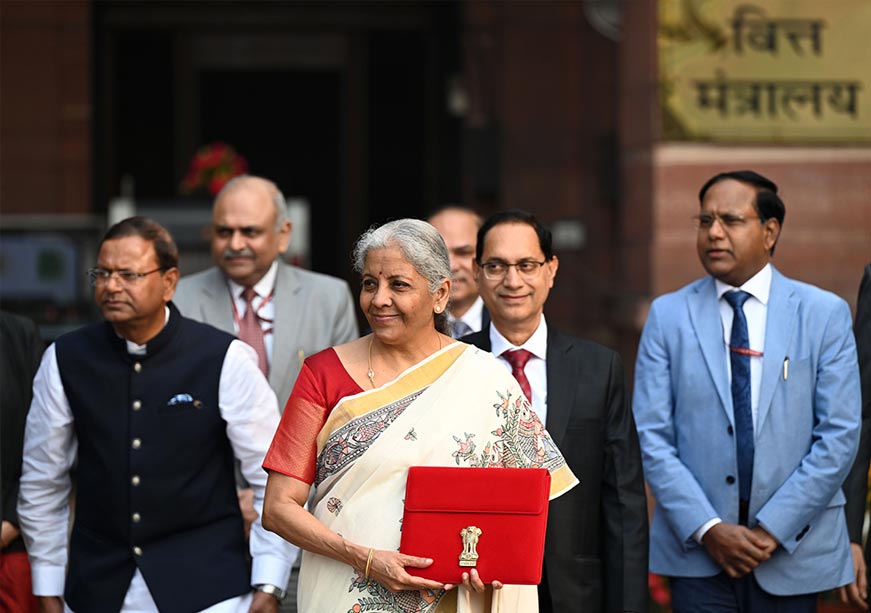
Image Source: Union Budget 2025: A Lukewarm Commitment To Climate Action
 NICKELED AND DIMED