
By Mani Meghana Godavarthi
Abstract:
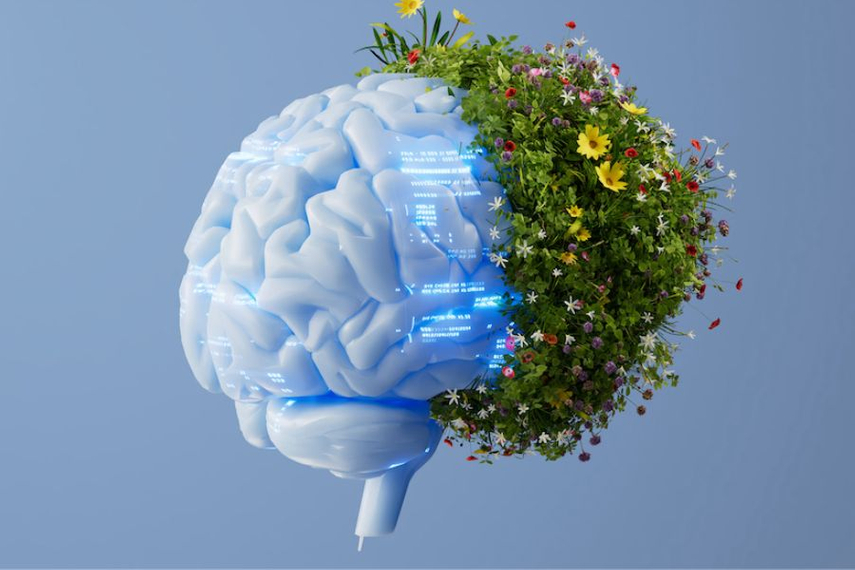
Artificial Intelligence (AI) is two sides of the same coin. It has contributed significantly to Environmental conservation by aiding companies to map and process data to identify critical issues and map future predictions but at the same time it in itself has contributed to the rapidly increasing environmental concerns due to its massive consumption of resources and emission of carbon. This paradoxical nature of AI has to be balanced in the best interest of the environment. Unfortunately, the current policies with this regard are unilateral and ignorant of justice and policy must be formulated in such a way to balance the benefits against the detriments.
Introduction
Artificial Intelligence (AI) is causing a stir in every realm, it is believed to have great potential to change the world but it is parallelly feared for its detrimental effects. Scientists expect AI to develop rapidly and have significant breakthroughs, but at the same time a lot of scholars have reservations about its usage. AI has started establishing its presence in the field of environment as well. Artificial Intelligence play a role of both yin and yang in the realm of environmental conservation. On one hand, it plays a crucial role in helping companies analyze data, identify critical environmental issues, and make future predictions. On the other hand, the technology itself contributes to escalating environmental concerns. Hence it is essential to use AI in a slow and balanced manner to ensure it does not have lasting detrimental effects while contributing to fight against environmental detriments. Thus, this article aims to map the growing role of AI in mapping environmental concerns and at the same time highlights the detriments of using AI by itself to the environment thereby presenting a comprehensive picture of Artificial Intelligence’s (AI) role in the environmental sphere.
Artificial Intelligence (AI) and its growing role in mapping environment
The use of artificial intelligence has been increasing at a rapid rate. This increases the potential to address global environmental challenges. One of the biggest benefits of AI is that it can build on historical information and detect data patterns to accurately predict future occurrences. This ability of AI has been proven invaluable for monitoring of the environment as this capability positions AI as an invaluable asset for governments, businesses, and individuals striving to make more environmentally conscious choices.. A lot of steps are being taken to further the use of AI as a support system to tackle environmental crises.
The United Nations Environment Programme (UNEP) uses AI to detect when the infrastructure for producing oil and gas vents methane gas, which is one of the primary contributors of climate changes.
Companies such as Space Intelligence, Sipremo and Greyparrot are using AI as an attempt to address environmental concerns. Space intelligence has mapped more than 1 million hectares of land by using satellite data and uses technology to measure deforestation rates and carbon storage rates while Sipremo uses AI to predict when and where a climate disaster will occur and their type. Greyparrot uses its AI system to analyze waste processing and recycling facilities to help recover more waste, they also helped create detailed maps of ocean litter in remote locations.
On September 23, 2024, IBM and NASA together developed and launched a model that helps tackle a variety of short-term weather related challenges and long-term climate projection. This model was pre-trained on 40 years of earth observation data from NASA’s modern-era retrospective analysis, version-2 (MERRA-2). The potential application of this technology, according to the company, includes targeted forecasts, detecting and predicting severe weather patterns etc.
Scientists at the University of Leeds say that AI can map large Antarctic icebergs in satellite images in just one hundredth of a second.
Understandably, AI presents a promising future for its use in the realm of environment conservation. It is important to note that only those metrics that are easily measurable are used primarily, such as mapping the land using satellite imagery as was done by Space intelligence. It heavily relies on the data set provided which means there exists a scope for deception and misconception.
Artificial Intelligence (AI) and its role in environmental depletion
AI does not present a perfect picture in tackling environmental issues, it, on the other hand, is the perfect example of hidden rot. The process of chip manufacturing and supply chains which are necessary for sustaining AI has severe environmental impact. Additionally, the rapid advancements in AI technology contribute to a growing problem of electronic waste (e-waste) due to more discarded devices. This cycle of rapid obsolescence worsens global e-waste issues, overwhelming recycling systems and harming the environment. Ignoring the manufactural impacts for a second, it is essential to focus on the training and usage of AI. AI model training has the potential to evaporate large amounts of fresh water and the training process for a single AI model can consume thousands of megawatts of energy. It can also emit hundreds of tons of carbon, which is equivalent to thousands of household emissions. Data centers, which house these models, have a considerable carbon footprint, raising alarms about their sustainability. With the increase in the popularity of chatbots and image generators, it is essential to note that a single generative AI query consumes multifold times, almost four to five times, of energy as compared to a normal search engine usage.
Companies have tried to come up with unique solutions to reduce the environmental impact from AI’s production and training and usage. The founders of NetworkOcean believed that moving data centers off the land and underwater would mean that the surrounding seawater can cool the temperature of the GPUs inside while slowing the ocean’s temperature rise by drawing less power. As innovative as this idea sounds, scientists who study Brackish water say that even a slightest heat or disturbance from such activities could trigger the growth of toxic algae which would hard the wildlife contributing to the same exact thing it was supposed to curb
The primary issue arising out of these grave environmental consequences is that it amplifies social stressors such as health care costs and housing insecurities. Indirectly it will result in destitution. According to research it is essential to have policy and justice play a role to curb such effects. Environmental equity becomes a concern as the environmental costs are not equitably distributed across different regions. Transnational policies such as the carbon credit systems often fail to have a sense of justice towards lower income nations. For example, the EU’s CBAM (Carbon Border Adjustment Mechanism) ignores the impact it has on lower income economies as they pay taxes to the EU to export. Another key problem is the uncertainty behind job accessibility. There has been a significant rise in demand for employment in India especially with regards to “green” jobs as a step to move towards a green economy but the main concern that persists is whether these employment opportunities be accessible to those who need them the most because if the marginalized communities are not uplifted then the nation’s economy will be negatively effected. The adverse effects of AI on the environment can result in a disproportionate burden on marginalized communities that lack access to basic resources and overall influence the social structure of the countries.
Conclusion
AI has the capacity to enhance forecasting methods in an attempt to prepare for extreme weather conditions. Its ability to absorb and process data on a large scale, and analyze it, makes it a good aid for decision making thereby generating novel methods of transition to a greener future. From optimizing energy consumption to enhancing precision agriculture, AI technologies offer innovative solutions that can significantly reduce our ecological footprint and promote sustainable practices. AI is vital to map and reduce environmental harm, but this in itself can cause harm to the environment. The deployment of AI can increase existing inequalities and disproportionately impact marginalized communities, raising critical questions about environmental justice. Balancing the benefits of AI with its potential drawbacks will be essential to ensure that technological progress supports equitable environmental protection for all.
The author personally believes that it is essential to balance the benefits and detriments of AI in an attempt to achieve maximum satisfaction while addressing environmental concerns. It is essential to turn AI into a tool rather than perceiving it as a threat and cancel out the potential drawbacks to foster a sustainable future. AI has the potential to transform the current environmental landscape by mapping hazards and aiding to make informed decisions, as the ramifications of AI are not predetermined and are highly subjective on how society chooses to implement these technologies. Not focusing on justice can lead to marginalized communities bearing the brunt of negative environmental impacts. Responsible AI development must prioritize transparency and actively involve affected communities, ensuring that the promise of AI does not exacerbate existing inequalities. There must be a balanced usage to ensure a balance in the environment.
Author’s bio
Mani Meghana Godavarthi is a second year BBA LLB student at Jindal Global Law School. She is interested in Constitutional law, Criminal Law and Company Law. She is also fascinated with the working and implementation of environmental laws in the context of businesses.
Image Source: https://www.campaignasia.com/article/advertisers-grapple-with-the-weight-of-ais-environmental impact/497621
 NICKELED AND DIMED