By Tanishi Jaiswal
Abstract:
The Majestic bear—white as snow, yet an embodiment of the darkness within the ecosystem in itself. An image of a polar bear floating on thin ice has often been used as a symbol for the world’s rapidly changing climate. The thinner the ice, the thinner the hope. As we enter into a new stage of life where technology renders itself as a double-edged sword – both revolutionary as well as environmentally hazardous, it becomes pertinent to find ways around this and employ newer technology towards biological conservation. Scientists have created a new method for tracking polar bears that could enhance one’s understanding of how they adapt to shrinking sea ice. The innovative use of stick-on GPS tracking tags will allow researchers to gain unprecedented insights into polar bear behaviour and movement. Can this new-age science fill in the gaps, or will it render itself as another mediocre attempt towards so-called ‘sustainability’? – the following article attempts to answer this very paradigm.
Introduction
As the Arctic summer concludes, polar bears move inland to wait for the ice to form. While thousands of tourists gather to witness these regal predators, researchers are devising innovative methods to ensure that both people and bears remain safely apart. With Arctic sea ice melting, polar bears are spending more time on land, raising growing concerns among conservationists about the increasing likelihood of encounters between bears and people. In an effort to reduce such encounters, scientists have developed a new mechanism where tracking devices are attached to the bears’ fur. This allows for close monitoring of the bears’ locations, thereby protecting both the people and the bears. Climate change is leading to increased interactions between bears and humans, heightening the dangers in regions where they share territory. A 2022 study by the US Geological Survey, utilising satellite tracking data from over 400 polar bears in Alaska, indicates that the amount of time these bears spend on land has grown considerably over the past few decades. The following article aims to further elucidate upon this discovery while highlighting the urgent need for a structured mechanism for conservational measures due to the rapidly changing nature of the biosphere.
Choose: Man or Bear?
As much as one would want to categorise the possibility of the white bear’s extinction onto factors such as ‘inevitability’ and ‘nature’ per se, the reality stands far detached from such vindications. Just to put this in perspective – in April 2006, an American hunter in the Northwest Territories, Canada, shot and killed a hybrid bear, (a cross between a grizzly bear scientifically known as Ursus arctos horribili and a polar bear). After genetic testing confirmed the bear’s hybrid nature, concerns arose that the increased interbreeding between polar bears and grizzly bears might be adding to the pressures that push polar bears toward extinction. The mere fact that this ‘hybrid’ variant isn’t uncommon anymore is enough to prove that there is something greater leading to such a conundrum. The survival of Polar bears faces numerous human-induced threats, such as oil and gas exploration, increased shipping activity, and rising toxin production. However, many scientists argue that the main threat to polar bear populations is the loss of sea ice habitats, especially the Arctic sea ice on continental shelves and between island archipelagos. This is due to the long-term rise in global temperatures, which has caused a reduction in Arctic sea ice. This trend is expected to persist as atmospheric greenhouse gas concentrations continue to increase.
One thing is clear – there exists an indisputable level of urgency when it comes to conserving this species..This brings us back to the fundamental question of whether humans can coexist with these bears at all. It appears that whenever polar bears are exposed to human influence, whether directly or indirectly, they tend to perish. Thus, the ‘conservation’ of polar bears by humans seems rather paradoxical in nature. Data suggests that the worldwide population of approximately 26,000 polar bears is split into 19 subpopulations, organised into four ecoregions that reflect sea-ice patterns and polar bear life cycles. These subpopulations currently show different responses to climate change. While two have already suffered population declines linked to sea-ice loss, some are experiencing nutritional stress, others are reported to be stable or even thriving, and for some, the status remains unclear due to a lack of sufficient data. This clearly implies that the strategy of conservation would need to requisite technology to ‘build a wall’ (not referring to its physical version) of sorts between men and bears. But does such a technology even exist in the first place? – The next part of the article aims to elaborate upon the same.
Stick-On GPS Tracking Devices: A Tool to Ensure Minimum Human Intervention
Researchers have long relied on satellite collars as the primary method to monitor their behaviour and understand how polar bears adapt to the impacts of climate change. The old mechanisms of GPS trackers require ear tags to be securely fastened in place, while implants require a minor surgical procedure to insert them beneath the skin. In the alternative, scientists could also use satellite collars to follow polar bears’ movements. However, collars can only be used on adult female polar bears. Adult males have necks that are as wide as their heads, causing collars to slip off. Additionally, young bears grow too quickly for collars to remain safe and effective.
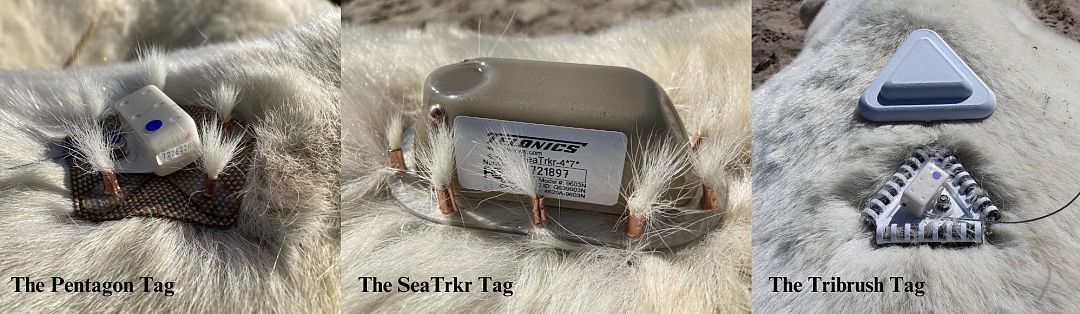
To tackle this, three new prototypes were tested on wild polar bears along the Hudson Bay in Canada, providing a temporary and less invasive solution. These stick-on fur tags are a product of the ‘Burr on Fur’ project, which began when Polar Bears International (a small non-profit organisation) challenged 3M scientists, known for developing Post-It notes. The challenge was to create tracking devices that are non-toxic, gentle on the bears’ skin, and capable of withstanding harsh environmental conditions like extreme cold, snow, and saltwater. This took almost six years to materialise i.e. the project was set in motion in the year 2018 (it was slowed down owing to the covid-19 pandemic) and concluded in early 2024. The stick-on tags are designed to have minimal impact on the bears and are ideally meant to remain attached for up to 12 months, lasting through the interval between the bears’ fur shedding. The best-performing prototypes currently available have stayed in place for up to 114 days. Another prototype named SeaTrkr tag, is crimped into the bears’ fur. It remains attached for an average of 58 days and is equipped with a built-in GPS system, which enables scientists to track the bears’ location with an accuracy of just a few metres.

The above image is a representation of three prototypes used in the study
Climate change is accelerating the loss of Arctic sea ice, which is consequently driving polar bears into closer proximity to human settlements as they search for food. This encroachment increases the risk of adverse interactions between bears and humans, such as aggressive encounters and property damage. Additionally, human activities, including tourism and industrial development, further disrupt polar bears’ natural habitats and exacerbate conflicts. This situation underscores the urgent need for effective management strategies to mitigate these risks and safeguard both species. With these simple, yet effective tools in place, we can ensure that polar bear movements are closely monitored, enhancing our ability to protect their habitats and develop informed conservation strategies.
Way Forward
In light of the escalating impacts of climate change on polar bear habitats, it is imperative to advance and refine our conservation strategies. The introduction of innovative tracking technologies, such as stick-on GPS devices, mark a pivotal development in addressing these challenges. These devices provide a minimally invasive means of monitoring polar bears, offering accurate and detailed location data that can significantly enhance our understanding of their movements and their interactions with human settlements. To build on this progress, it is crucial to further improve the design and functionality of these tracking devices, ensuring they remain effective and durable in the harsh Arctic environment. Continued research and development should focus on optimising the technology to extend the duration of data collection and enhance the precision of tracking. Additionally, integrating these advanced tracking systems into comprehensive conservation strategies is essential for mitigating human-bear conflicts and crafting informed management practices.
As we move forward, the combination of cutting-edge technology and adaptive management approaches will be vital in protecting polar bear populations. By harnessing these advancements, we can gain deeper insights into bear behaviour, anticipate and address potential conflicts, and implement measures that safeguard both polar bears and their shrinking habitats. The success of these efforts will depend on continued collaboration between scientists, conservationists, and policymakers to ensure a balanced and sustainable coexistence between humans and wildlife in the face of a rapidly changing climate.
About the Author
Tanishi Jaiswal is currently pursuing her fourth-year, B.A. LLB (Hons.), at Jindal Global Law School. Her areas of interest include Corporate and Commercial law. She is also interested in assessing the legalities associated with environmental norms and schemes.
Image source: https://images.app.goo.gl/UT7NvfxDRi2itqGe6
 NICKELED AND DIMED