
By Purvi Agarwal
Abstract
Energy poverty, defined as the lack of access to modern energy services in certain sections of society, can lead to disruptions in production and general development. Certain below-par energy sources may even lead to poor quality and productivity, illness and a risk of asphyxiation from pollution, Therefore, the transition to clean and green energy sources is the need of the hour. This article delves into issues of energy transition and energy poverty as a core of socio-economic inequalities in the current climate change framework, drawing attention to the Global South in particular while bringing awareness to the need for financial inclusion.
Introduction
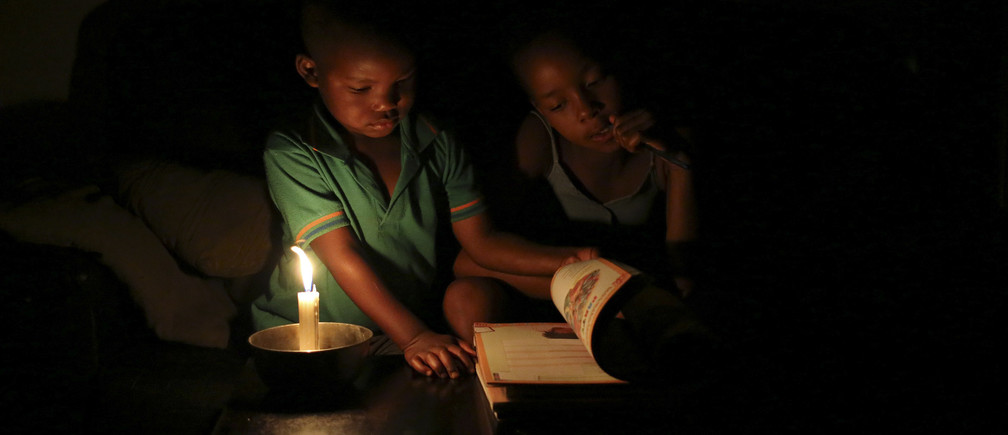
The shift from conventional, fossil fuel-based energy sources to cleaner, renewable alternatives is at the core of climate action and energy transition; around 2 billion people live in energy poverty today—that is, without access to reliable and affordable modern energy services. The burden of energy poverty disproportionately falls on vulnerable populations, with a dire need for access to reliable and affordable energy in developing countries. For instance, women are typically tasked with gathering firewood or other conventional fuels for cooking and heating, which puts them at risk for health problems and reduces their chances for economic or educational pursuits. The scarcity of electricity in homes makes it difficult for kids to finish their homework after sunset, widening the educational divide.
It has been decades since world leaders came together and decided to find green energy alternatives to fossil fuels, pledging to execute and adhere to major conventions and treaties such as the Kyoto Protocol (1997), the Rio Convention (1992) and the Paris Agreement (2015). Needless to say, significant progress has yet to be achieved. In an ideal world, oil and coal would be entirely replaced by clean and environmentally friendly energy sources. However, as of now, approximately 15% of our energy needs are met by an amalgamation of nuclear energy, wind, solar and hydropower, wood, biofuels and renewable sources. Nonetheless, major energy sourcing depends on oil. The U.S. Energy Information Administration states that in 2022, total petroleum consumption averaged about 20.28 million barrels per day. Similarly, despite being the most carbon-intensive fossil fuel, the International Energy Agency quotes that coal still supplies over a third of global electricity generation. The urgency and severity of transitioning to clean energy sources, along with accessibility to resources, most importantly its awareness, is a grave crisis. Addressing the challenges posed by climate change and formulating strategies to mitigate its impacts present formidable obstacles. However, it is also crucial to underscore the issue of inequitable access to existing technologies among certain demographics. It is fair to presume that holistic climate action would entail comprehensive policies and poverty reduction.This necessitates policies directly aimed at the backward section of society and not just methods in which the trickle-down effect comes into play. Therefore, focused collaboration between private and government enterprises is vital.
What is Energy Poverty?
The paper ‘Energy Poverty and Low Carbon Energy Transition’ (Štreimikienė, Grigorios, Kyriakopoulos, 2023) performed a literature review on energy poverty as a multi-dimensional issue caused by the low-carbon energy transition, mentioning that the contentious nature of energy poverty exists at the regional and international levels of analysis. This phenomenon has only been further aggravated by the implications of the COVID-19 pandemic, the Russia-Ukraine war and the Israel-Palestine issue. As nations worldwide face challenges with climate change and strive toward sustainable development goals, the so-called “third world countries” also focus on ‘enabl(ing) developing countries to play a more active role in international policy and decision-making processes in support of their efforts to achieve sustainable development’ in the words of the South Centre. The Global South, emerging from its long-held identity as the ‘backward’, ‘poor’ or ‘inefficient’ region, is trying to navigate its way through the clean energy transition and the pre-existing divide between North and South countries in terms of accessibility and awareness. Despite strong efforts, energy poverty and inaccessibility remain huge barriers to transitioning to clean energy methods.
Global South Perspective
Following this argument, PM Narendra Modi, leading the voice of the Global South, during his speech at COP28, advocated for more climate finance, technology, and carbon space. He started off by saying the countries of the Global South have done the least to cause climate change, but the ill effects of climate change are much greater on them; and that they are committed to climate action in spite of the lack of resources. Further, he describes that it is only just the nations of the Global South, receive as much assistance as possible from developed nations in the fight against climate change. A similar approach has been decided upon in the G20, wherein private investment and several trillion dollars of climate finance by 2030 are imperative, that too equally available, accessible and affordable.
South Africa was one of the first countries to talk about just transition under the Paris Agreement as part of the Nationally Determined Contribution. This was included in Africa’s national development plan 2012, followed by a National Employment Vulnerability Assessment in 2017 to understand the potential impacts of clean energy transitions on employment by sector. Although halted by COVID-19, this resolution has been strongly advocated in dialogues on a regional and international level. The plan clearly states, “Millions of people are employed in energy-intensive industries and the mining sector is a major contributor to South Africa’s foreign exchange earnings. A judicious process of transition is therefore non-negotiable.” Although it remains unclear how much it would take to responsibly and inclusively transition to green energy, South Africa and India evidently and firmly insist on a sound fiscal policy and principles on government climate change, objectively alleviating energy poverty and favourable assistance to the Global South.
Further, the new framework for energy transition proposed by the World Bank, titled “Scaling Up to Phase Down,” serves as a roadmap to identify financing challenges and develop a comprehensive financing approach. It talks about collaboration of the state with the private sector in developing countries to build infrastructure that will lower carbon electricity production. International energy agency commentary on how to maximise the social benefits of clean energy policies for low-income households additionally states that ‘Socially progressive energy policies must be carefully designed with the environment in mind; policymakers have a responsibility to recognise the effects of energy policies can shift significantly based on local circumstances.’
Final arguments
Renewable energy technologies such as solar, wind, and hydropower have the potential to revolutionise energy access, especially in remote and off-grid areas. It is the responsibility of various governments and international organisations to facilitate this transition of microfinancing for energy access projects and capacity-building programs for local communities. It is not just about providing electricity connections but also about empowering communities to harness the benefits of energy access for their socio-economic advancement. This does not limit itself to promoting energy-efficient technologies, productive uses of energy for income generation and integrating energy access into broader development agendas. Therefore, energy poverty alleviation and financial inclusion are crucial steps towards building resilience and adaptation.
Author’s Bio
Purvi Agarwal is currently studying B.A. (HONS) Diplomacy and Foreign Policy at the Jindal School of International Affairs and is a columnist for Centre for New Economic Studies, Nickeled and Dimed. She has worked with ABP Network, Europe India Centre for Business and Industry, Jindal Global Centre for G20 and NDTV. Additionally, she is interested in multilateralism, Indian foreign policy and financial literacy. She is also proficient in Hindi and English while holding certifications in German and Japanese.
Image Source: https://www.weforum.org/agenda/2019/11/energy-poverty-africa-sdg7/
 NICKELED AND DIMED