
By Tanishi Jaiswal
Abstract
The Indian cheetah (also referred to as the Asiatic cheetah) has always been associated with
covenants of royalty and pride. This docile cat rendered itself one of the most sought-after
animals among various Mughal Emperors and Hindu Maharajas. The cheetah species dates
back to almost 8.5 million years when the same were found in great numbers across Africa,
Arabia, and Asia. However, owing to the incessant hunting culture prevalent during those
times, the Indian cheetah was pushed into extinction as early as the year 1952. The
Government of India through its long-awaited “Cheetah Project” aimed at translocating
cheetahs from the African continent on Indian soil. This article aims to critically analyse the
progress and growth of the scheme.
Introduction:
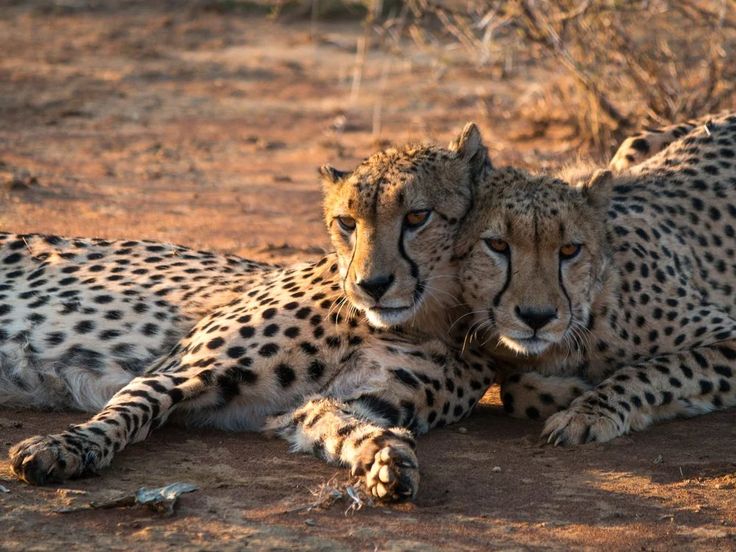
Oftentimes, when one thinks of cheetahs, one visualises a slender and sumptuous cat dashing across vast open grassland plains at an almost supersonic speed. This depiction falls more in line with its African variety as opposed to the Asiatic species. The Asiatic cheetah that once roamed in the Indian biosphere occupied a more diverse habitat such as – scrubs, bushlands, arid, semi-arid open lands, low hills, and rocky plateaus interspersed with plains. States such as Jharkhand, Odisha, Uttar Pradesh, Punjab, Gujarat, Rajasthan, and the Deccan region were home to these cats. Throughout the Medieval and Colonial periods in India, cheetahs were looked upon as royal creatures. Its pace, agility, and poise attracted many to hunt, poach, and even domesticate them. It wasn’t long until these cats completely disappeared posing signs of a complete extinction. In the contemporary epoch, ‘cheetahs’ are often synonymous with its African kind. The Environment Ministry of India through the “Cheetah project” endeavoured to carve out a supposed ‘homecoming’ plan for cheetahs and reintroduce them into the Indian biosphere. On the face of it, the same seems like a noble cause aimed at creating a more inclusive ecosystem. Nonetheless, this project has attracted significant criticism on the part of both environmentalists and researchers. The following aims at presenting a more nuanced perspective surrounding such debates by virtue of a three-fold analysis – historical, legislative, and scientific.
A Tale of Extinction:
Pre-colonial rule saw cheetahs as arguably one of the most culturally significant animals throughout the subcontinent. In fact, they were even depicted in cave paintings at Kharvai and Khairabad and in the upper Chambal valley, in Madhya Pradesh as early as 2,500 BCE – 2,300 BCE. Even during the reign of the Mughals, the cheetah was magnificently depicted in paintings and illustrated manuscripts including Anwar-i Suhaili, a Persian version of the Sanskrit Panchatantra. Further, another factor that heightened its popularity was a sport referred to as ‘coursing’. This sport requires trained cheetahs to be released in the wild in an attempt to hunt down smaller animals as their prey (mostly blackbucks). As strange as it may sound, ‘domesticated’ cheetahs were not uncommon in those days. ‘Coursing’ completely dominated the sporting culture, especially during the Mughal rule. This gave rise to cheetahs being held captive in domesticated shelters or training grounds. Historian Divyabanusinh presents a detailed account of how the Great Akbar was quite fond of this lissom cat, so much so that he had once collected nearly 1,000 of them. The Akbarnama details various hunting/capturing methods such as odis, camouflaged pit traps, and automatic trap doors. Another element to this is the steady loss of habitat in an agrarian economy like India. Asiatic cheetahs thrived in plain grasslands and semi-arid and arid open lands. However, post-independence in an attempt to boost the economy, a young republic such as India incessantly started the process of conversion of such grasslands into agricultural land. This gradually destroyed the spotted cat’s habitat until one day it vanished completely.
It is important to take into account that, unlike fellow big cats like leopards and tigers, cheetahs were not as ‘fierce’. These docile creatures were thus capable of being domesticated by virtue of human intervention. Moreover, since domestication required the separation of these cheetahs from the wild, breeding (especially in cases of female cheetahs) became implausible. As a result, its population fell sharply leading to inbreeding – i.e. mating with relatives. To date, cheetahs tend to be more vulnerable to infections and diseases giving rise to low genetic variability.
The Cheetah Reintroduction Scheme: A master plan?
On 7th January, 2022 the Government of India via a press release laid down an Action plan for the introduction of cheetahs on Indian soil. The statement read as follows – “India is going to be home once again to the majestic presence of cheetah, the world’s fastest land animal. Yes, the Government of India has decided to reintroduce cheetahs, under the ‘Action Plan for Introduction of Cheetah in India’.” As a part of this plan, 50-odd African cheetahs will be translocated to the Indian biosphere in multiple stages over five years. The Environment Ministry termed the same as a boon to the Indian Ecosystem. The preservation plan would comprise not just a calculated effort to save the big cat in itself but also its prey base (some of which are threatened species) and other endangered species required for coexistence in grasslands and open-forest ecosystems most of which are on the brink of extinction. The debate and discussion surrounding this project date back to 2009 when the same was initiated for the first time by the Wildlife Trust of India. However, these efforts were put on hold owing to the 2012 Supreme Court judgement which held importing cheetahs was violative of International conservation standards. The same was reversed in the year 2020 when importing cheetahs in “small numbers and on an experimental basis” was permitted. The first stage of the project comprised a total of twenty cats being translocated from Namibia and South Africa to Kuno National Park in Madhya Pradesh. Further, a dozen more are to be introduced every consecutive year till the total number of surviving cheetahs comes up to a grand total of forty. As of now, nine out of the twenty cheetahs introduced have unfortunately already died (seven adult cheetahs and three cubs born in Kuno). Despite this, a government report dated 2023 labelled the first stage of this project as a success as it fulfilled four out of the six parameters laid down by the Ministry of Environment & Forests. Further, since more than fifty percent of the cheetahs did survive, the project was deemed to have achieved its goal. That being said, the discussion doesn’t end there – there exist various other intricacies that must be evaluated. Assuming that the same has the potential to change the Indian ecosystem in the long run, it becomes crucial to evaluate whether these legislative schemes have the prowess to transform into constructive change. For this, one needs to critically assess the same. The next part of the Article will attempt to delve into this by taking into account the perspectives of various naturalists and environmentalists.
Critique:
The cause of death for these big cats can be classified into the following kinds – humidity, maggot infestations, and infections caused by the radio collars. Some female cheetahs have even succumbed to violent mating incidents whereas the cubs born are found to be highly malnourished, weak, and dehydrated. S.P. Yadav, the project director defended the same by pointing out how these problems have not been reported even in South Africa and Namibia. While it is important to laud and encourage such projects, one must take into account certain constructive advice and shortcomings presented by veterinary and scientific institutions. Bengal tigers for instance – owing to its significant presence in India, both forest officials and the government have developed an adequate level of understanding regarding the know-how of that particular species. On the contrary, Indian institutions tend to have little to no practical knowledge with regard to cheetahs for the simple reason of lack of exposure. Independent India has had limited to no sightings of cheetahs. Adrian Tordiffe, a South African cheetah expert serving on the Indian government’s advisory committee for Project Cheetah, says he was “frustrated by the cheetahs’ deaths”. In addition to this, he claimed that a better veterinary set-up and monitoring could have prevented such untimely deaths. Another important element was the lack of seeking actual professional help – Tordiffe, when asked about the material aspects of his role as a member of the advisory committee, stated that the entire board of foreign experts had been reduced to mere “show-pieces”. Another possible explanation for these premature deaths could be the fact these cats were brought in from the Southern Hemisphere where the climate system is virtually reversed. While these cheetahs in anticipation of African winters had developed thick winter coats, they were met with unusually heavy rainfall at Kuno National Park (recorded at 321 mm for the months of June & July) causing skin infections. A study conducted by scientists of the Cheetah Research Project of Leibniz-IZW highlighted the disregard for spatial ecology in the case of Kuno National Park. Normally, a radius of 100km2 per cheetah is ideal (as per Namibian & South African standards). However, Kuno requires 100km2 to be shared among three of them. Although prey density in Kuno renders itself way higher than its African counterpart, concerns of territorial conflicts among these cats persist.
The Way Forward:
It is quite remarkable that India as a nation is moving forward towards the goal of preservation. This project is a testament to the same. It is high time that all nations come together and join efforts to restore and undo past environmental wrongs. The Indian cheetah – “A land mammal that once scampered across grasslands and eventually hunted into oblivion”, cannot be limited to such a description. That being said, a ‘revival’ in the truest sense would mean not repeating past mistakes. The Supreme Court of India in July of 2023 flagged the location chosen for this project (i.e. Kuno National Park) and noted, “You should look at other possibilities… Why are you making this a prestige issue?” It is of utmost importance that we as a nation evolve from the idea of viewing animals as a symbol of supposed ‘past glory’. Instead, it should be perceived through the contemporary conservationist point of view. We must ensure that the next batch of cheetahs coming in be viewed through a different lens, a more profound one. It is only then can the majestic cat truly be revived.
Author’s Bio
Tanishi Jaiswal is currently pursuing her third-year, B.A. LLB, at Jindal Global Law
School. Her areas of interest include Corporate and Commercial law. She is also
interested in assessing the legalities associated with environmental norms and schemes.
Image Source:
 NICKELED AND DIMED