
By Anoushka Rawat
Abstract
Media (such as print, broadcast, and the internet) holds immense power to influence and shape society and categorise what is deemed ‘normal’ and ‘abnormal’, especially in the 21st century. The broadcast media (examples include radio, television, and cinema) and the internet have become indispensable parts of our lives. It is of utmost significance to explore the kind of content it projects and to what degree it impacts the behaviours and norms of society. Herein, the article aims to traverse over the theme of media representation of gender.
Introduction
Research conducted in 2017 shows how exposure to traditional gender stereotypes and counter-traditional gender representation influences the members of society, especially young minds. The under-representation and misrepresentation of gender images as portrayed by the media impact an individual’s thought processes. The media holds the power to drastically transform opinions on crucial themes of gender-based roles, power dynamics and societal expectations.
Secondly, as society today tends to consume multiple views on the previously mentioned themes through movies, sitcoms and television shows, it becomes essential to examine the portrayal of male and female characters. Often, movies and shows reinforce narrow gender concepts of masculinity and femininity. In popular culture, a male character is supposed to be emotionally stoic, has leadership qualities and (seldom) resorts to violent means to get the work done. Whereas the role of female characters often revolves around them being a figure of empathy and care and a source of love and affection. The media representation of women as ‘damsels in distress’ reinforces gender biases. Furthermore, the media industry can also be held responsible for the society being used to have sexist connotations in the different vocabulary they use for men and women. Simply put, Taylor Swift once said, “There’s a different vocabulary for men and women. A man does something, it is strategic; a woman does the same thing, it is calculated. A man is allowed to react; a woman can only over-react”.
Representation of Hypermasculinity and Emotional Vulnerability in Men
Now, the rigid gender norms and expectations represented by the media not only impact the female minds but also idealise men who are in touch with their ‘masculinity’. The range of characteristics that come under the ambit of ‘masculinity’ includes being emotionally cold, possessing physical strength and dominance and having a provider and protector mindset. Such expressions could harm the minds of men, as they would feel pressured to conform to these traits to prove their ‘masculinity’ and demonstrate themselves as ‘A Real Man’ or ‘The Man from the Movies’. Even though these traits do not universally apply to all men, there are instances wherein men who don’t associate themselves with these rigid structures are labelled either effeminate, unmanly or womanish.
Secondly, it leaves no room for men to express themselves, which leads to this general adaptation in society wherein men often do not discuss their problems and hardships with their families (or loved ones). Bottling up emotions is usually linked to not only mental ills but also to physical difficulties such as headaches, insomnia, and heart diseases. Various instances have shown that men are more likely to experience cardiovascular problems than women. Statistically, between 70% to 89% of sudden heart attacks are experienced by men. Even though these health-related issues are attributes of other factors and differences in lifestyles between men and women, emotional stress also plays a significant part.
Split Portrayal of Men in the Media
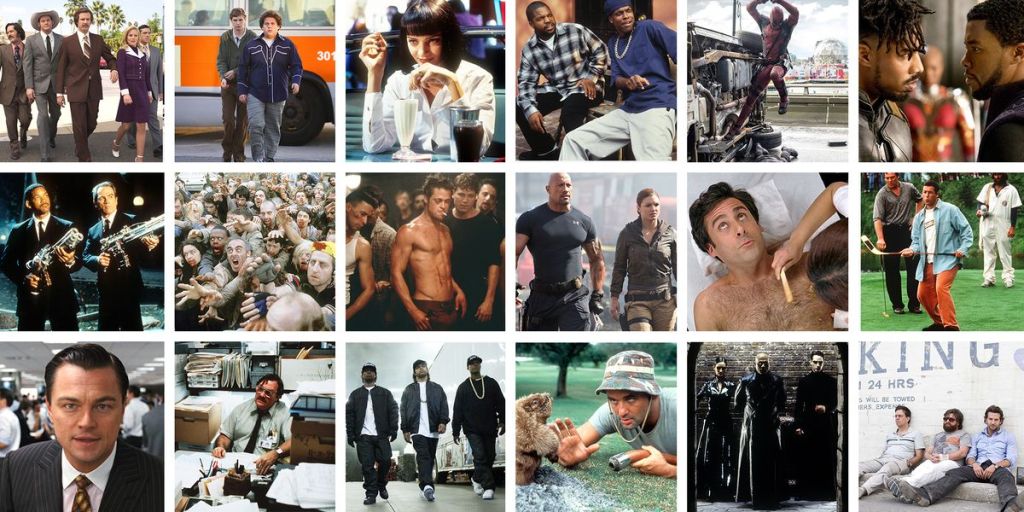
This section explores the portrayals of male characters’s traits and behaviours in movies. Rather than a monolithic presentation, it aims to reflect contrasting aspects of male leads in films. An illustration can be provided by comparing and contrasting three phenomenal movies: Scarface (1983), Fight Club (1999) and Eternal Sunshine of the Spotless Mind (2004). The first two movies present the idea of hypermasculinity. And the Eternal Sunshine of the Spotless Mind circles the notion of emotional vulnerability in men.
First released in 1983, Scarface explores the themes of greed, power, and money. Every minute of the three-hour-long movie has hypermasculine and sexist undertones. A hyper-masculine persona is an overemphasis on physical strength, sexuality, and aggression. It depicts an exaggerated image of masculinity. A ‘tough guy’ quote from the movie shows the protagonist, Tony Montana (played by Al Pacino) mocking, the restaurant patrons for not having the guts to be what they want to be (herein, he assumes that every man just wants to adopt violence in his life and be a part of an organised crime group). In the movie, he displays excessive narcissism and utilisation of aggression and violence. Simultaneously, with his overly assertive and dominant behaviour, he acquires power, wealth, and luxury, along with the female lead, Elvira Hancock (played by Michelle Pfeiffer). Tony displays a chauvinistic attitude towards Elvira and his sister, Gina Montana. Throughout the movie, Tony presents Elvira as a trophy, thus objectifying her and explicitly being with her because of her beauty and status. It can be summed up in one of his dialogues, “In this country, you gotta make money first. Then when you get the money, you get the power. Then when you get the power, then you get the women”. He is protective of his sister to the extent that he does not allow any man to roam around with her (later in the movie, he kills his best friend, Manny, for marrying his sister). To summarise, Scarface reflects skewed power dynamics for men and their will (or licence) to do anything and everything. Whereas women are just ‘secondary objects’.
Second, Fight Club, released in 1999, illustrates male characters celebrating their licence to beat one another up. It begins with the story of Edward Norton’s character, shown as being stuck in the corporate world and described as lonely and depressed. To relieve his pain, he regularly meets and hugs people who are less fortunate than him. This practice, of course, does not work out for him. A few minutes into the movie, he meets Tyler Durden (played by Brad Pitt), who seems to be the epitome of masculinity as he possesses physical strength and the will to rebel against societal norms. Tyler helps the narrator (Edward Norton) realise that the consumerist world has led to his alienation from his real identity. Subsequently, he tells him about the ‘Fight Club’, which serves as an outlet for men to de-stress themselves and reclaim their sense of power. It just showcases that men need a space to express themselves, thus neglecting the need for emotional expression. The outlet for releasing anger and frustration can be summed up through one of the dialogues, “I felt like destroying something beautiful”.
Thirdly, Eternal Sunshine of the Spotless Mind showcases Joel Barish (played by Jim Carrey) as the emotionally sensitive male lead. Throughout the movie, Joel experiences multiple facets of love, growth, and pain delicately. Even though Joel struggles with openly communicating his feelings, he never resorts to violent manifestations of emotional expression (as earlier seen in the case of Tony Montana and Tyler Durden) and is often seen introspecting and scribbling in his diary. Moreover, he never shies away from showing his immense pain of heartbreak (he experiences a breakup with his girlfriend, Clementine) and his inability to cope with the same. The movie intricately highlights moments wherein Joel feels joy, heartache, regret, insecurity, fear, and longing. Despite the script being such that Clementine (played by Kate Winslet) and Joel try to erase their memories of each other, somewhere in the movie, Joel reminisces about the time he said, “I loved you on this day. I love this memory” (to Clementine).
Conclusion
Overall, all three movies showcase male characters in a vividly diverse sense. They offer a nuanced understanding of the multifaceted nature of masculinity and identity. It facilitates the audience to explore the different ideas on releasing male frustration, stress, and anger. As the chosen movies constantly revolve around similar themes of gender dynamics and intricacies of masculinity, their manifestations, on the other hand, are poles apart. But these do cater to a varied spectrum of views that encompass society. Comprehensively understanding the realm of hypermasculinity, it affects the minds of men in the sense that they might face interpersonal problems, stress (due to emotional suppression) and an inability to showcase/accept vulnerabilities. Additionally, it could also distort men’s body image as hypermasculine movies often tend to showcase the male character as physically chiselled. Lastly, considering that Scarface, Fight Club and Eternal Sunshine of the Spotless Mind are blockbuster hits of their time, it would be safe to assume that they collectively shaped and influenced society.
Author’s Bio
Anoushka Rawat is a second-year student of Bachelors in Global Affairs at the Jindal School of International Affairs. She is deeply interested in gender studies and varied perspectives on feminism.
Image Source: https://www.bestproducts.com/lifestyle/g20915960/best-movies-for-men/
 NICKELED AND DIMED