
By Jayendra Singh
Abstract
This article explores the recently approved Loss and Damage Fund (LDF) in the context of climate change mitigation and adaptation. It delves into the challenges associated with defining climate-induced loss and damage and ensuring the additionality of climate finance. Additionally, it highlights the progress made throughout all these years and the current developments, as well as a lack of consensus between developed and developing nations, which poses a significant obstacle in the path of this initiative. The article emphasizes the importance of addressing these issues to establish a transparent and effective LDF that truly supports vulnerable nations affected by climate change.
Introduction
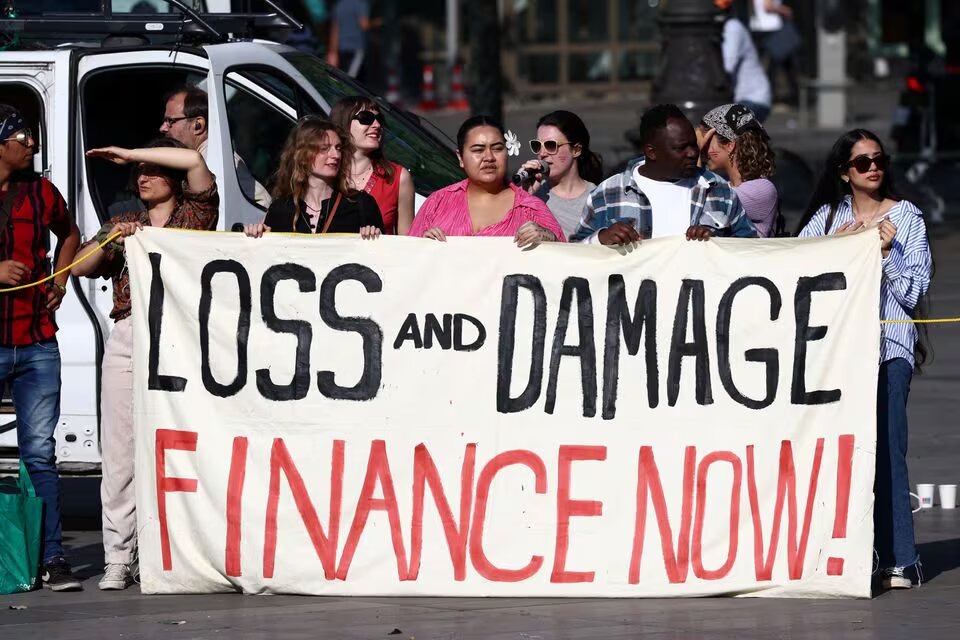
The reality of disproportionate vulnerability to climate change has been observed, analyzed, and asserted ever since the first United Nations Conference on the Human Environment in Stockholm, in 1972. The divide between the Global South and North is yet to be closed, the efforts to do so, however, are well in place, which includes monetary compensation and aid, amongst other activities to prevent loss and damage through climate change. The concept of ‘Loss and Damage’ is used to describe the cost incurred by those who have been affected negatively by the impacts of climate change, and which cannot be prevented by either mitigation or adaptation. The term was promulgated by the Alliance of Small Island States (AOSIS) through the voice of Vanuatu, who proposed creating an insurance scheme for countries likely to be impacted by the rising sea levels. While the latest development of the “Loss and Damage Fund” (LDF from hereon) under the UNFCCC might be the most well-known initiative, the idea itself has been floating around the UN circles for quite some time.
What we must know about the latest developments under the loss and damage umbrella is the establishment of the LDF and how it plans to shape the future of the ways vulnerable nations cope with the reality of climate change. The article delves into the overall concept of Loss and Damage, and assesses the current development during the COP28, moving past the initial talk of successful approval and asks crucial questions regarding its successful implementation.
What is the Loss and Damage Fund?
As we have established, the concept of Loss and Damage is not well defined, but we know the basics. In simpler terms, the Loss and Damage Fund is a global initiative designed to help countries that are most affected by climate change. It provides financial support to help these countries recover from and adapt to the effects of climate change, such as extreme weather events and rising sea levels. The fund is intended to be a new and additional source of funding, separate from other development aid, to ensure that it is used specifically for climate change mitigation and adaptation. The responsibility of formulating and discussing the creation of the fund is set on the “Transitional Committee on Loss and Damage”, which includes representatives from 24 countries, both developed and developing. The fund was officially approved on the opening day of the COP28, albeit as a mixed bag for developing nations. The current pledge combined from countries like the UK, the host country UAE, and others like Germany has come to a total of $700m the equivalent of around 0.2% of the irreversible loss and damage developing nations are facing right now. This has led to criticism of the fund even before it is fully functional.
Definitional Dilemmas and the Perils of Ambiguity
The lack of definitions is going to impact the execution severely, and the problem should have been dealt with during the structuring of the fund itself. The problems of ‘definitions’ is a contentious subject in every field, however, briefly speaking, there have been several issues in the past due to the lack of crisp and precise definitions of certain terms that have led to misuse of so-called novel ideas like climate finance. Although Article 8 of the Paris Agreement highlights the importance of “averting, minimizing and addressing loss and damage”, there is no official or precise definition of what constitutes climate-induced loss and damage, or what addressing it means. The most pertinent example is the mechanism of “Climate Finance” which, as of now, has no official agreed definition. This has led to countries putting their creative spin as to how they should define it, giving them the freedom of labeling projects such as “Gelato stores across Asia”, or “La Tierra Roja”, a love story set in the Argentine forests as “Climate Finance”. While the very fact might seem ridiculous, this problem of not having a set definition, when the stakes–as well as the scale–are so high can lead to some disastrous consequences, especially for those who are vulnerable to climate change.
Truly New and Additional
Another issue with climate finance has been the problem of additionality. The problem of additionality in climate finance refers to the challenge of ensuring that the funds allocated for climate change are not misrepresented funds already in place for development aid to various nations from the global south. The issue has been identified and discussed by several authors, so I shall not delve into the specifics of it. However, it is important to discuss this in the context of the discourse surrounding the LDF because of the tendency for spillover effect from the lack of accountability from the side of the major stakeholders or actors. A report by CARE International found that 93% of the climate finance reported by wealthy countries between 2011 and 2020 was taken directly from development aid, meaning it was not new and additional. This issue specifically can also seep into the LDF if not addressed from the genesis of the fund itself, and now that the World Bank is in charge of the first leg of the fund, developing nations hold a doubtful gaze towards it. The transitional committee must also enshrine the specific guidelines to avoid ambiguity and room for loopholes that we have seen until now.
What is the future?
This lack of consensus is apparent in the meetings of the transitional committee and was based on a few concerns. The major issues that polarized the North and South are: Who is going to host the fund? Who are the beneficiaries? And who is going to pay for it? One would say these questions are essential and must be easy to answer; but if we look at it in the context of developing nations not taking accountability for their share of damage, it becomes clear why things are the way they are. While the fund has been sanctioned now, these disagreements continue in the overall discourse. The important thing to focus on would be the Global Stocktake which would give us the necessary perspective on the way we’re approaching climate change mitigation and adaptation. While creating new funds might seem like a novel idea, the necessary tools to operationalize it to its full potential are equally important and must be developed accordingly.
Conclusion
The Loss and Damage Fund (LDF) represents a vital response to the consequences of climate change for vulnerable nations. However, critical issues include the lack of clear definitions for climate-induced loss and damage and climate finance, which can open a can of worms that would be disastrous for those most vulnerable to climate change. Ensuring the additionality of climate finance is also crucial to prevent the diversion of development aid. Furthermore, the underwhelming pledge for funding, the involvement of the World Bank, and the lack of representation from the crucial beneficiaries pose significant challenges for the fund itself. Addressing these issues is paramount to establishing a transparent and effective LDF that truly supports those most affected by climate change.
Author’s Bio
Jayendra Singh is a Final-year student at the Jindal School of International Affairs pursuing an MA in Diplomacy, Law, and Business. His research interests lie in the fields of Global Environmental Governance, Green (IR), and caste studies. He’s currently the team co-lead for CIDS Journal and columnist for Nickeled & Dimed.
Image Source: REUTERS/Stephanie Lecocq
 NICKELED AND DIMED